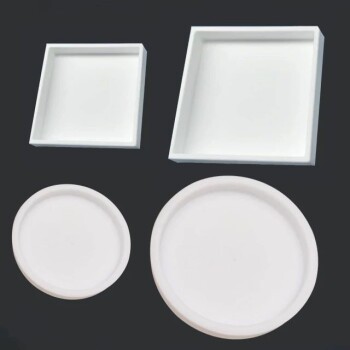
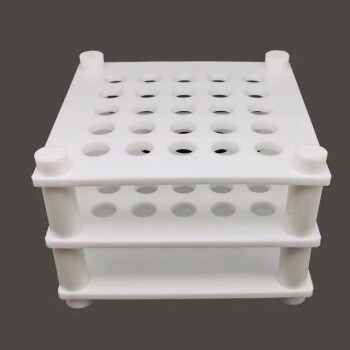
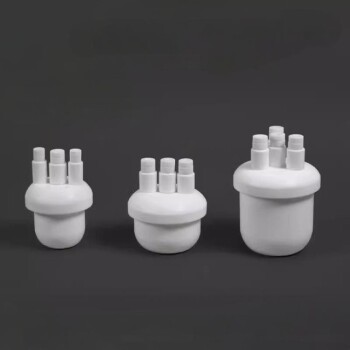
The stainless steel high-pressure reactor with a PTFE liner provides a controlled, sealed environment that enables the hydrothermal carbonization of precursors. Specifically, it allows aqueous glucose solutions to reach the high temperatures (typically 180°C) and pressures required for dehydration and polymerization while protecting the reaction from metallic contamination.
This specialized equipment facilitates the chemical transformation of organic precursors into carbon nanospheres by decoupling the mechanical need for high-pressure containment from the chemical need for an inert, non-corrosive reaction space.
The Dual Role of the Reactor System
Structural Integrity Under High Pressure
The stainless steel outer shell serves as the primary pressure vessel, providing the mechanical strength necessary to withstand internal pressures generated during hydrothermal synthesis. This is essential because the reaction occurs at temperatures well above the atmospheric boiling point of water, requiring a sealed system to maintain the liquid phase.
Enabling High-Temperature Liquid Reactions
By containing the pressure, the reactor allows the aqueous solution to reach 180°C or higher without evaporating. This high-energy environment is the catalyst for the controlled dehydration and polymerization of glucose, which is the foundational step in forming uniform carbon nanospheres.
Safety and Heat Distribution
The robust steel construction ensures the system can safely manage the expansion of gases and liquids. It also provides uniform heat distribution from the external heating source to the internal reaction chamber, ensuring consistent growth rates for the nanomaterials.
The Critical Function of the PTFE Liner
Ensuring Precursor Purity
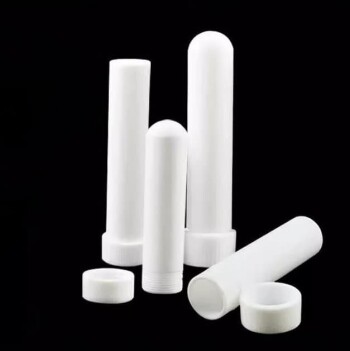
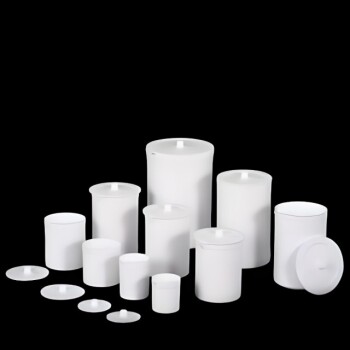
The Polytetrafluoroethylene (PTFE) liner acts as a total chemical barrier between the reaction medium and the metal walls. This prevents impurity ions from the stainless steel from leaching into the solution, which is vital for producing high-purity carbon nanospheres with consistent electrochemical or structural properties.
Corrosion Resistance
Hydrothermal reactions often produce acidic or alkaline intermediates that can aggressively attack metal surfaces. The chemical inertness of PTFE protects the stainless steel shell from corrosion, significantly extending the service life of the reactor and preventing structural failure over time.
Facilitating Clean Recovery
The non-stick properties of PTFE allow for the easy recovery of the synthesized carbon spheres. Because the material does not react with the carbon precursors or the resulting nanospheres, the yield and morphology of the product remain unaffected by the container walls.
Understanding the Trade-offs and Limitations
Temperature Constraints of PTFE
While PTFE is highly inert, it has a physical limit; it begins to soften and can release toxic vapors or deform if temperatures exceed 220°C to 250°C. For syntheses requiring higher temperatures, researchers must transition to PPL liners or specialized metallic alloys, though these often sacrifice some chemical inertness.
Thermal Lag Issues
The presence of a thick PTFE liner creates a thermal gradient between the stainless steel shell and the internal solution. Users must account for this "thermal lag," as the temperature of the reaction fluid may be slightly lower than the temperature registered by the external heating mantle or oven.
Pressure Sensitivity and Loading
Overfilling the liner (typically exceeding 70-80% capacity) can lead to over-pressurization, which may cause the PTFE liner to "creep" or deform under the lid. Maintaining the correct loading ratio is critical to ensure both the safety of the operator and the longevity of the liner's seal.
How to Apply This to Your Project
Making the Right Choice for Your Goal
- If your primary focus is material purity: Always use a pristine PTFE liner and inspect it for discoloration or pitting before starting the synthesis to avoid cross-contamination.
- If your primary focus is morphology control: Ensure your reactor's heating ramp rate is calibrated to account for the thermal insulation provided by the PTFE liner to achieve consistent nucleation.
- If your primary focus is equipment longevity: Never exceed 200°C for extended periods and clean the liner immediately after use with appropriate solvents to prevent the buildup of carbonized residues.
By balancing the structural strength of stainless steel with the chemical passivity of PTFE, you create the ideal "micro-laboratory" for the precise synthesis of advanced carbon nanostructures.
Summary Table:
| Component | Primary Function | Key Benefit for Nanomaterials |
|---|---|---|
| Stainless Steel Shell | High-pressure containment | Safely enables reactions at 180°C+ |
| PTFE Liner | Chemical inertness | Prevents metallic contamination & corrosion |
| Sealed System | Liquid phase maintenance | Facilitates dehydration & polymerization |
| Non-stick Surface | Easy product recovery | Maintains yield and morphology integrity |
Elevate Your Research with Precision Engineering
Are you looking to optimize your hydrothermal synthesis? KINTEK specializes in high-performance laboratory equipment designed for accuracy and durability. Our high-temperature high-pressure reactors and autoclaves are the industry standard for researchers developing advanced carbon nanostructures and energy storage materials.
Beyond reactors, KINTEK offers a comprehensive range of tools, including:
- Thermal Processing: Muffle, tube, and vacuum furnaces (CVD/PECVD/MPCVD).
- Material Preparation: Crushing and milling systems, sieving equipment, and hydraulic presses.
- Essential Consumables: High-purity PTFE products, ceramics, and crucibles.
Ready to achieve superior purity and consistency? Contact our technical experts today to find the ideal solution for your laboratory’s unique requirements.
References
- Zikun Liang, Erjun Kan. Tailoring the Microstructure of Porous Carbon Spheres as High Rate Performance Anodes for Lithium-Ion Batteries. DOI: 10.3390/ma16134828
This article is also based on technical information from Kintek Solution Knowledge Base .
Related Products
- Stainless High Pressure Autoclave Reactor Laboratory Pressure Reactor
- Custom PTFE Teflon Parts Manufacturer for Hydrothermal Synthesis Reactor Polytetrafluoroethylene Carbon Paper and Carbon Cloth Nano-growth
- Mini SS High Pressure Autoclave Reactor for Laboratory Use
- Customizable High Pressure Reactors for Advanced Scientific and Industrial Applications
- Custom PTFE Teflon Parts Manufacturer for Microwave Digestion Tank
People Also Ask
- Why is a laboratory high-pressure reactor used in the hydrothermal synthesis of hydroxyapatite catalysts?
- What role does a laboratory high-pressure reactor play in the leaching process of spent cathode materials? Optimize Recovery
- Why is a laboratory high-pressure reactor necessary for synthesizing fly ash-based zeolite? Achieve Pure Crystallization
- What conditions do laboratory high-pressure reactors provide for HTC? Optimize Your Biochar Production Processes
- What is the function of a high-pressure reactor autoclave? Enhancing Cu/N Co-Doped Carbon Catalyst Synthesis