The primary importance of a Hastelloy high-pressure autoclave is its dual ability to withstand extreme physical stress while maintaining absolute chemical purity. It serves as the core reaction vessel for simulating the 260°C environment of pressurized water reactors (PWR), ensuring that long-term stress corrosion tests—particularly on 304 stainless steel—are accurate and free from contamination by the vessel itself.
Core Takeaway In nuclear materials research, the testing vessel must be invisible to the experiment. The Hastelloy autoclave achieves this by providing exceptional corrosion resistance and chemical inertness, preventing the release of metal ion impurities that would otherwise invalidate data on reactor component durability.
Ensuring Physical Stability Under Load
Withstanding High Temperatures
Researching nuclear power components requires replicating the intense thermal conditions of an operating reactor. A Hastelloy autoclave is engineered to maintain structural integrity and operational stability at temperatures of 260°C.
Long-Term Operational Durability
Simulations of reactor environments are often prolonged processes rather than momentary tests. This equipment enables stable, long-term operation under the high pressures that correspond with these elevated temperatures, ensuring the vessel does not degrade during extended experiments.
Maintaining Chemical Purity
Preventing Experimental Contamination
The validity of stress corrosion testing relies heavily on the precise chemistry of the water environment. Hastelloy possesses high chemical inertness, which prevents the vessel walls from reacting with the water or releasing metal ion impurities.
Controlling Environmental Composition
If the vessel leaches ions, the water chemistry changes, effectively ruining the control variables of the experiment. By using Hastelloy, researchers ensure high purity and a strictly controllable composition of the test medium, guaranteeing that results reflect the test material's performance, not the vessel's degradation.
Simulating Real-World Reactor Conditions
Replicating the PWR Environment
The autoclave serves as the central hub for simulating the physical extremes of a Pressurized Water Reactor (PWR). It creates a high-fidelity model of the environment that reactor components will face in actual service.
Facilitating Stress Corrosion Testing
This setup is critical for evaluating materials such as 304 stainless steel. By exposing the steel to a clean, high-pressure, high-temperature environment, researchers can accurately assess its susceptibility to stress corrosion cracking without interference from external contaminants.
Understanding the Risks of Material Selection
The Impact of Impurities
The choice of autoclave material is a trade-off between cost and data integrity. Using a vessel with lower corrosion resistance than Hastelloy risks introducing metal ions into the solution. These impurities can accelerate or inhibit corrosion rates on the test sample, leading to scientifically flawed conclusions.
The Integrity of the "Core Reaction Vessel"
In this context, the autoclave is not just a container; it is the "core reaction vessel." If the vessel cannot maintain its inert state, it becomes an active participant in the chemical reaction. This defeats the purpose of the experiment, which is to isolate the interaction between the water environment and the 304 stainless steel sample.
Making the Right Choice for Your Research
To ensure your nuclear power research yields actionable and valid data, consider your specific testing goals:
- If your primary focus is Material Validation: Use Hastelloy to ensure that stress corrosion observed on 304 stainless steel is caused solely by the simulated water chemistry, not by vessel corrosion products.
- If your primary focus is Long-term Simulation: Rely on this equipment to maintain mechanical safety and stability during extended runs at 260°C and high pressure.
The Hastelloy autoclave transforms the testing vessel from a potential variable into a reliable constant, securing the validity of critical nuclear safety research.
Summary Table:
| Feature | Benefit in Nuclear Research |
|---|---|
| Material Inertness | Prevents metal ion leaching to ensure water chemistry purity |
| Thermal Stability | Maintains structural integrity at 260°C for PWR simulation |
| Corrosion Resistance | Withstands aggressive media during long-term stress corrosion tests |
| High Pressure Rating | Safely simulates extreme physical stresses of reactor environments |
| Data Integrity | Isolates sample performance by removing vessel-related variables |
Secure Your Research Integrity with KINTEK
In nuclear safety and materials science, the reliability of your data depends on the quality of your environment. KINTEK specializes in advanced laboratory solutions, providing high-performance Hastelloy high-temperature high-pressure reactors and autoclaves designed specifically to withstand the most demanding reactor simulations.
Our comprehensive range of equipment—from high-temperature furnaces and crushing systems to isostatic presses and electrolytic cells—is engineered to provide researchers with the precision they need. Don't let vessel contamination compromise your results.
Contact KINTEK today to discuss your custom autoclave requirements and enhance your lab's capabilities!
References
- Fabio Scenini, A.H. Sherry. Stress corrosion cracking of Ru doped 304 stainless steel in high temperature water. DOI: 10.1179/1743278212y.0000000049
This article is also based on technical information from Kintek Solution Knowledge Base .
Related Products
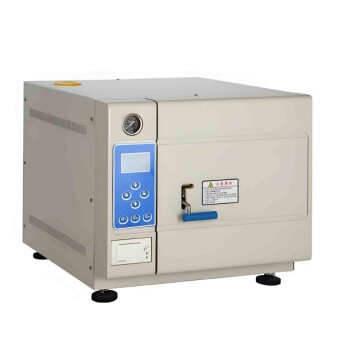
- Desktop Fast High Pressure Laboratory Autoclave Sterilizer 16L 24L for Lab Use
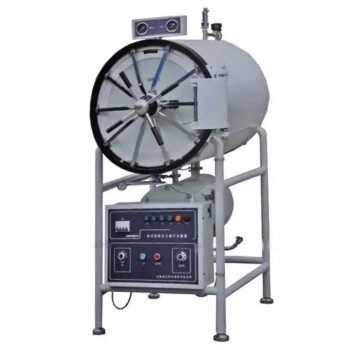
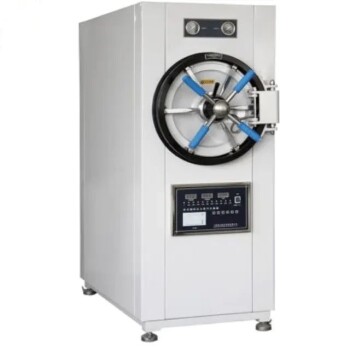
- Laboratory High Pressure Horizontal Autoclave Steam Sterilizer for Lab Use
- Mini SS High Pressure Autoclave Reactor for Laboratory Use
- Stainless High Pressure Autoclave Reactor Laboratory Pressure Reactor
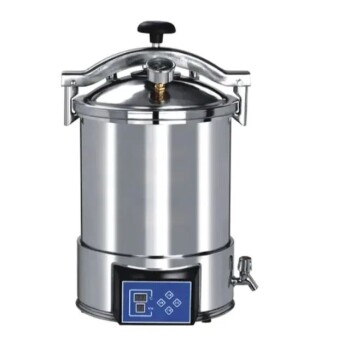
- Portable High Pressure Laboratory Autoclave Steam Sterilizer for Lab Use
People Also Ask
- Why is a laboratory high-pressure autoclave sterilizer necessary? Ensure Accuracy in Antibacterial Research
- What is the role of a laboratory high-pressure autoclave in the conversion of furfural to piperidine? Optimize Yields
- What function does a high-pressure laboratory autoclave serve in walnut shell pretreatment? Enhance Biomass Reactivity.
- How does a laboratory high-pressure autoclave function to control Mn3O4 morphology? Precision Particle Engineering
- Autoclave's Role in PAA & MA Nanosheet Assembly? Driving High-Pressure Solvothermal Chemical Integration