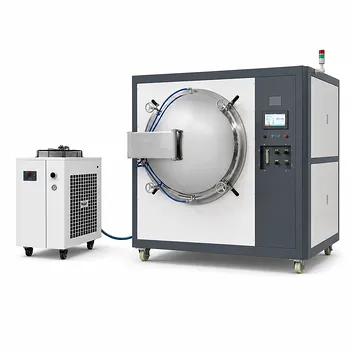
The necessity of using a vacuum oven lies in its ability to dry copper without chemical degradation. After acid etching, commercial copper films possess highly active surfaces that are extremely susceptible to rapid oxidation when exposed to air. A vacuum oven enables moisture removal at a low temperature (40°C) while simultaneously isolating the copper from oxygen, ensuring the material remains pristine for subsequent processing.
By lowering the environmental pressure, a vacuum oven facilitates rapid drying without thermal damage or oxidation. This step is essential for maintaining the high interface wettability required to bond copper films successfully with graphite layers in composite materials.
The Vulnerability of Cleaned Copper
Reactivity Post-Etching
Once copper films undergo acid etching, their surfaces are stripped of contaminants and stable oxides. This renders the metal chemically highly active and unstable in a standard atmosphere.
The Oxidation Threat
Without immediate isolation, oxygen in the air reacts with this active surface. This rapid oxidation compromises the chemical properties of the film before the next fabrication step can begin.
The Physics of Low-Temperature Vacuum Drying
Lowering the Boiling Point
A vacuum oven dramatically reduces the environmental pressure surrounding the film. This allows residual moisture or solvents to evaporate rapidly at much lower temperatures, typically around 40°C to 45°C.
Preventing Thermal Stress
By drying at these reduced temperatures, the process avoids the thermal stress associated with standard high-heat drying methods. This approach thoroughly removes solvents while preserving the structural integrity of the material.
Implications for Composite Fabrication
Interface Wettability
The ultimate goal of this cleaning phase is to prepare the copper for bonding with graphite films to form layered composites. Success depends entirely on the chemical condition of the interface.
Ensuring Strong Adhesion
Effectively avoiding surface oxidation is the only way to maintain excellent interface wettability. If the copper oxidizes during drying, the graphite layer will not adhere correctly, leading to a defective composite material.
Understanding the Trade-offs
Vacuum vs. Standard Convection
Standard convection ovens rely on heat and air circulation to remove moisture. For active copper, this is detrimental because the heat accelerates the reaction between the copper and the oxygen in the circulating air.
The Cost of Equipment
Implementing vacuum drying requires specialized equipment capable of maintaining a stable low-pressure environment. While more complex than standard drying, it is the only method that balances oxygen isolation with efficient solvent removal.
Maximizing Process Reliability
To ensure the highest quality copper-graphite composites, adhere to the following drying principles:
- If your primary focus is preventing surface defects: Prioritize oxygen isolation immediately after etching to prevent rapid oxidation of the active copper.
- If your primary focus is interface quality: Ensure the drying temperature remains low (around 40°C) under vacuum to maximize wettability between copper and graphite layers.
The vacuum oven is not just a drying tool; it is a preservation environment essential for high-performance composite fabrication.
Summary Table:
| Feature | Vacuum Oven Drying | Standard Convection Drying |
|---|---|---|
| Drying Temp. | Low (approx. 40°C) | High (Standard Boiling Point) |
| Oxidation Risk | Extremely Low (Oxygen Isolated) | High (Heat + Air Exposure) |
| Surface Quality | Pristine / Active | Oxidized / Compromised |
| Wettability | High (Optimal for Bonding) | Low (Poor Adhesion) |
| Main Benefit | Chemical Integrity Preservation | Basic Moisture Removal |
Optimize Your Material Interface with KINTEK Precision Solutions
Don't let oxidation compromise your high-performance composites. KINTEK specializes in advanced laboratory equipment designed for the most sensitive research environments. Whether you are performing low-temperature drying for copper films or developing complex layered materials, our comprehensive range of vacuum ovens, high-temperature furnaces, and chemical processing tools ensures your materials remain pristine.
Why choose KINTEK?
- Superior Thermal Control: Precise low-temperature management for volatile or reactive materials.
- Total Isolation: High-performance vacuum systems to prevent chemical degradation.
- End-to-End Solutions: From crushing and milling to high-pressure reactors and dental furnaces, we support every stage of your lab's workflow.
Ready to enhance your lab's efficiency and material reliability? Contact us today to find the perfect equipment for your application!
Related Products
- 23L Laboratory Vacuum Drying Oven
- 56L Vertical Laboratory Vacuum Drying Oven
- Vacuum Hot Press Furnace Machine for Lamination and Heating
- Vacuum Heat Treat Sintering Brazing Furnace
- Laboratory Scientific Electric Heating Blast Drying Oven
People Also Ask
- Why is a laboratory vacuum drying oven recommended for rice straw residues? Protect Your Biomass Integrity
- What role does a laboratory vacuum drying oven play in the preparation of modified multi-walled carbon nanotubes?
- What is the importance of using a laboratory vacuum drying oven? Preserving Slow-Release Microcapsule Integrity
- Why is a Laboratory Vacuum Drying Oven recommended for PBAT microspheres? Protect Sensitive Polymer Integrity
- What role does a laboratory vacuum drying oven play in processing nanoparticle powder samples? Protect Sample Integrity