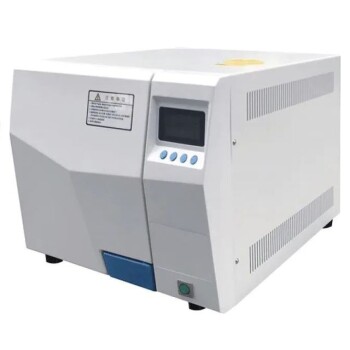
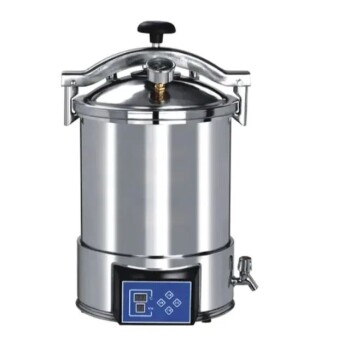
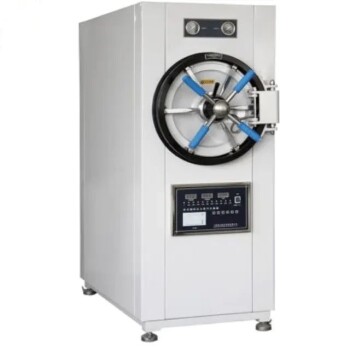
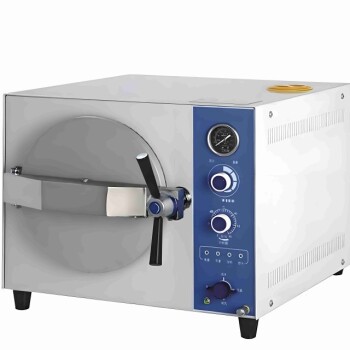
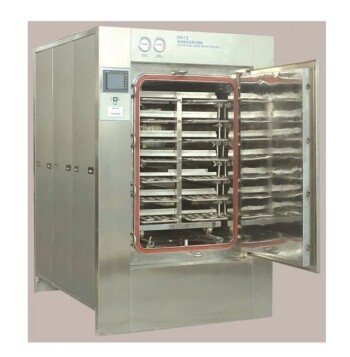
The primary application of a laboratory autoclave in the rice husk biorefining process is the sterilization of materials essential for fermentation. It utilizes high-temperature and high-pressure conditions—typically 121°C for 20 minutes—to treat fractionated solid residues, culture media, and fermentation equipment.
Core Takeaway The autoclave creates a contaminant-free environment by eliminating extraneous microorganisms. This ensures that specific yeast strains can convert sugars into products without competition, securing the validity of kinetic data and the efficiency of the biorefining process.
Establishing Process Integrity
Elimination of Microbial Contamination
In a biorefining context, the presence of wild bacteria or fungi can destroy an experiment. The autoclave is the definitive tool used to eliminate microbial contamination from all inputs before the biological conversion stage begins.
Protecting the Yeast Monoculture
The goal of rice husk biorefining often involves using specific yeast strains to ferment sugars. The autoclave ensures these yeast strains function in a pure environment. Without this step, outside microbes would compete for resources or produce inhibitory byproducts.
Operational Parameters
Standard Sterilization Conditions
To ensure total sterility, the laboratory autoclave generally operates at 121 degrees Celsius. This temperature must be maintained for a duration of 20 minutes to be effective against persistent spores and bacteria.
Scope of Treatment
The sterilization process is not limited to just the biomass. It is applied comprehensively to fractionated solid residues, the culture media (nutrient broth), and the fermentation equipment itself to prevent cross-contamination.
Understanding the Risks
The Cost of Contamination
Failing to properly autoclave materials is not merely a cleanliness issue; it is a yield issue. Extraneous microorganisms consume the sugars derived from rice husks that are intended for the target yeast, significantly lowering the final product yield.
Impact on Data Reliability
In a research or laboratory setting, contamination introduces variable factors that ruin reproducibility. If the environment is not sterile, kinetic data regarding sugar conversion becomes unreliable, as it reflects the activity of unknown contaminants rather than the specific yeast strain being studied.
Making the Right Choice for Your Goal
To maximize the effectiveness of your biorefining process, apply the following principles:
- If your primary focus is Process Efficiency: Ensure all solid residues and media are autoclaved at 121°C for the full 20 minutes to prevent yield loss due to microbial competition.
- If your primary focus is Experimental Accuracy: Sterilize all hardware and fermentation equipment between trials to eliminate "ghost" data caused by residual biological matter.
The laboratory autoclave is the gatekeeper of your bioprocess, ensuring that your results are a product of your design, not accidental contamination.
Summary Table:
| Parameter | Standard Requirement | Application in Biorefining |
|---|---|---|
| Temperature | 121°C | Thermal destruction of persistent spores and bacteria |
| Time | 20 Minutes | Ensures complete sterility of solid residues and media |
| Target Inputs | Solid Residues & Media | Eliminates microbial competition for fermentable sugars |
| Equipment Scope | Fermentation Hardware | Prevents cross-contamination and ensures data reliability |
Secure Your Bioprocess Integrity with KINTEK
Maximize your biorefining efficiency and experimental accuracy with KINTEK’s industry-leading laboratory solutions. Whether you are scaling up fermentation or refining kinetic models, our high-temperature high-pressure reactors and autoclaves provide the precise control needed to eliminate contaminants and protect your yeast monocultures.
From crushing and milling systems for biomass preparation to specialized high-temperature furnaces and PTFE consumables, KINTEK specializes in the laboratory equipment and consumables essential for cutting-edge material science and battery research.
Ready to optimize your lab's performance? Contact KINTEK today to discover how our high-performance autoclaves and thermal solutions can accelerate your research goals!
References
- Hyun Jin Jung, Kyeong Keun Oh. NaOH-Catalyzed Fractionation of Rice Husk Followed by Concomitant Production of Bioethanol and Furfural for Improving Profitability in Biorefinery. DOI: 10.3390/app11167508
This article is also based on technical information from Kintek Solution Knowledge Base .
Related Products
- Desktop Fast Laboratory Autoclave Sterilizer 20L 24L for Lab Use
- Desktop Fast High Pressure Laboratory Autoclave Sterilizer 16L 24L for Lab Use
- Portable High Pressure Laboratory Autoclave Steam Sterilizer for Lab Use
- Portable Digital Display Automatic Laboratory Sterilizer Lab Autoclave for Sterilization Pressure
- Desktop Fast Laboratory Autoclave Sterilizer 35L 50L 90L for Lab Use
People Also Ask
- What are the two types of autoclave used in the laboratory? Gravity vs. Pre-Vacuum Explained
- What is a laboratory autoclave? A Guide to Sterilization with Pressurized Steam
- What precautions should be taken during autoclave in laboratory? A Complete Safety Guide to Prevent Burns and Explosions
- What extreme conditions does a laboratory autoclave simulate? Testing Wear Resistance of Nuclear Fuel Cladding
- What role does a laboratory autoclave play in HEA corrosion research? Key to Validating Advanced Reactor Materials