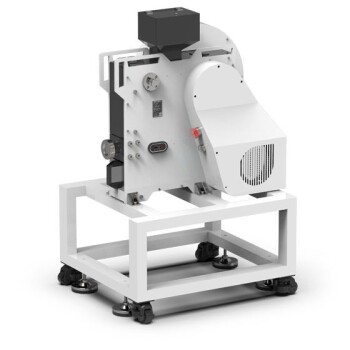
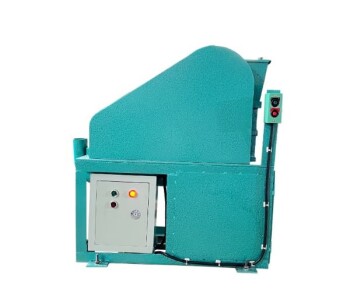
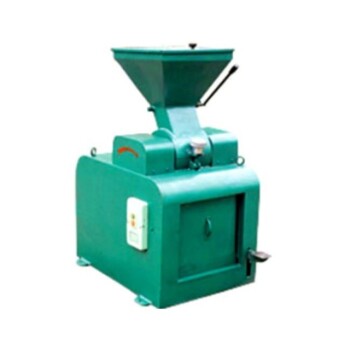
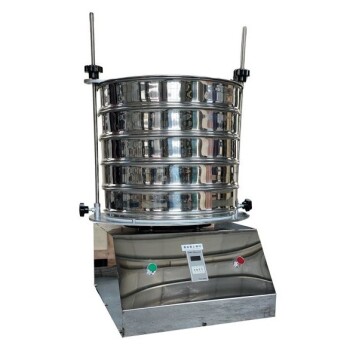
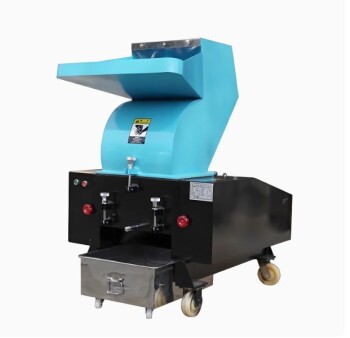
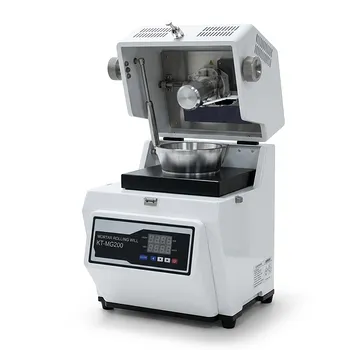
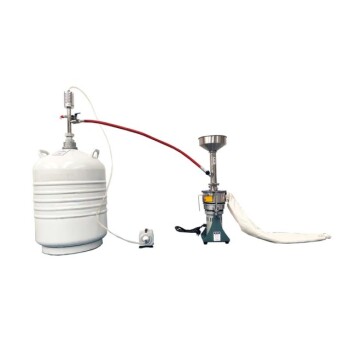
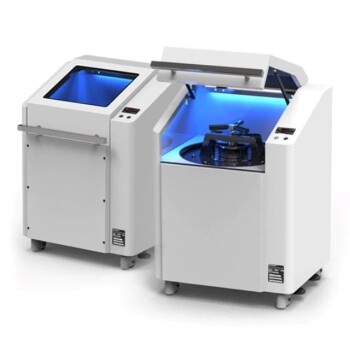
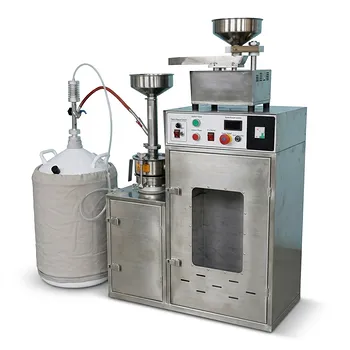
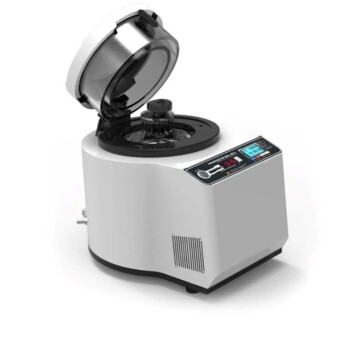
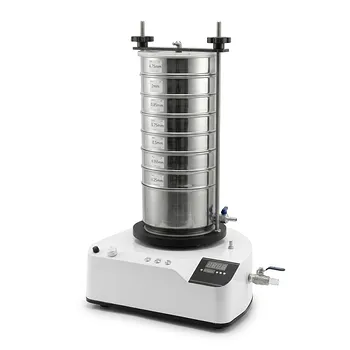
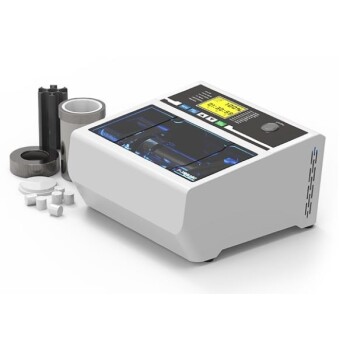
The primary function of crushing equipment and standard grading sieves in the pretreatment of high-ash coal is to reduce and classify the sample to a uniform particle size of -212 µm. This specific grain size control is essential to ensure the representativeness and homogeneity of the sample, which are prerequisites for accurate CHNS elemental analysis and FTIR spectroscopy.
Pretreatment transforms heterogeneous raw coal into a standardized laboratory material, ensuring that the minute quantity used in analysis accurately reflects the chemical composition of the entire bulk sample.
Ensuring Sample Representativeness and Homogeneity
The Critical Role of the -212 µm Threshold
Reducing coal to a particle size of -212 µm is a standard requirement for elemental analysis. This fine grain size ensures that the high-ash content and organic matter are thoroughly mixed, preventing localized concentrations of minerals from skewing the results.
Eliminating Heterogeneity in High-Ash Samples
High-ash coal often contains significant stony or mineral inclusions that differ chemically from the coal matrix. Crushing breaks these components down, while sieving confirms the maximum particle size, ensuring the final sample is a consistent, uniform powder.
Enhancing Analytical Performance
Increasing Chemical Reactivity and Surface Area
Smaller particles possess a significantly higher specific surface area, which is vital for chemical reactivity during CHNS analysis. This increased surface area allows for more efficient combustion and complete conversion of the sample into measurable gases.
Improving Spectral Clarity in FTIR
In spectroscopic applications like FTIR, particle size control is necessary to ensure clear spectral responses. Consistent sizing minimizes light scattering and interference, allowing for a more accurate identification of functional groups within the coal structure.
Standardizing Heat and Gas Diffusion
Uniform particle sizes help eliminate interference caused by differing diffusion paths during kinetic analysis. In processes like pyrolysis, standardized sizes ensure uniform heat transfer and gas diffusion, which is critical for the repeatability of experimental results.
Understanding the Trade-offs and Pitfalls
Potential for Sample Contamination
The use of high-energy crushing equipment can introduce trace metal contamination from the grinding media. For ultra-trace analysis, technicians must carefully select the material of the mill (e.g., tungsten carbide vs. stainless steel) to avoid compromising the sample.
Risks of Volatile Loss and Moisture Change
Excessive grinding generates localized heat, which can lead to the loss of volatile components or a change in the moisture content. It is essential to use intermittent grinding or cooling stages when processing sensitive coal samples to maintain their chemical integrity.
The Pitfall of Over-Sieving
Continuous sieving of coal can lead to the separation of components based on density or hardness rather than just size. If the fine dust produced during crushing is discarded rather than incorporated, the resulting sample may no longer be representative of the original bulk material.
Applying Pretreatment Standards to Your Goals
How to Apply This to Your Project
To achieve the most accurate analytical results, the pretreatment process must be tailored to the specific end-use of the data.
- If your primary focus is elemental quantification (CHNS): Ensure the sample is fully reduced to -212 µm to guarantee complete combustion and representative results.
- If your primary focus is kinetic or pyrolysis research: Utilize high-precision sieving to isolate narrow size ranges (e.g., 150–250 μm) to ensure uniform heating rates and eliminate diffusion interference.
- If your primary focus is mineralogical structure (FTIR/XRD): Prioritize minimizing mechanical heat during crushing to prevent the thermal degradation of sensitive organic or mineral phases.
Consistent particle size control is the foundation upon which all reliable coal characterization is built.
Summary Table:
| Pretreatment Step | Equipment Used | Target Specification | Analytical Benefit |
|---|---|---|---|
| Particle Reduction | Crushing & Milling Systems | -212 µm grain size | Ensures homogeneity and sample representativeness |
| Size Classification | Standard Grading Sieves | Precise mesh control | Eliminates heterogeneity and diffusion interference |
| Sample Consolidation | Hydraulic Pellet Presses | Uniform solid pellets | Improves spectral clarity for FTIR and XRD analysis |
| Thermal Analysis | High-Temp Furnaces | Standardized fine powder | Enhances combustion efficiency and data repeatability |
Elevate Your Analytical Precision with KINTEK
Reliable coal characterization starts with flawless sample preparation. At KINTEK, we provide the high-performance laboratory tools you need to achieve uniform particle size and representative results every time.
From high-energy crushing and milling systems and precision sieving equipment to manual and automatic hydraulic presses for pellet preparation, our solutions are engineered for durability and scientific accuracy. Whether you are conducting CHNS elemental analysis or researching thermal behavior in our advanced muffle and tube furnaces, KINTEK ensures your laboratory is equipped for success.
Ready to optimize your sample pretreatment workflow? Contact our experts today to find the perfect equipment tailored to your specific material research needs!
References
- Anubhav Shukla, Atul Kumar Varma. Rapid Estimation of Sulfur Content in High-Ash Indian Coal Using Mid-Infrared FTIR Data. DOI: 10.3390/min13050634
This article is also based on technical information from Kintek Solution Knowledge Base .
Related Products
- Laboratory Jaw Crusher
- Sealed Jaw Crusher High Efficiency Environmental Protection Safe and Reliable
- Laboratory Sealed Hammer Crusher for Efficient Sample Preparation
- Laboratory Test Sieves and Sieving Machines
- Powerful Plastic Crusher Machine
People Also Ask
- What role do laboratory crushers and standard sieves play in Datura stramonium pretreatment? Optimize Your HTL Yield
- What is a laboratory crusher? The First Step to Accurate Sample Analysis
- What is the primary function of a laboratory crusher? Optimize Biomass & Coal Co-Gasification Efficiency
- What is a jaw crusher for labs? The Essential First Step for Accurate Sample Analysis
- How does a jaw crusher contribute to the primary processing of slate waste? Optimize Your Size Reduction Workflow