Knowledge What is the primary handling instruction for the H-type electrolytic cell? Essential Care for Glass Lab Equipment
Author avatar

Tech Team · Kintek Solution

Updated 1 day ago

What is the primary handling instruction for the H-type electrolytic cell? Essential Care for Glass Lab Equipment


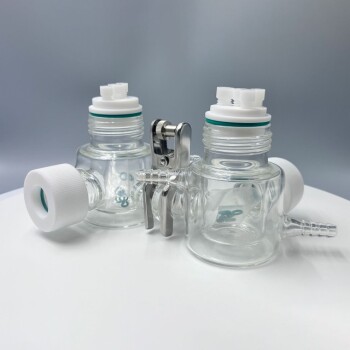
The primary handling instruction for the H-type electrolytic cell is to treat it with extreme care and gentleness at all times. Because the cell body is constructed from glass, it is inherently fragile and susceptible to breakage during transport, setup, or cleaning.

The H-type cell is a precision glass instrument designed to separate chemical reactions. Its structural integrity is essential for safety and accuracy, necessitating a "gentle-touch" approach during all phases of use.

The Importance of Material Awareness

Glass Construction

The defining characteristic of this apparatus is its material. As noted in the primary documentation, the entire cell body is made of glass.

This material choice provides excellent chemical resistance and visibility, but it comes with the drawback of high fragility. You must handle the cell as you would expensive laboratory glassware, not as a rugged industrial tool.

The H-Shape Design

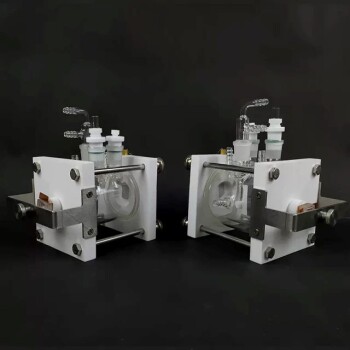
The "H-type" designation refers to the physical geometry of the cell. It consists of two distinct vertical chambers connected by a horizontal bridge.

This shape creates stress points where the chambers join. Rough handling or twisting can easily cause fractures at these critical junctions.

Operational Context

Separation of Chambers

The H-shape divides the cell into an anode chamber and a cathode chamber. This physical separation is critical for the device's function.

It allows oxidation and reduction reactions to proceed independently. Any crack or break in the glass compromises this isolation, rendering the experiment invalid.

The Membrane Interface

The two chambers are typically separated by a replaceable ion-exchange membrane located in the connecting bridge.

While the glass structure holds the fluids, this membrane permits necessary ion transport. Handling the cell roughly can misalign or damage the seal around this membrane, leading to leaks or cross-contamination.

Understanding the Trade-offs

Fragility vs. Transparency

The choice of glass involves a distinct trade-off. You gain the ability to visually monitor the reaction and ensure no chemical leaching occurs from the container.

However, you accept the risk that a single drop or hard impact will destroy the unit.

Cleaning and Maintenance Risks

The most dangerous times for an H-type cell are often during cleaning or membrane replacement, not during the experiment itself.

Disassembling the unit to change the ion-exchange membrane requires force to loosen seals. Applying too much torque to the glass parts during this process is a common cause of breakage.

Ensuring Longevity and Safety

To maximize the lifespan of your H-type electrolytic cell, follow these specific guidelines based on your current activity:

  • If your primary focus is transport: Always support the cell from the bottom of both chambers simultaneously, never by the connecting bridge alone.
  • If your primary focus is membrane replacement: Apply gentle, even pressure when securing the membrane to avoid creating stress fractures in the glass connecting arms.

Treating the glass structure with respect is the first step toward reproducible, high-quality electrochemical data.

Summary Table:

Handling Aspect Instruction & Recommendation Why It Matters
Material Handling Extreme care and gentleness; avoid impacts. Glass construction is highly fragile and prone to fractures.
Structural Support Always support both chambers from the bottom. Lifting by the bridge creates stress points that lead to breaks.
Assembly/Disassembly Apply even, gentle pressure during membrane changes. Prevents torque-induced cracking at the connecting junctions.
Operational Use Maintain structural integrity of the H-shape. Prevents leaks and cross-contamination between chambers.

Elevate Your Electrochemistry with Precision KINTEK Solutions

Don't let fragile equipment compromise your research. KINTEK specializes in high-quality laboratory essentials, offering a robust selection of electrolytic cells, electrodes, and battery research tools designed for durability and precision.

Whether you need advanced high-temperature furnaces, reliable crushing and milling systems, or premium PTFE and ceramic consumables, our team is dedicated to providing the tools that ensure reproducible, high-quality data.

Ready to upgrade your lab? Contact us today to explore our comprehensive range of equipment and consumables!

Related Products

People Also Ask

Related Products

Custom PTFE Teflon Parts Manufacturer for PTFE Ball Valve Seat

Custom PTFE Teflon Parts Manufacturer for PTFE Ball Valve Seat

Seats and inserts are vital components in the valve industry. As a key component, polytetrafluoroethylene is usually selected as the raw material.

Custom PTFE Teflon Parts Manufacturer for Non-Standard Insulator Customization

Custom PTFE Teflon Parts Manufacturer for Non-Standard Insulator Customization

PTFE insulator PTFE has excellent electrical insulation properties in a wide temperature and frequency range.

Custom PTFE Teflon Parts Manufacturer for Acid and Alkali Resistant Chemical Powder Material Scoops

Custom PTFE Teflon Parts Manufacturer for Acid and Alkali Resistant Chemical Powder Material Scoops

Known for its excellent thermal stability, chemical resistance and electrical insulating properties, PTFE is a versatile thermoplastic material.

Custom PTFE Teflon Parts Manufacturer for Culture Dish and Evaporation Dish

Custom PTFE Teflon Parts Manufacturer for Culture Dish and Evaporation Dish

The PTFE culture dish evaporating dish is a versatile laboratory tool known for its chemical resistance and high-temperature stability. PTFE, a fluoropolymer, offers exceptional non-stick properties and durability, making it ideal for various applications in research and industry, including filtration, pyrolysis, and membrane technology.

Custom PTFE Teflon Parts Manufacturer for Hollow Etching Flower Basket ITO FTO Developing Glue Removal

Custom PTFE Teflon Parts Manufacturer for Hollow Etching Flower Basket ITO FTO Developing Glue Removal

PTFE adjustable height flower basket (Teflon flower baskets) are made of high-purity experimental grade PTFE, with excellent chemical stability, corrosion resistance, sealing and high and low temperature resistance.

Conductive Carbon Cloth Carbon Paper Carbon Felt for Electrodes and Batteries

Conductive Carbon Cloth Carbon Paper Carbon Felt for Electrodes and Batteries

Conductive carbon cloth, paper, and felt for electrochemical experiments. High-quality materials for reliable and accurate results. Order now for customization options.

Custom PTFE Teflon Parts Manufacturer for PTFE Containers

Custom PTFE Teflon Parts Manufacturer for PTFE Containers

PTFE container is a container with excellent corrosion resistance and chemical inertness.

Custom PTFE Teflon Parts Manufacturer for Hollow Cleaning Basket and Rack Carrier

Custom PTFE Teflon Parts Manufacturer for Hollow Cleaning Basket and Rack Carrier

The PTFE hollow cleaning flower basket is a specialized laboratory tool designed for efficient and safe cleaning processes. Made from high-quality polytetrafluoroethylene (PTFE), this basket offers exceptional resistance to acids, alkalis, and organic solvents, ensuring durability and reliability in various chemical environments.

Electrode Polishing Material for Electrochemical Experiments

Electrode Polishing Material for Electrochemical Experiments

Looking for a way to polish your electrodes for electrochemical experiments? Our polishing materials are here to help! Follow our easy instructions for best results.

Glassy Carbon Sheet RVC for Electrochemical Experiments

Glassy Carbon Sheet RVC for Electrochemical Experiments

Discover our Glassy Carbon Sheet - RVC. Perfect for your experiments, this high-quality material will elevate your research to the next level.

Conductive Boron Nitride BN Ceramics Composite for Advanced Applications

Conductive Boron Nitride BN Ceramics Composite for Advanced Applications

Due to the characteristics of boron nitride itself, the dielectric constant and dielectric loss are very small, so it is an ideal electrical insulating material.

Button Battery Storage Box for Battery Lab

Button Battery Storage Box for Battery Lab

Button-type battery storage box, detachable, high-quality PP environmental protection material; suitable for small objects/chemicals, etc., thickened, compressive, durable, and available in a variety of styles.

Aluminum-Plastic Flexible Packaging Film for Lithium Battery Packaging

Aluminum-Plastic Flexible Packaging Film for Lithium Battery Packaging

Aluminum-plastic film has excellent electrolyte properties and is an important safe material for soft-pack lithium batteries. Unlike metal case batteries, pouch batteries wrapped in this film are safer.

Graphite Vacuum Furnace Negative Material Graphitization Furnace

Graphite Vacuum Furnace Negative Material Graphitization Furnace

Graphitization furnace for battery production has uniform temperature and low energy consumption. Graphitization furnace for negative electrode materials: an efficient graphitization solution for battery production and advanced functions to enhance battery performance.

Precision Machined Zirconia Ceramic Ball for Engineering Advanced Fine Ceramics

Precision Machined Zirconia Ceramic Ball for Engineering Advanced Fine Ceramics

zirconia ceramic ball have the characteristics of high strength, high hardness, PPM wear level, high fracture toughness, good wear resistance, and high specific gravity.

Copper Foam

Copper Foam

Copper foam has good thermal conductivity and can be widely used for heat conduction and heat dissipation of motors/electrical appliances and electronic components.

Single Punch Electric Tablet Press Machine TDP Tablet Punching Machine

Single Punch Electric Tablet Press Machine TDP Tablet Punching Machine

The electric tablet punching machine is a laboratory equipment designed for pressing various granular and powdery raw materials into discs and other geometric shapes. It is commonly used in pharmaceutical, healthcare products, food, and other industries for small batch production and processing. The machine is compact, lightweight, and easy to operate, making it suitable for use in clinics, schools, laboratories, and research units.

Laboratory Test Sieves and Vibratory Sieve Shaker Machine

Laboratory Test Sieves and Vibratory Sieve Shaker Machine

Efficiently process powders, granules, and small blocks with a high-frequency vibration sieve. Control vibration frequency, screen continuously or intermittently, and achieve accurate particle size determination, separation, and classification.

Laboratory Vibratory Sieve Shaker Machine for Dry and Wet Three-Dimensional Sieving

Laboratory Vibratory Sieve Shaker Machine for Dry and Wet Three-Dimensional Sieving

KT-VD200 can be used for sieving tasks of dry and wet samples in the laboratory. The screening quality is 20g-3kg. The product is designed with a unique mechanical structure and an electromagnetic vibrating body with a vibration frequency of 3000 times per minute.

Small Lab Rubber Calendering Machine

Small Lab Rubber Calendering Machine

Small lab rubber calendering machine is used for producing thin, continuous sheets of plastic or rubber materials. It is commonly employed in laboratories, small-scale production facilities, and prototyping environments to create films, coatings, and laminates with precise thickness and surface finish.


Leave Your Message