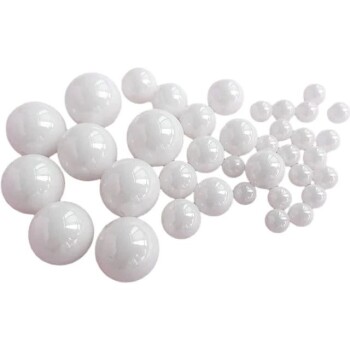
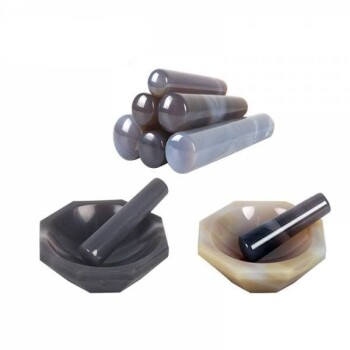
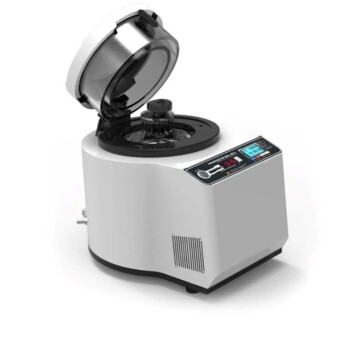
The primary purpose of using zirconia (ZrO2) grinding balls is to deliver high-impact mechanical force while maintaining strict chemical purity.
When preparing ZrB2–SiC–TaC composite powders, zirconia is the medium of choice because its high density and hardness allow it to effectively pulverize hard ceramic agglomerates. Simultaneously, its chemical stability and wear resistance prevent the introduction of metallic impurities that would compromise the performance of these ultra-high temperature ceramics.
Core Takeaway Achieving the correct particle size in high-performance ceramics requires aggressive milling that often introduces contaminants. Zirconia grinding media solves this paradox by providing the necessary impact kinetic energy to break down particles without shedding harmful metallic impurities into the mixture.
Achieving Mechanical Efficiency
High Density Generates Impact Force
Effective milling relies on kinetic energy. Zirconia balls possess high density, which translates to significantly greater impact force compared to lighter ceramic media.
Breaking Down Hard Agglomerates
ZrB2, SiC, and TaC are extremely hard materials that tend to form clusters. The significant weight and hardness of zirconia balls provide the shear and impact forces required to thoroughly break up these powder agglomerates.
Preserving Material Purity
Eliminating Metallic Contamination
Standard steel grinding media shed metallic particles during processing. Zirconia is chemically stable, ensuring that no metallic contaminants are introduced into the mixture during prolonged mixing.
Exceptional Wear Resistance
Even among ceramics, zirconia is notably durable. Its high wear resistance means the grinding media itself degrades very slowly, minimizing the amount of foreign debris added to the raw materials.
Ensuring Ceramic Performance
For ultra-high temperature ceramics (UHTCs), purity is non-negotiable. Using zirconia guarantees the high purity requisite for the final material's thermal and structural integrity.
Understanding the Trade-offs
The Cost of Purity
While zirconia is superior for purity and density, it is generally more expensive than standard steel media. However, for high-performance ceramics like ZrB2–SiC–TaC, the cost is justified because metallic contamination often renders the final product unusable.
Hardness Compatibility
Zirconia is hard, but care must be taken regarding the hardness of the liner and the target material. The milling parameters must be tuned to ensure the media grinds the powder without aggressively wearing down the mill lining, which could introduce a different source of contamination.
Making the Right Choice for Your Goal
To ensure the success of your ZrB2–SiC–TaC preparation, align your grinding media selection with your critical processing requirements.
- If your primary focus is Material Purity: Select zirconia to strictly prevent metallic contamination and side reactions that degrade ultra-high temperature performance.
- If your primary focus is Milling Efficiency: Rely on zirconia's high density to provide the necessary kinetic energy to break down stubborn agglomerates that lighter media cannot resolve.
By selecting zirconia, you effectively balance the physical need for aggressive grinding with the chemical requirement for absolute sterility.
Summary Table:
| Feature | Zirconia (ZrO2) Grinding Media | Benefit for Composite Powders |
|---|---|---|
| High Density | High kinetic energy output | Efficiently breaks down hard ZrB2/SiC/TaC agglomerates |
| Extreme Hardness | Exceptional wear resistance | Maintains media shape and reduces debris contamination |
| Chemical Stability | Non-metallic and inert | Prevents metallic impurities from compromising UHTC properties |
| Purity Grade | High-purity ceramic composition | Ensures thermal and structural integrity of final materials |
Elevate Your Material Purity with KINTEK Expertise
Precision milling of ultra-high temperature ceramics like ZrB2–SiC–TaC demands the highest quality media and equipment. At KINTEK, we specialize in providing advanced crushing and milling systems along with premium zirconia grinding media designed to eliminate metallic contamination and maximize particle size reduction.
Whether you are refining ceramic powders, utilizing our high-temperature furnaces, or conducting advanced research with our high-pressure reactors, KINTEK offers the comprehensive lab solutions you need to ensure consistent, high-performance results.
Ready to optimize your ceramic processing? Contact our technical specialists today to discover how our tailored solutions can enhance your laboratory's efficiency and material integrity.
Related Products
- Laboratory Jar Ball Mill with Alumina Zirconia Grinding Jar and Balls
- Precision Machined Zirconia Ceramic Ball for Engineering Advanced Fine Ceramics
- Laboratory Jar Mill with Agate Grinding Jar and Balls
- Laboratory Ball Mill Jar Mill with Metal Alloy Grinding Jar and Balls
- Laboratory Micro Tissue Grinding Mill Grinder
People Also Ask
- What are the primary functions of using a ball mill for BZCY72 powder? Achieve High Purity and Enhanced Sintering
- In what way does a laboratory ball mill affect material properties when modifying PHBV/pulp fiber composites?
- Why is a laboratory ball mill required for ultra-fine fly ash? Unlock Nano-Scale Adsorption Power
- What is the function of a laboratory ball mill in the preparation of AMMCs? Optimize Dispersion & Grain Refinement
- What is the function of a laboratory ball mill in the pretreatment of waste tire char (WTC)? Optimize Material Reactivity