The primary role of mechanical mixing equipment in the pre-treatment of Copper and Tungsten Carbide (Cu/WC) composites is to achieve a uniform distribution of powders at both the macro and micro levels. This process utilizes long-duration rotational mixing to overcome the significant density differences between the two materials, creating a homogeneous blend prior to sintering.
Uniformity defines material integrity. The central purpose of mechanical mixing is to negate the natural tendency of materials with vastly different densities to separate, ensuring that the final composite exhibits consistent structural properties.
The Challenge: Density Disparity
Overcoming Physical Differences
The fundamental challenge in creating Cu/WC composites lies in the physical properties of the raw ingredients. Copper (Cu) and Tungsten Carbide (WC) possess significant density differences.
The Risk of Segregation
Without intervention, these density variations naturally lead to separation. The heavier particles tend to settle differently than the lighter ones, creating an unstable mixture.
Ensuring Micro-Level Consistency
Mechanical mixing goes beyond simple blending; it targets micro-distribution. The goal is to ensure that individual particles of copper and tungsten carbide are interdispersed evenly, not just mixed in bulk.
The Process: Long-Duration Rotational Mixing
Stabilizing the Mixture
To counteract the density issue, the equipment employs long-duration rotational mixing. This continuous motion prevents the heavier tungsten carbide from isolating itself from the copper matrix.
Preparation for Sintering
This mixing stage is the foundation for the subsequent sintering process. If the powder is not homogenized now, the heat treatment will result in a flawed material.
Guaranteeing Property Consistency
The ultimate output of this mechanical rigor is reliability. By preventing composition segregation early, the equipment ensures the consistency of the final material properties, such as hardness and conductivity.
Understanding the Trade-offs
The Necessity of Time
The primary reference highlights that this process requires long-duration mixing. This is a necessary investment of time; rushing this stage creates a high risk of immediate segregation due to the density mismatch.
Process Dependency
Success is entirely dependent on the mechanical energy applied. Passive mixing methods are insufficient for Cu/WC composites because they cannot generate the forces required to keep the heavy WC particles suspended within the lighter Cu powder.
Making the Right Choice for Your Goal
Achieving a high-quality composite requires prioritizing the pre-treatment phase.
- If your primary focus is Structural Integrity: Prioritize long-duration rotational cycles to fully negate the density differences between the powders.
- If your primary focus is Material Reliability: Verify that your equipment is calibrated to achieve micro-distribution, as this directly correlates to the consistency of the sintered product.
The quality of your final Cu/WC composite is determined by the thoroughness of your mechanical mixing strategy.
Summary Table:
| Mixing Feature | Function in Cu/WC Pre-treatment | Impact on Final Composite |
|---|---|---|
| Long-Duration Rotation | Counteracts density disparity between Cu and WC | Prevents particle segregation and settling |
| Macro/Micro Distribution | Ensures even particle spacing at all scales | Guarantees consistent hardness & conductivity |
| Mechanical Energy | Forces heavy WC particles into the Cu matrix | Provides the structural foundation for sintering |
| Homogenization | Eliminates composition fluctuations | Ensures high material reliability and integrity |
Elevate Your Material Research with KINTEK Precision
Achieving the perfect Cu/WC composite begins with flawless pre-treatment. At KINTEK, we specialize in the advanced laboratory equipment necessary to master density disparities and ensure micro-level consistency.
Whether you require high-performance crushing and milling systems for powder preparation, vacuum or induction melting furnaces for sintering, or hydraulic presses for pellet formation, KINTEK provides the integrated solutions your lab needs. From tungsten-carbide-ready milling tools to high-temperature furnaces, our portfolio is designed to guarantee structural integrity and material reliability for every sample.
Ready to optimize your powder metallurgy workflow? Contact our experts today to discover how KINTEK’s comprehensive range of equipment and consumables can transform your research outcomes.
Related Products
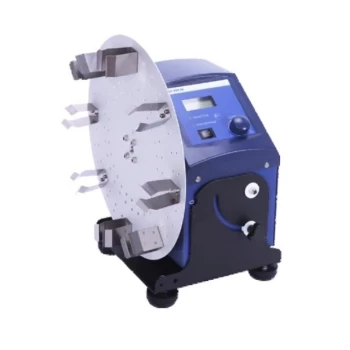
- Laboratory Disc Rotary Mixer for Efficient Sample Mixing and Homogenization
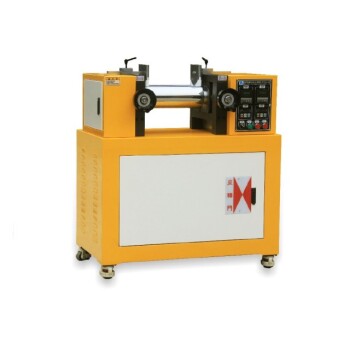
- Open Type Two Roll Mixing Mill Machine for Rubber Crusher
- Laboratory Vortex Mixer Orbital Shaker Multifunctional Rotation Oscillation Mixer
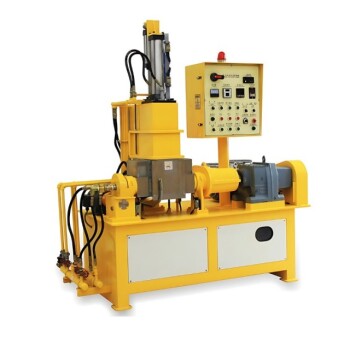
- Lab Internal Rubber Mixer Rubber Kneader Machine for Mixing and Kneading
- Laboratory Oscillating Orbital Shaker
People Also Ask
- What is a laboratory mixer used for? Choose the Right Tool for Liquids or Solids
- What is a laboratory mixer? A Guide to Achieving Perfect Sample Homogeneity
- What are laboratory mixers used for? Achieve Perfect Sample Homogeneity and Reliable Results
- How does a high-efficiency homogenizing mixer contribute to the preparation of Tobermorite and Xonotlite precursors?
- Why is precision mixing required for concrete corrosion studies? Ensure Data Integrity through Homogenization