The primary function of a laboratory oven in the pre-treatment of Magnetic Composite Carbon precursors is to completely eliminate free water from the impregnated mixture. Typically set to 105 °C, this drying phase is a critical prerequisite that ensures the physical material is stable enough to withstand the rigorous conditions of the subsequent carbonization process.
By effectively removing moisture in a controlled environment, this step prevents rapid steam generation inside the material. If skipped, trapped water would vaporize explosively during high-temperature treatment, leading to structural collapse or severe cracking of the composite.
The Critical Role of Moisture Removal
Targeting Free Water
The synthesis of Magnetic Composite Carbon often involves an "impregnated mixture" which retains significant moisture.
The laboratory oven provides a consistent thermal environment, typically at 105 °C. This specific temperature is chosen because it is just above the boiling point of water, ensuring effective evaporation without initiating premature chemical decomposition of the precursor materials.
preparing for Carbonization
This drying step is not the final stage; it is a preparatory measure for the high-temperature furnace.
Entering the carbonization phase requires a "bone-dry" baseline. The laboratory oven serves as the bridge between the wet chemistry phase (impregnation) and the thermal processing phase (carbonization).
Ensuring Structural Integrity
Preventing Steam-Induced Failure
The most significant risk to the precursor is the rapid expansion of water into steam.
If a wet precursor is introduced directly into a high-temperature furnace, the water trapped within the pore structure turns to steam almost instantly. This rapid volume expansion creates immense internal pressure, which forces the material apart from the inside out.
Avoiding Cracks and Collapse
The laboratory oven mitigates this risk by ensuring the evaporation happens slowly and gently.
By removing the water at a low, steady temperature, the pore structure remains intact. This prevents structural collapse or cracking, ensuring the precursor maintains its intended physical form before it undergoes the final transformation into Magnetic Composite Carbon.
Understanding the Trade-offs
The Risk of Incomplete Drying
Rushing the oven cycle can result in residual moisture deep within the material.
Even a small amount of remaining water can compromise the structural integrity during the subsequent high-heat phases. It is better to extend the drying time at 105 °C than to risk batch failure in the furnace.
Temperature Precision
While the goal is drying, avoiding excessive heat at this stage is crucial.
Setting the oven significantly higher than 105 °C during this pre-treatment could alter the chemical impregnation or cause surface defects before the material is ready for carbonization.
Making the Right Choice for Your Process
To ensure the successful synthesis of Magnetic Composite Carbon, consider the following based on your specific operational goals:
- If your primary focus is Physical Stability: Ensure the oven temperature is strictly maintained at 105 °C until the weight of the sample stabilizes, confirming all free water is removed.
- If your primary focus is Defect Prevention: Inspect the dried precursor for surface cracks prior to carbonization; any damage here indicates the drying rate was likely too aggressive or incomplete.
Proper use of the laboratory oven transforms a volatile, wet mixture into a robust precursor ready for high-performance applications.
Summary Table:
| Process Phase | Target Parameter | Purpose | Risk of Skipping |
|---|---|---|---|
| Pre-treatment | 105 °C (Laboratory Oven) | Removal of free water & moisture | Explosive steam expansion & structural collapse |
| Carbonization | High Temperature (Furnace) | Chemical transformation & carbonization | Incomplete synthesis & poor magnetic properties |
| Structural Goal | Stable Pore Structure | Ensure integrity & prevent cracking | Severe cracking & material fragmentation |
Elevate Your Material Synthesis with KINTEK Precision
Don’t let moisture compromise your research. KINTEK specializes in high-performance laboratory equipment designed to ensure the structural integrity of your advanced materials. Whether you are prepping precursors or conducting complex carbonization, our comprehensive range of laboratory ovens, high-temperature furnaces (muffle, vacuum, CVD), and crushing systems provides the thermal precision your lab demands.
From high-temperature high-pressure reactors to essential ceramic crucibles, we offer everything needed for battery research and composite development. Ensure flawless results and prevent material failure today.
Contact KINTEK Experts to Find Your Solution
References
- Pascal S. Thue, Éder C. Lima. Magnetic Composite Carbon from Microcrystalline Cellulose to Tackle Paracetamol Contamination: Kinetics, Mass Transfer, Equilibrium, and Thermodynamic Studies. DOI: 10.3390/polym16243538
This article is also based on technical information from Kintek Solution Knowledge Base .
Related Products
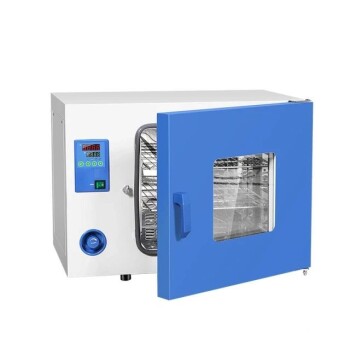
- Laboratory Scientific Electric Heating Blast Drying Oven
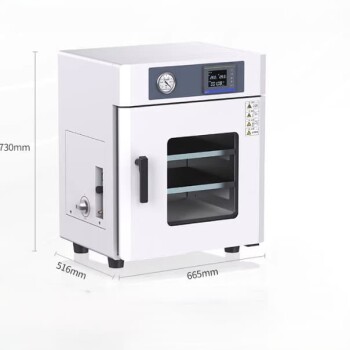
- 56L Vertical Laboratory Vacuum Drying Oven
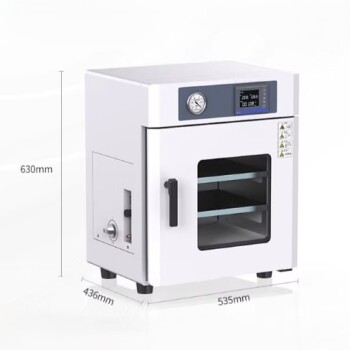
- 23L Laboratory Vacuum Drying Oven
- 1200℃ Muffle Furnace Oven for Laboratory
- 1700℃ Muffle Oven Furnace for Laboratory
People Also Ask
- How does a laboratory electric drying oven contribute to the formation of the initial coating? Expert Insights
- What role does a precision laboratory drying oven play in the synthesis of GO-PANI nanocomposites? Protect Material Integrity
- What role does a laboratory drying oven play in the preparation of zinc oxide nanoparticle precursors?
- What is the necessity of using a laboratory drying oven when processing MoO3/GO composite nanopowders? Find out here.
- What is the role of a laboratory drying oven in cellulose citrate production? Ensure Material Stability & Purity