The primary purpose of an in-situ pressure monitoring device is to record real-time macro-stress changes within an all-solid-state battery during its charge and discharge cycles. By capturing linear elastic stress fluctuations, these devices detect the physical expansion and contraction of the cathode active material's lattice. This allows researchers to immediately visualize the mechanical "breathing effect" inherent in the battery's chemistry.
By correlating mechanical stress with electrochemical performance, in-situ monitoring bridges the gap between material properties and cell failure. It provides the data necessary to validate zero-strain designs and understand the mechanical limits of cycle life.
Decoding the "Breathing Effect"
Detecting Lattice Volume Changes
During galvanostatic cycling, the active materials in a battery do not remain static. As lithium ions insert and extract, the cathode active material's lattice expands and contracts.
Real-Time Stress Visualization
This physical movement generates mechanical force. An in-situ pressure device captures these linear elastic stress fluctuations as they happen.
Quantifying the "Breathing"
This rhythmic expansion and contraction is technically referred to as the breathing effect. Monitoring this effect allows you to map the mechanical "heartbeat" of the cell against its voltage profile.
Validating Material Innovation
Evaluating Zero-Strain Materials
One of the most valuable applications of this technology is evaluating zero-strain or low-strain material designs.
Truth-Telling Data
If a new material is engineered to minimize volume expansion, this device acts as the validator. It provides direct evidence of whether the material successfully mitigates stress or if significant expansion still occurs.
Predicting Cycle Life
Mechanical stress is a leading cause of battery degradation. By understanding how much stress a material generates, researchers can better predict the cycle life and long-term durability of the battery.
The Mechanics of Solid-State Interfaces
Maintaining Solid-Solid Contact
Unlike liquid batteries, solid-state batteries rely on physical contact for ion transport. Significant volume changes during lithium deposition can disrupt this contact.
Preventing Delamination
Monitoring pressure helps identify the threshold where volume changes might cause interfacial delamination. This occurs when layers separate, leading to increased impedance and cell failure.
Optimizing External Pressure
While the monitoring device measures internal stress, it helps inform the requirements for external pressure. Typically, a constant stack pressure (often 7 to 17 MPa) is required to maintain contact during these fluctuations.
Understanding the Trade-offs
Monitoring vs. Controlling
It is critical to distinguish between monitoring stress and controlling pressure. A monitoring device measures the force generated by the cell, while a pressure-controlled test cell applies a fixed force to the stack.
Signal Integrity
The customized pressure cell must be extremely rigid. If the cell body is too compliant, it may absorb the expansion force, leading to dampened data signals and an underestimation of the internal stress.
Complexity of Analysis
Interpreting macro-stress changes requires isolating variables. You must differentiate between stress caused by the cathode lattice breathing and stress caused by lithium plating at the anode.
Making the Right Choice for Your Goal
To effectively utilize in-situ pressure monitoring, align the technology with your specific research objectives:
- If your primary focus is material synthesis: Use pressure monitoring to strictly evaluate the volume expansion characteristics of new cathode lattices to validate "zero-strain" claims.
- If your primary focus is cell engineering: Use the data to determine the minimum external stack pressure required to counteract the breathing effect and prevent delamination.
By treating mechanical stress as a fundamental variable alongside voltage and current, you unlock the ability to engineer truly durable solid-state energy storage.
Summary Table:
| Key Feature | Research Benefit | Impact on Battery Performance |
|---|---|---|
| Real-time Stress Tracking | Monitors the "breathing effect" | Prevents interfacial delamination |
| Lattice Volume Analysis | Validates zero-strain material designs | Extends cycle life and durability |
| Interface Monitoring | Optimizes external stack pressure | Maintains stable solid-solid contact |
| Signal Integrity | Captures precise linear elastic stress | Provides data for material innovation |
Elevate Your Battery Research with KINTEK Precision
To master the complexities of the "breathing effect" and interface stability in all-solid-state batteries, you need equipment that delivers uncompromised accuracy. KINTEK specializes in high-performance laboratory solutions, offering a specialized range of battery research tools and consumables, hydraulic presses (pellet, hot, isostatic), and high-temperature furnaces designed to meet the rigorous demands of material science.
Whether you are validating zero-strain designs or optimizing stack pressure, our portfolio—including high-pressure reactors, electrolytic cells, and advanced milling systems—provides the reliability your innovation deserves.
Ready to optimize your lab's performance? Contact our experts today to find the perfect tools for your next breakthrough!
Related Products
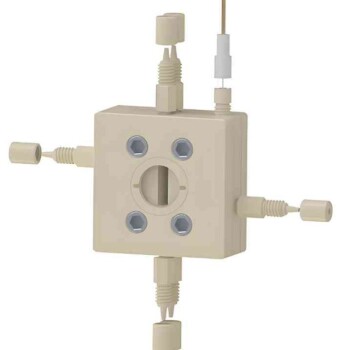
- Visual High-Pressure Reactor for In-Situ Observation
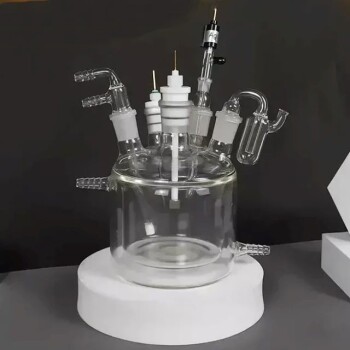
- Super Sealed Electrolytic Electrochemical Cell
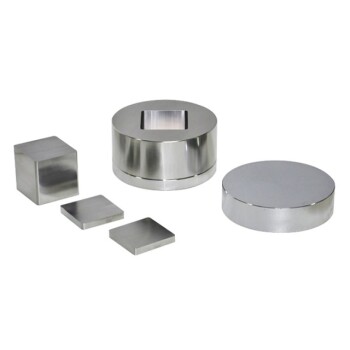
- Ring Press Mold for Lab Applications
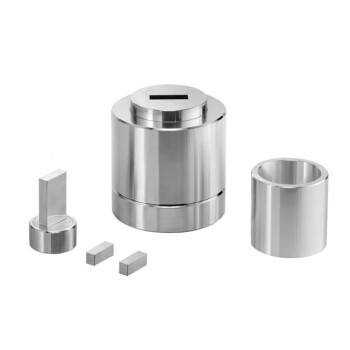
- Cylindrical Press Mold for Lab Applications
- H Type Electrolytic Cell Triple Electrochemical Cell
People Also Ask
- How do high-pressure reactors enhance biochar redox activity? Optimize Surface Functionalization and Energy Density
- What is the purpose of a high-pressure reactor in oleophilic GO modification? Optimize Grafting and Oil Dispersion.
- How does a high-pressure reactor facilitate reductive amidation? Maximize Yield & Speed in Tandem Reactions
- How does a high-pressure reactor assist in catalytic hydrogenation of 2,6-dimethylnitrobenzene? Optimize Your Process
- What is the significance of using a high-pressure reactor for the treatment of rice husk? Boost Furfural Yield & Speed