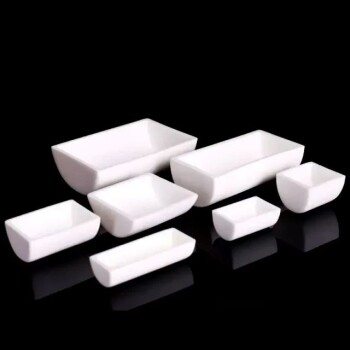
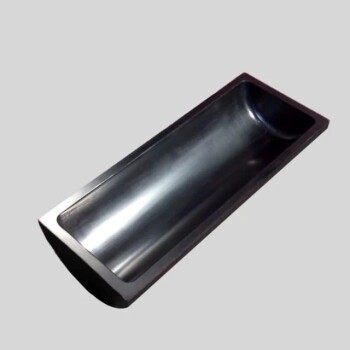
Unglazed porcelain boats are primarily used as chemically inert, high-temperature sample containers that prevent contamination during the pyrolysis of iron-germanium precursors. These vessels ensure that the iron and germanium components do not react with the container walls at temperatures reaching at least 650°C. This stability allows the resulting powder to accurately reflect the true thermal decomposition properties and chemical stoichiometry of the precursor material.
Porcelain boats provide a stable, non-reactive environment that maintains the chemical purity of iron-germanium samples while allowing for the creation of controlled micro-atmospheres necessary for successful pyrolysis.
Ensuring Chemical Purity and Sample Integrity
Prevention of Material Leaching
At high temperatures, many container materials become reactive and can leach impurities into the sample. Unglazed porcelain remains chemically inert, ensuring that no elements from the container migrate into the iron-germanium powder.
Resistance to Thermal Deformity
The boats maintain their structural integrity and shape at temperatures often exceeding 800°C. This prevents the sample from spilling or shifting during the critical phase of bulk pyrolysis in a tube furnace.
Accuracy of Thermal Analysis
Because the boat does not participate in the chemical reaction, the collected data represents the precursor's behavior alone. This ensures that the thermal decomposition characteristics recorded are not skewed by secondary reactions with the vessel.
Control of the Local Reaction Environment
Creating a Controlled Micro-Atmosphere
When used with a lid, a porcelain boat creates a relatively closed local micro-environment. This is essential for preventing the rapid loss of volatile intermediate products, which ensures that the chemical transformation reaches completion.
Shielding from Furnace Impurities
The boat acts as a physical barrier against residual contaminants that may be present on the interior walls of the furnace tube. This shielding results in higher purity end-products, such as hybrid nanosheets, with a more stable crystalline structure.
Protecting the Laboratory Infrastructure
During bulk pyrolysis, precursors can release volatile substances that might damage the furnace tube. Using a porcelain boat, sometimes in conjunction with foil wrapping, helps localize these vapors and reduces the maintenance requirements for the heating equipment.
Understanding the Trade-offs and Limitations
Sensitivity to Thermal Shock
While porcelain is highly heat-resistant, it is a brittle ceramic that is susceptible to cracking if heated or cooled too rapidly. Users must implement controlled heating and cooling ramps to avoid destroying the boat and potentially losing the sample.
Porosity and Cross-Contamination
Unglazed porcelain has a degree of natural porosity that can trap microscopic amounts of chemical precursors. Over multiple runs, this can lead to cross-contamination if the same boat is used for different chemical systems without rigorous cleaning.
Material Compatibility
While inert to iron and germanium, porcelain may react with certain highly caustic fluxes or specific specialized precursors. It is vital to verify the chemical compatibility of the porcelain with all components of the precursor mixture before beginning high-temperature cycles.
Best Practices for Precursor Pyrolysis
To achieve the best results when synthesizing iron-germanium materials, consider the following recommendations based on your specific research or production goals:
- If your primary focus is maximum material purity: Use a new or dedicated unglazed boat for each precursor type to eliminate the risk of pore-based cross-contamination.
- If your primary focus is consistent stoichiometry: Utilize a fitted lid to create a micro-environment that traps volatile intermediates and ensures a complete reaction.
- If your primary focus is furnace longevity: Ensure the boat is properly positioned and consider sacrificial shielding to prevent volatile decomposition products from depositing on the quartz furnace tube.
Selecting the right container is not merely a matter of convenience, but a fundamental requirement for ensuring the chemical validity of your synthesized materials.
Summary Table:
| Feature | Benefit for Bulk Pyrolysis | Key Consideration |
|---|---|---|
| Chemical Inertness | Prevents leaching and maintains precursor stoichiometry. | Ensure compatibility with caustic fluxes. |
| Thermal Stability | Maintains structural integrity at temperatures exceeding 800°C. | Susceptible to rapid thermal shock. |
| Micro-Atmosphere | Lidded boats trap volatile intermediates for complete reactions. | Requires precise fit and placement. |
| Physical Barrier | Protects samples from furnace impurities and protects tubes from vapors. | Porous surface may trap residues. |
| Surface Texture | Unglazed surface provides a stable, non-slip base for powders. | Requires rigorous cleaning between runs. |
Elevate Your Material Synthesis with KINTEK
Precision in pyrolysis requires more than just high temperatures; it demands the right environment. KINTEK provides high-performance laboratory equipment and consumables designed for the most rigorous research standards.
Whether you need chemically inert porcelain boats and crucibles, high-purity ceramics, or advanced tube and vacuum furnaces to execute your thermal cycles, our experts are here to help. We specialize in providing comprehensive solutions—from high-temperature furnaces (muffle, tube, CVD, PECVD) and hydraulic presses to PTFE products and cooling solutions—ensuring your iron-germanium precursors and other sensitive materials achieve maximum purity and consistency.
Ready to optimize your laboratory efficiency? Contact KINTEK today to discover our full range of thermal processing solutions tailored to your specific research needs.
References
- Thomas Büttner, David Scheschkewitz. Single‐Source Precursors for the Chemical Vapor Deposition of Iron Germanides. DOI: 10.1002/ejic.202300433
This article is also based on technical information from Kintek Solution Knowledge Base .
Related Products
- Aluminized Ceramic Evaporation Boat for Thin Film Deposition
- Alumina Al2O3 Ceramic Crucible Semicircle Boat with Lid for Engineering Advanced Fine Ceramics
- Molybdenum Tungsten Tantalum Special Shape Evaporation Boat
- Ceramic Evaporation Boat Set Alumina Crucible for Laboratory Use
- Folding Molybdenum Tantalum Boat With or Without Cover
People Also Ask
- What is the source of evaporation for thin film? Choosing Between Thermal and E-Beam Methods
- Why are high-purity ceramic boats used for lignin activation? Ensure Purity & Thermal Stability
- Why is an alumina boat and Ti3AlC2 powder bed necessary for Ti2AlC sintering? Protect MAX Phase Purity
- Why use an alumina boat for high-temperature carbon activation? Ensure Maximum Material Purity & Thermal Stability
- Why is an alumina boat selected for catalyst precursors? Ensure Sample Purity at 1000 °C