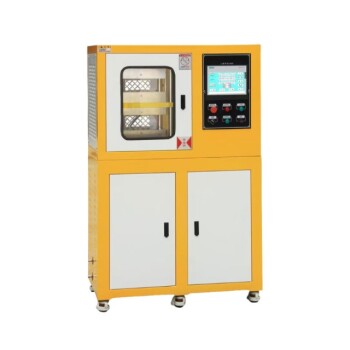
The primary role of a high-pressure reactor in keratin extraction is to generate the extreme conditions necessary to break down the resilient structure of leather waste. By creating a controlled environment of high temperature and pressure, the reactor physically disrupts the chemical bonds between keratin molecules, allowing them to dissolve rapidly into solvents.
Leather waste is naturally resistant to breakdown due to its durable chemical structure. The high-pressure reactor overcomes this by providing a significantly higher energy density than standard heating methods, essential for efficient and rapid keratin recovery.
The Mechanics of Extraction
Creating a Controlled Environment
To extract keratin effectively, you cannot rely on ambient conditions. A high-pressure reactor establishes a controlled environment where both temperature and pressure are elevated simultaneously.
Physical Bond Disruption
The core function of this environment is the physical disruption of chemical bonds. Leather waste holds keratin molecules together tightly; the reactor's conditions force these bonds to break.
Facilitating Dissolution
Once these bonds are disrupted, the keratin becomes accessible. The reactor effectively prepares the molecules, facilitating their dissolution in solvents that would otherwise be ineffective against the intact leather structure.
Why High Pressure is Critical
Superior Energy Density
The primary reference highlights that high-pressure reactors provide a significantly higher energy density compared to atmospheric heating. This intensity is required to penetrate the dense material of leather waste.
Speed and Efficiency
Standard atmospheric heating often lacks the energy required to break stable keratin bonds within a reasonable timeframe. The high-pressure reactor ensures the process is both efficient and rapid, acting as a force multiplier for the extraction process.
Understanding the Operational Context
The Necessity of Control
While powerful, this process relies heavily on precision. The reference emphasizes a controlled environment, implying that maintaining specific temperature and pressure ratios is vital for success.
Beyond Atmospheric Limits
It is important to recognize that this is not merely a "hotter" version of standard heating. It is a fundamental shift in energy application. Methods relying solely on atmospheric heating will likely fail to achieve the bond disruption necessary for high-yield extraction.
Making the Right Choice for Your Goal
To determine if a high-pressure reactor fits your processing needs, consider your specific constraints regarding time and efficiency.
- If your primary focus is process speed: The reactor is essential because it utilizes high energy density to achieve rapid dissolution, bypassing the slow kinetics of atmospheric heating.
- If your primary focus is extraction efficiency: The reactor is required to physically disrupt the robust chemical bonds that prevent solvents from accessing and dissolving the keratin.
Ultimately, the high-pressure reactor is the definitive tool for converting resistant leather waste into soluble keratin through superior energy application.
Summary Table:
| Feature | Role in Keratin Extraction | Benefit |
|---|---|---|
| Energy Density | Provides significantly higher energy than atmospheric heating | Penetrates dense leather fibers |
| Bond Disruption | Physically breaks resilient chemical bonds | Releases keratin from the leather matrix |
| Pressure Control | Creates a stable, high-pressure environment | Allows solvents to work at superheated levels |
| Reaction Speed | Accelerates the dissolution process | Reduces processing time and increases efficiency |
Maximize Your Material Recovery with KINTEK
Transform leather waste into valuable keratin with precision-engineered solutions from KINTEK. As specialists in laboratory equipment, we provide industry-leading high-temperature high-pressure reactors and autoclaves designed to handle the most resilient chemical structures. Whether you are focused on sustainable research or industrial-scale extraction, our portfolio—including crushing systems, high-temperature furnaces, and specialized reactors—ensures superior energy application and process efficiency.
Ready to elevate your extraction yields? Contact us today to consult with our experts on the perfect high-pressure system for your laboratory needs.
References
- Yanchun Li, Deyi Zhu. Research progress on resource utilization of leather solid waste. DOI: 10.1186/s42825-019-0008-6
This article is also based on technical information from Kintek Solution Knowledge Base .
Related Products
- Mini SS High Pressure Autoclave Reactor for Laboratory Use
- Stainless High Pressure Autoclave Reactor Laboratory Pressure Reactor
- Customizable High Pressure Reactors for Advanced Scientific and Industrial Applications
- High Pressure Laboratory Autoclave Reactor for Hydrothermal Synthesis
- Customizable Laboratory High Temperature High Pressure Reactors for Diverse Scientific Applications
People Also Ask
- Why use high-pressure reactors for molecular sieve synthesis? Unlock Superior Crystallinity and Framework Control
- What are the advantages of using a high-pressure reactor like an autoclave? Maximize Liquefaction Speed & Yield
- What is the function of a high-pressure reactor autoclave? Enhancing Cu/N Co-Doped Carbon Catalyst Synthesis
- Why are high-pressure reactors or autoclaves necessary for the synthesis of new functional materials? Unlock Precision.
- How are high-pressure reactors used to prepare metaphosphate electrocatalysts? Master In-Situ Precursor Growth