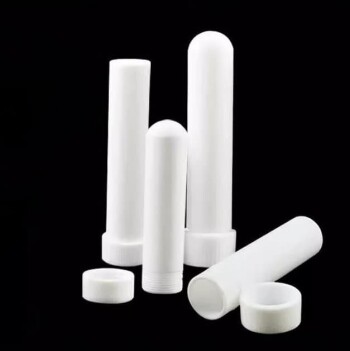
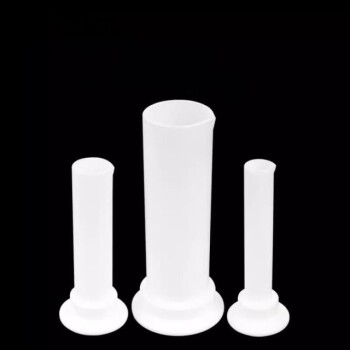
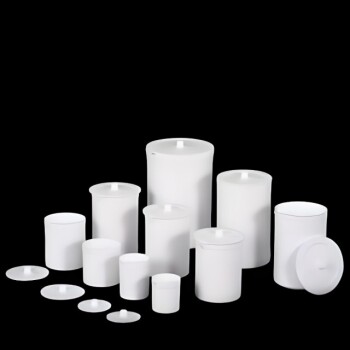
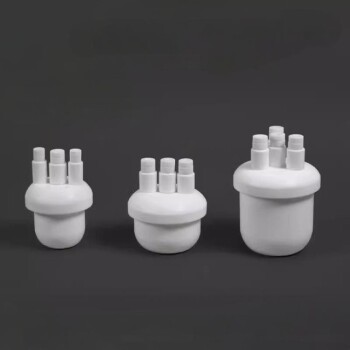
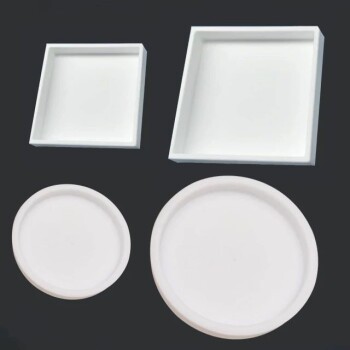
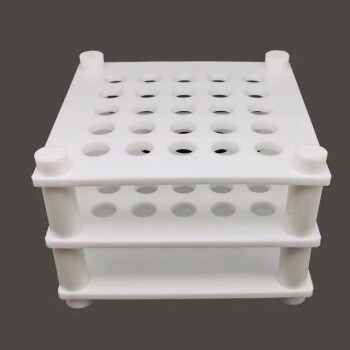
The PTFE-lined high-pressure reactor is the foundational vessel for hydrothermal synthesis. It provides a hermetically sealed environment where elevated temperatures and pressures facilitate the in-situ growth of precursor components into defined nanowire structures on substrates like nickel mesh. By combining the structural strength of a stainless steel shell with the chemical inertness of a PTFE (Polytetrafluoroethylene) liner, the reactor enables subcritical reactions while maintaining the high material purity essential for advanced nanomaterials.
A PTFE-lined reactor creates a controlled, high-energy environment that accelerates reaction kinetics and morphology control while preventing metallic contamination through its chemically inert internal lining.
The Power of the Pressurized Environment
Achieving Subcritical Conditions
The primary function of the high-pressure reactor (or autoclave) is to allow solvents—typically water or organic liquids—to reach temperatures well above their boiling points. Under these sealed conditions, the solvent enters a subcritical state, significantly increasing its ability to dissolve precursors and induce complexation reactions.
Accelerating Reaction Kinetics
The high-pressure environment significantly enhances the solubility of precursors and accelerates the chemical reaction kinetics. This allows for the crystallization of complex structures, such as perovskite oxides or Fe2O3 nanotubes, at much lower temperatures than traditional solid-state methods.
Controlling Nanowire Morphology
The reactor provides the stability needed for directional control over crystal growth. By maintaining constant temperature and pressure, the system ensures that precursor components grow into specific morphologies, such as nanorods, nanowires, or nanospheres, with precise particle size distribution.
The Critical Role of the PTFE Liner
Chemical Inertness and Corrosion Resistance
The PTFE liner is essential because the reaction solutions often contain strong electrolytes, metal salts, or acidic/alkaline products. PTFE offers exceptional chemical stability, shielding the outer metal shell from these corrosive agents during the synthesis process.
Safeguarding Precursor Purity
Without the liner, the metal reactor body could leach iron, nickel, or other metallic impurities into the solution. The PTFE barrier ensures that the synthesized nanowires or electrocatalysts maintain high purity, which is critical for their performance in electrochemical applications.
Preventing In-situ Contamination
In processes where nanowires grow directly on a substrate (like nickel mesh), the liner prevents the reaction environment from being altered by unintended side reactions with the reactor walls. This ensures that the morphology and regularity of the nanotubes or nanowires remain consistent.
The Engineering of Safety and Integrity
The Stainless Steel Shell
While the PTFE liner provides chemical protection, it lacks the mechanical strength to withstand high internal pressures. The external stainless steel shell provides the necessary structural integrity to ensure the system remains safe and intact during high-pressure cycles.
Sealing and Pressure Retention
The reactor design ensures a hermetic seal, preventing the escape of vapors and maintaining the internal pressure required for the hydrothermal reaction. This containment is what allows the "pressure cooker" effect that drives the synthesis of precursor nanostructures.
Understanding the Trade-offs and Limitations
Temperature Constraints
The most significant limitation of a PTFE liner is its thermal threshold, typically capped at 220°C to 250°C. Exceeding these temperatures can cause the PTFE to soften, deform, or release toxic fumes, limiting the reactor's use to low-to-medium temperature hydrothermal processes.
Thermal Lag and Heating Rates
The PTFE liner acts as an insulator, which can create a thermal lag between the external heating element and the internal reaction solution. This must be accounted for when timing reactions or attempting to achieve rapid temperature ramps for specific nucleation events.
Pressure Limitations and Deformation
Repeated use at high pressures can lead to the "creep" or deformation of the PTFE liner, especially if the cooling process is too rapid. If the liner loses its shape, it may compromise the seal or become difficult to remove from the stainless steel shell.
Applying This to Your Synthesis Goals
To achieve the best results in your hydrothermal synthesis, you must align your reactor parameters with your specific material requirements.
- If your primary focus is high material purity: Ensure your PTFE liner is thoroughly cleaned with acid between uses to remove any residual metal ions or precursors from previous runs.
- If your primary focus is morphology control (e.g., nanowires): Maintain a strict constant temperature for the duration of the reaction to ensure consistent crystal growth rates across the substrate.
- If your primary focus is synthesis efficiency: Utilize the reactor to perform reactions at lower temperatures than solid-state methods, taking advantage of the accelerated kinetics provided by the subcritical solvent.
The PTFE-lined high-pressure reactor remains the industry standard for synthesizing high-purity precursor nanowires through controlled, low-temperature hydrothermal paths.
Summary Table:
| Component/Feature | Primary Function | Key Benefit for Nanowires |
|---|---|---|
| PTFE Liner | Chemical inertness & corrosion resistance | Ensures material purity; prevents metallic leaching |
| Stainless Steel Shell | Mechanical strength & structural integrity | Maintains safety during high-pressure cycles |
| Hermetic Seal | Vapour containment | Enables subcritical states for faster reaction kinetics |
| Pressure Environment | Increases precursor solubility | Precise control over crystal morphology and size |
| Thermal Stability | Consistent heating up to 250°C | Stable environment for uniform nanowire growth |
Elevate Your Material Synthesis with KINTEK Precision
Are you aiming for unmatched purity and structural control in your nanomaterial research? KINTEK specializes in high-performance laboratory equipment designed to meet the rigorous demands of modern science. Our premium high-temperature high-pressure reactors and autoclaves provide the perfect hermetic environment for hydrothermal synthesis, ensuring your precursor nanowires grow with precision and zero contamination.
From high-temperature furnaces and crushing systems to our specialized PTFE-lined reactors and electrolytic cells, KINTEK delivers the reliability that researchers and industrial labs trust. Let us help you optimize your reaction kinetics and achieve superior morphology control.
Ready to upgrade your lab's capabilities? Contact our specialists today to find the ideal reactor solution!
References
- Jie Zhang, Donggang Guo. Interfacial microenvironment modulation enhancing catalytic kinetics of CoNiP@NiFe LDH heterostructures for highly efficient oxygen evolution reaction. DOI: 10.1039/d3ra05717h
This article is also based on technical information from Kintek Solution Knowledge Base .
Related Products
- Custom PTFE Teflon Parts Manufacturer for Hydrothermal Synthesis Reactor Polytetrafluoroethylene Carbon Paper and Carbon Cloth Nano-growth
- Custom PTFE Teflon Parts Manufacturer for Reagent Wide Mouth Fine Mouth Sample High Temperature Bottles
- Stainless High Pressure Autoclave Reactor Laboratory Pressure Reactor
- Customizable High Pressure Reactors for Advanced Scientific and Industrial Applications
- Custom PTFE Teflon Parts Manufacturer for Microwave Digestion Tank
People Also Ask
- What is the function of a PTFE reactor in MXene etching? Ensure Safe, High-Purity MAX Phase Conversion
- Why is a PTFE reactor required for titanium-based nano-ceramic coating solutions? Ensure Chemical Inertness & Purity
- Why must a Polytetrafluoroethylene (PTFE) reactor be used for Ti3C2TX MXene etching? Ensure Safety and Purity
- Why are PTFE reactors preferred for silver phosphate glass testing? Ensure Purity and Kinetic Accuracy
- What are the advantages of using polytetrafluoroethylene (PTFE) liners in hydrothermal synthesis reactors? High Purity