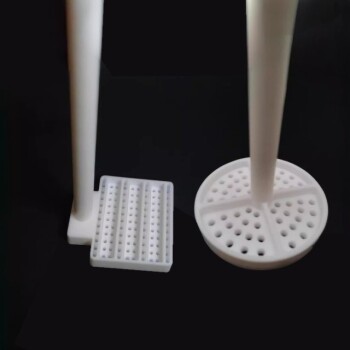
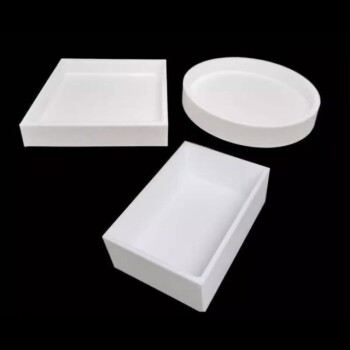
The Teflon-lined high-pressure reactor is the fundamental tool for the solvothermal synthesis of Cu/In-MOF nanorod arrays. It provides a sealed, high-temperature, and high-pressure environment that enables metal ions and organic ligands to overcome energy barriers and coordinate effectively. This specialized environment facilitates the self-assembled growth of precursors onto substrates, such as FTO conductive glass, while the Teflon lining ensures the final material remains free from metallic contamination.
A Teflon-lined high-pressure reactor serves as a controlled pressure vessel that drives the nucleation and oriented growth of nanostructures. By maintaining autogenous pressure and providing a chemically inert interior, it ensures the production of high-purity metal-organic frameworks with uniform morphology.
Driving Synthesis Through Solvothermal Environments
Generating Autogenous Pressure
The reactor creates a closed system where heating the solvent beyond its boiling point generates autogenous pressure. This pressure significantly enhances the solubility and reactivity of copper and indium precursors, which is essential for the formation of complex framework structures.
Overcoming Kinetic Energy Barriers
Under these high-temperature and high-pressure conditions, the reactants gain enough energy to undergo coordination and assembly. This allows the copper sources, indium sources, and organic ligands to organize into stable, crystalline MOF structures that would not form under standard atmospheric conditions.
Facilitating Oriented Crystal Growth
The stable environment within the reactor promotes oriented growth on specific crystal planes. This is critical for the synthesis of nanorod arrays, as it ensures the MOF grows vertically and uniformly from the surface of the FTO substrate.
The Critical Role of the Teflon Lining
Prevention of Metal Ion Contamination
The Teflon (PTFE) liner is prized for its chemical inertness, acting as a physical barrier between the reaction solution and the stainless steel reactor shell. This prevents the steel's iron, nickel, or chromium from leaching into the solution and compromising the purity of the Cu/In-MOF.
Resistance to Corrosive Solvents
Many solvothermal reactions involve aggressive organic ligands or acidic/alkaline solvents that can damage metal surfaces. The Teflon lining is resistant to a wide range of corrosive chemicals, ensuring the reactor remains intact throughout long synthesis cycles.
Enhancing Morphological Uniformity
Because the liner provides a clean and non-reactive surface, it minimizes unintended secondary nucleation sites. This focus on the intended substrate allows for the formation of uniform morphology and a high specific surface area across the nanorod array.
Understanding the Trade-offs and Limitations
Temperature Constraints
While Teflon is highly inert, it has a physical limit; it typically begins to soften or release toxic fumes if temperatures exceed 250°C. For syntheses requiring extreme heat, alternative liners or specialized reactor designs must be used to avoid structural failure.
Pressure Safety Hazards
The build-up of autogenous pressure is essential for growth but poses a significant safety risk if not monitored. Overfilling the Teflon liner—typically beyond 80% capacity—can lead to excessive pressure that may cause the stainless steel outer shell to fail or the liner to deform.
Thermal Lag and Cooling Rates
The thick walls of the stainless steel shell and the insulating properties of the Teflon liner can create a thermal lag. This means the internal temperature of the reaction solution may take significant time to stabilize or cool, which can impact the consistency of crystal nucleation between different batches.
How to Apply This to Your Synthesis Project
Optimizing Your Experimental Results
When utilizing a Teflon-lined reactor for MOF synthesis, your approach should vary based on your specific material requirements and laboratory setup.
- If your primary focus is material purity: Always ensure the Teflon liner is thoroughly cleaned with acid between uses to remove residual metal ions that could act as unintended catalysts.
- If your primary focus is nanorod alignment: Precisely control the heating ramp rate and the fill level of the reactor to maintain consistent autogenous pressure throughout the growth phase.
- If your primary focus is equipment longevity: Never exceed the manufacturer's maximum temperature rating for the Teflon liner to prevent permanent deformation and potential safety leaks.
By mastering the high-pressure solvothermal environment, researchers can achieve the precise molecular engineering required to produce high-performance Cu/In-MOF nanostructures.
Summary Table:
| Feature | Role in MOF Synthesis | Critical Consideration |
|---|---|---|
| Teflon Lining | Prevents metallic contamination & resists corrosion | Temp limit < 250°C to avoid deformation |
| Sealed Shell | Generates autogenous pressure for precursor solubility | Fill capacity limit (< 80%) for safety |
| High-Pressure | Overcomes kinetic energy barriers for assembly | Risk of pressure hazards if unmonitored |
| Stable Environment | Facilitates oriented growth of nanorod arrays | Thermal lag due to insulating properties |
Elevate Your Solvothermal Synthesis with KINTEK
Advance your material science research with KINTEK’s high-pressure reactors and autoclaves, specifically engineered for the precise synthesis of Cu/In-MOF nanorod arrays. Our Teflon-lined vessels provide the chemically inert, high-pressure environment essential for achieving superior purity and oriented crystal growth.
Why choose KINTEK?
- Comprehensive Laboratory Range: Beyond reactors, we offer high-temperature furnaces (muffle, vacuum, CVD, dental), hydraulic presses, and crushing systems.
- Precision Consumables: High-quality PTFE products, ceramics, and crucibles designed for extreme conditions.
- Specialized Research Tools: From battery research tools to cooling solutions (ULT freezers, freeze dryers) and homogenizers.
Ready to optimize your lab’s efficiency and experimental outcomes? Contact us today to discuss your specific requirements and explore our full portfolio of high-performance laboratory equipment!
References
- Cheng Wang, Shikuo Li. Regulating the Charge Migration in CuInSe<sub>2</sub>/N‐Doped Carbon Nanorod Arrays via Interfacial Engineering for Boosting Photoelectrochemical Water Splitting. DOI: 10.1002/advs.202300034
This article is also based on technical information from Kintek Solution Knowledge Base .
Related Products
- Custom PTFE Teflon Parts Manufacturer for Reagent Wide Mouth Fine Mouth Sample High Temperature Bottles
- Custom PTFE Teflon Parts Manufacturer for Hydrothermal Synthesis Reactor Polytetrafluoroethylene Carbon Paper and Carbon Cloth Nano-growth
- Custom PTFE Teflon Parts Manufacturer for Microwave Digestion Tank
- Stainless High Pressure Autoclave Reactor Laboratory Pressure Reactor
- Customizable High Pressure Reactors for Advanced Scientific and Industrial Applications
People Also Ask
- What makes PTFE bottles suitable for static leaching? Ensure Zero-Contamination for Glass Testing
- Why Use PTFE Sample Bottles for Coal Demineralization? Ensure Chemical Stability and Data Integrity
- Why are PTFE containers necessary for selective HF etching of MAX phases? Ensure Safe & Pure MXene Synthesis
- Why use high-quality PTFE containers for CO2 reduction electrolytes? Eliminate silicon contamination and ensure data.
- Why is a PTFE container required for acid leaching of silicon nanosheets? Ensure High Purity and Safety