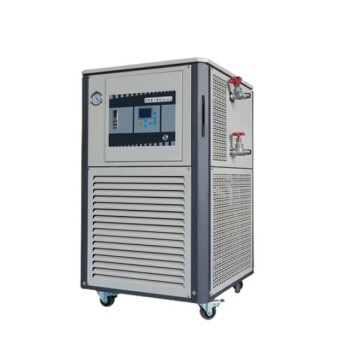
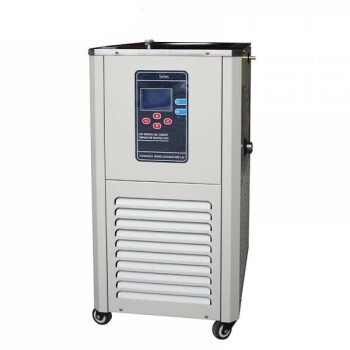
The primary role of a temperature-controlled reactor in the synthesis of 4A Zeolite is to establish a precise, stable, and enclosed thermodynamic environment. By maintaining the hydrothermal reaction specifically at 90°C, the reactor ensures that silicon and aluminum sources undergo thorough ion exchange and crystallization within a sodium hydroxide solution.
Core Insight: The reactor's function extends beyond simple heating; it acts as a structural gatekeeper. Precise thermal regulation at 90°C is the critical variable that guarantees the resulting zeolite achieves a silicon-to-aluminum ratio of approximately 2, creating the specific three-dimensional microporous framework required for high-performance applications.
The Mechanics of Hydrothermal Synthesis
Creating a Stable Thermodynamic Environment
The synthesis of 4A Zeolite is sensitive to environmental fluctuations. The reactor provides a closed system that isolates the chemical mixture from external variables.
By maintaining a consistent internal environment, the reactor ensures that the thermodynamic conditions remain uniform throughout the process. This stability is essential for the reproducible formation of crystalline structures.
Facilitating Ion Exchange
Inside the reactor, the raw materials—silicon and aluminum sources—are submerged in a sodium hydroxide (alkaline) solution.
The controlled heat drives the ion exchange process between these sources. This chemical interaction is the fundamental step that allows the amorphous raw materials to reorganize into ordered structures.
Driving Crystallization
Once the ions are exchanging, the reactor's sustained temperature promotes crystallization.
This phase transforms the liquid and solid mixture into a solid crystal lattice. Without the sustained thermal energy provided by the reactor, the transformation would likely remain incomplete or structurally unsound.
Why Temperature Precision Matters
Achieving the Target Chemical Ratio
For 4A Zeolite specifically, the chemical goal is a silicon-to-aluminum ratio (Si/Al) of approximately 2.
The reactor's ability to hold the temperature at exactly 90°C is what facilitates this specific stoichiometric balance. Deviations in temperature could lead to different ratios, resulting in a different type of zeolite or an impure product.
Forming the 3D Microporous Framework
The ultimate physical goal is to create a structured, three-dimensional microporous framework.
This specific architecture is what gives 4A Zeolite its value as a physical carrier for nanoparticle loading. The reactor's controlled environment ensures the pores form correctly and consistently, maximizing the material's utility.
Understanding the Operational Parameters
The Necessity of a Sealed System
While temperature is the primary variable, the enclosed nature of the reactor is equally vital.
As noted in broader zeolite synthesis contexts, these reactors seal the alkaline environment. This prevents the loss of volatile components and maintains the necessary concentration of the sodium hydroxide solution throughout the reaction.
Pressure Capabilities
Although 4A Zeolite is synthesized at 90°C, the reactor used is often a high-pressure laboratory vessel.
These reactors are capable of withstanding pressures from 1 to 15 bar and temperatures up to 150°C. While 4A synthesis may not push these upper limits, the vessel's robust design ensures safety and containment during the potentially long crystallization periods (24 to 96 hours).
Optimizing Your Synthesis Setup
To ensure you achieve high-quality 4A Zeolite, align your equipment capabilities with your specific chemical goals.
- If your primary focus is Structural Purity: Ensure your reactor has a PID or similar high-precision controller to lock the temperature at exactly 90°C, as fluctuations will alter the critical Si/Al ratio.
- If your primary focus is Nanoparticle Loading: Verify that your synthesis duration allows for full crystallization to ensure the 3D framework is robust enough to serve as a physical carrier.
Precision in the reactor yields precision in the crystal lattice.
Summary Table:
| Parameter | Specification for 4A Zeolite | Reactor Role |
|---|---|---|
| Temperature | Exactly 90°C | Drives ion exchange and prevents impurity phases |
| Environment | Alkaline (NaOH Solution) | Sealed system maintains molar concentration |
| Si/Al Ratio | Approximately 2.0 | Precision control ensures stoichiometric balance |
| Timeframe | 24 - 96 Hours | Sustained thermodynamic stability for crystallization |
| Pressure | 1 - 15 Bar Capability | Safety and containment of volatile alkaline mixtures |
Elevate Your Material Synthesis with KINTEK Precision
Achieving the perfect 3D microporous framework for 4A Zeolite requires more than just heat—it requires the absolute thermodynamic control provided by KINTEK’s high-temperature high-pressure reactors and autoclaves.
Whether you are focusing on nanoparticle loading or complex ion exchange, our specialized laboratory equipment ensures reproducible results for the most demanding research. KINTEK provides a comprehensive range of solutions including:
- High-Performance Reactors: Precision-controlled muffle, tube, and vacuum furnaces.
- Material Processing: Advanced crushing, milling, and hydraulic pellet presses.
- Lab Essentials: High-purity ceramics, PTFE consumables, and cooling solutions.
Ready to optimize your crystallization process? Contact our technical experts today to find the ideal reactor configuration for your laboratory.
References
- Maryam Azizi‐Lalabadi, Mahmood Alizadeh Sani. Antimicrobial activity of Titanium dioxide and Zinc oxide nanoparticles supported in 4A zeolite and evaluation the morphological characteristic. DOI: 10.1038/s41598-019-54025-0
This article is also based on technical information from Kintek Solution Knowledge Base .
Related Products
- High Pressure Laboratory Autoclave Reactor for Hydrothermal Synthesis
- Customizable Laboratory High Temperature High Pressure Reactors for Diverse Scientific Applications
- Custom PTFE Teflon Parts Manufacturer for Hydrothermal Synthesis Reactor Polytetrafluoroethylene Carbon Paper and Carbon Cloth Nano-growth
- Electric Rotary Kiln Small Rotary Furnace Biomass Pyrolysis Plant
- Customizable High Pressure Reactors for Advanced Scientific and Industrial Applications
People Also Ask
- What role does a high-pressure reactor (autoclave) play in the synthesis of NiCuFe-LDH? Master Hydrothermal Growth
- What Role Does a High-Pressure Reactor or Autoclave Play in HA Catalyst Synthesis? Achieve High Surface Area Materials
- What equipment is required for hydrothermal synthesis of Ga0.25Zn4.67S5.08? Optimize Your Semiconductor Production
- What is the function of a high-pressure reactor in the hydrothermal synthesis of boehmite? Expert Process Insights
- What role does an autoclave play in the synthesis of MnO2 nanofibers? Mastering Hydrothermal Growth