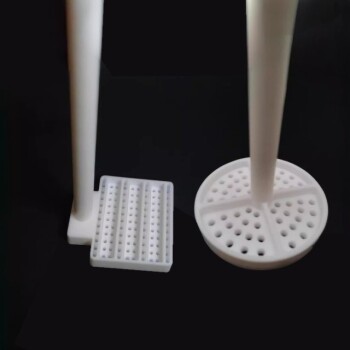
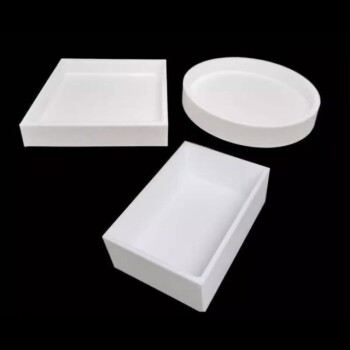
The Teflon-lined high-pressure reactor is the essential vessel that creates the subcritical environment required to transform colloidal precursors into the crystalline $H_{1.6}Mn_{1.6}O_4$ structure. By maintaining a sealed system at 120 °C for 24 hours, the reactor generates internal autogenous pressure that drives deep physicochemical changes. This specific environment is the only way to ensure the formation of the highly selective adsorption channels necessary for lithium-ion recovery.
The reactor functions as a controlled pressurized chamber that facilitates the dissolution and recrystallization of raw materials into a precise crystalline phase. Its design ensures that the resulting lithium-ion sieve precursor possesses the structural integrity and chemical purity required for high-performance ion exchange.
The Mechanics of Hydrothermal Synthesis
Generating Autogenous Pressure
The reactor creates a sealed environment where the internal pressure rises naturally as the temperature reaches 120 °C. This autogenous pressure allows the reaction solution to reach states that would be impossible at atmospheric pressure.
Driving Physicochemical Transformation
Under these pressurized conditions, the colloidal substances in the solution undergo a "deep transformation." The pressure forces the reactants to interact at a molecular level, facilitating the growth of a specific crystalline structure that serves as the foundation for the ion sieve.
Establishing Selective Adsorption Channels
The primary goal of using this reactor is to create lithium-selective channels. The high-pressure hydrothermal process ensures these channels are uniform and structurally sound, which directly dictates the final product's ability to capture lithium ions from complex solutions.
The Critical Role of the Teflon (PTFE) Liner
Ensuring Chemical Inertness
The Teflon (polytetrafluoroethylene) liner provides a completely inert surface that does not react with the precursor chemicals. This is vital for preventing the introduction of metallic impurities that could compromise the electrochemical performance of the $H_{1.6}Mn_{1.6}O_4$ precursor.
Superior Corrosion Resistance
Hydrothermal reactions often involve aggressive precursors or acidic environments that would quickly degrade a standard metal vessel. The Teflon liner acts as a protective barrier, shielding the outer stainless steel shell from corrosion and ensuring the longevity of the equipment.
Promoting Uniform Nucleation
The smooth, non-stick surface of the PTFE liner helps maintain a consistent environment for crystal growth. This prevents the precursor from adhering to the walls, ensuring that the nucleation and growth of the nanostructures occur uniformly throughout the liquid phase.
Understanding the Trade-offs
Temperature Limitations
While Teflon is exceptionally stable, it has a functional upper temperature limit, typically around 250 °C. Exceeding these temperatures can lead to the mechanical deformation of the liner, which risks leaking corrosive fluids into the stainless steel shell.
Pressure Sensitivity
The reactor relies on the strength of the external stainless steel jacket to contain the pressure generated during the 24-hour cycle. If the filling degree of the solvent is too high, the resulting pressure can exceed the safety rating of the vessel, leading to equipment failure.
Batch Consistency Challenges
Hydrothermal synthesis is a batch process, meaning small variations in the heating rate or cooling cycle can affect the crystallinity of the precursor. Achieving perfect reproducibility requires strict adherence to the 120 °C temperature setpoint and the 24-hour duration.
Applying This to Your Synthesis Process
Making the Right Choice for Your Goal
- If your primary focus is high purity: Ensure the Teflon liner is thoroughly cleaned and inspected for pits or scratches that could harbor contaminants from previous batches.
- If your primary focus is structural precision: Maintain a consistent filling ratio (typically 60-80%) inside the liner to ensure the autogenous pressure remains within the optimal range for crystal growth.
- If your primary focus is safety and durability: Regularly inspect the stainless steel outer shell for signs of stress or corrosion that may occur if the liner's seal is compromised.
By mastering the high-pressure hydrothermal environment, you ensure that the $H_{1.6}Mn_{1.6}O_4$ precursor achieves the exact crystalline architecture required for efficient lithium-ion extraction.
Summary Table:
| Feature | Specification/Role in Synthesis |
|---|---|
| Core Function | Creates subcritical environment for precursor transformation |
| Operating Temp | 120 °C (Optimal for $H_{1.6}Mn_{1.6}O_4$ formation) |
| Duration | 24 Hours (Ensures complete recrystallization) |
| Liner Material | PTFE (Teflon) for chemical inertness and corrosion resistance |
| Pressure Type | Autogenous (Self-generated via heating) |
| Final Product | High-purity lithium-selective adsorption channels |
Elevate Your Material Synthesis with KINTEK
Precision is non-negotiable when synthesizing high-performance lithium-ion sieve precursors. KINTEK specializes in advanced laboratory equipment designed to withstand the rigorous demands of hydrothermal synthesis.
Whether you need high-temperature high-pressure reactors and autoclaves with reliable PTFE liners or sophisticated muffle, tube, and vacuum furnaces, we provide the tools necessary for uniform nucleation and structural integrity. Our comprehensive portfolio also includes:
- Hydraulic presses (pellet, hot, isostatic) for material preparation.
- Crushing, milling, and sieving equipment for precursor processing.
- Electrolytic cells and electrodes for electrochemical testing.
- Cooling solutions and high-purity consumables like ceramics and crucibles.
Don't let equipment limitations compromise your research results. Partner with KINTEK for durable, high-performance solutions tailored to your lab's needs.
Contact us today to find the perfect reactor for your synthesis!
References
- Hua Wang, Rong Cui. Recovery of Li and Co in Waste Lithium Cobalt Oxide-Based Battery Using H1.6Mn1.6O4. DOI: 10.3390/molecules28093737
This article is also based on technical information from Kintek Solution Knowledge Base .
Related Products
- Custom PTFE Teflon Parts Manufacturer for Reagent Wide Mouth Fine Mouth Sample High Temperature Bottles
- Custom PTFE Teflon Parts Manufacturer for Hydrothermal Synthesis Reactor Polytetrafluoroethylene Carbon Paper and Carbon Cloth Nano-growth
- Custom PTFE Teflon Parts Manufacturer for Microwave Digestion Tank
- Stainless High Pressure Autoclave Reactor Laboratory Pressure Reactor
- Customizable High Pressure Reactors for Advanced Scientific and Industrial Applications
People Also Ask
- What makes PTFE bottles suitable for static leaching? Ensure Zero-Contamination for Glass Testing
- Why Use PTFE Sample Bottles for Coal Demineralization? Ensure Chemical Stability and Data Integrity
- Why are PTFE containers necessary for selective HF etching of MAX phases? Ensure Safe & Pure MXene Synthesis
- Why use high-quality PTFE containers for CO2 reduction electrolytes? Eliminate silicon contamination and ensure data.
- Why is a PTFE container required for acid leaching of silicon nanosheets? Ensure High Purity and Safety