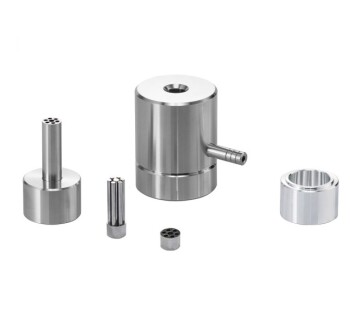
The sealed high-pressure reactor serves as the critical containment vessel that enables the solvothermal synthesis of Covalent Organic Frameworks (COFs). It functions by maintaining a closed system that allows the reaction mixture—specifically precursors like 2,5-dihydroxyterephthalic acid and triaminoguanidine hydrochloride in a solvent blend—to be heated to a constant 120°C, generating the necessary autogenous pressure to drive the formation of the framework over an extended 72-hour period.
The reactor’s primary role is to create a stable, pressurized environment where solvents can exist above their normal boiling points, facilitating the precise condensation reactions required to construct highly crystalline framework structures.
Creating the Solvothermal Environment
Overcoming Solvent Limitations
In standard laboratory glassware, heating a solvent mixture of 1,4-dioxane and water would be limited by the boiling point of the liquid.
The sealed reactor circumvents this by hermetically sealing the system. This allows the internal temperature to be maintained at 120°C without the loss of solvent through evaporation.
Generating Autogenous Pressure
As the temperature rises within the confined volume of the reactor, the vapor pressure of the solvent increases.
This generates "autogenous pressure," a self-generated pressure derived entirely from the heating of the sealed contents. This pressure is essential for facilitating chemical interactions that might be kinetically unfavorable at atmospheric pressure.
Facilitating Framework Assembly
Driving the Condensation Reaction
The synthesis of COF materials, such as COF-Cl, relies on a condensation reaction between organic building blocks.
The reactor provides the thermal energy and pressurized containment necessary to sustain this reaction. By maintaining these conditions for a specific duration (typically 72 hours), the reactor ensures the reaction proceeds to completion.
Ensuring Specific Crystallinity
The ultimate goal of COF synthesis is not just polymerization, but the formation of an ordered, crystalline lattice.
The stable, constant-temperature environment provided by the reactor is crucial for regulating the arrangement of the framework. It promotes the orderly assembly of the structure, ensuring the final material possesses the specific crystallinity and pore architecture required for its application.
Controlling Reaction Kinetics
While the primary focus is on containment and temperature, the high-pressure environment also influences diffusion rates within the liquid medium.
Although specific diffusion parameters vary by material, the closed system generally allows for a controlled "dissolution-recrystallization" mechanism. This regulation helps prevent the rapid precipitation of amorphous solids, favoring the growth of well-defined crystals instead.
Understanding the Operational Trade-offs
Process Visibility vs. Control
The sealed nature of the reactor is excellent for maintaining thermodynamic conditions, but it creates a "black box" environment.
You cannot visually monitor the reaction progress or intervene once the process begins without disrupting the internal atmosphere. This requires precise calculation of precursor ratios and strict adherence to time profiles (e.g., the 72-hour cycle).
Safety and Pressure Management
The generation of autogenous pressure introduces safety considerations not present in open reflux systems.
The reactor must be rated to withstand pressures significantly higher than the expected vapor pressure of the 1,4-dioxane/water mixture at 120°C to prevent mechanical failure.
Making the Right Choice for Your Goal
To optimize your COF synthesis, consider how the reactor parameters align with your objectives:
- If your primary focus is High Crystallinity: Prioritize the stability of the temperature control; even minor fluctuations during the 72-hour incubation can lead to structural defects.
- If your primary focus is Reaction Yield: Ensure the reactor volume is appropriate for the solvent load; too much headspace can reduce the effective autogenous pressure, potentially slowing the condensation rate.
The high-pressure reactor is not merely a container; it is a thermodynamic tool that forces organic precursors to organize into complex, crystalline architectures that would be impossible to form under standard atmospheric conditions.
Summary Table:
| Feature | Role in COF Synthesis | Benefit |
|---|---|---|
| Sealed Containment | Prevents solvent evaporation at 120°C | Maintains reaction stoichiometry and volume |
| Autogenous Pressure | Self-generated vapor pressure | Drives kinetically demanding condensation reactions |
| Thermal Stability | Consistent 72-hour heating | Ensures highly ordered crystalline lattice formation |
| Closed System | Controlled dissolution-recrystallization | Minimizes amorphous solids for well-defined pores |
Elevate Your Material Synthesis with KINTEK Precision
To achieve the high crystallinity and precise pore architecture required for advanced Covalent Organic Frameworks (COFs), your lab needs reliable thermodynamic control. KINTEK specializes in high-performance laboratory equipment designed for the most demanding solvothermal processes.
Our extensive portfolio includes:
- High-Temperature High-Pressure Reactors & Autoclaves for stable autogenous pressure.
- Muffle, Tube, and Vacuum Furnaces for precise thermal processing.
- Crushing, Milling, and Pelleting Systems for precursor preparation.
- Specialized Consumables including high-purity ceramics, crucibles, and PTFE products.
Whether you are conducting battery research or developing new catalysts, KINTEK provides the tools necessary for repeatable, high-yield results. Contact us today to optimize your lab's synthesis capabilities!
Related Products
- Stainless High Pressure Autoclave Reactor Laboratory Pressure Reactor
- Mini SS High Pressure Autoclave Reactor for Laboratory Use
- High Pressure Laboratory Autoclave Reactor for Hydrothermal Synthesis
- Customizable High Pressure Reactors for Advanced Scientific and Industrial Applications
- Customizable Laboratory High Temperature High Pressure Reactors for Diverse Scientific Applications
People Also Ask
- Why is a laboratory high-pressure reactor used in the hydrothermal synthesis of hydroxyapatite catalysts?
- Why is a laboratory high-pressure reactor necessary for synthesizing fly ash-based zeolite? Achieve Pure Crystallization
- What role does a laboratory high-pressure reactor play in the leaching process of spent cathode materials? Optimize Recovery
- What conditions do laboratory high-pressure reactors provide for HTC? Optimize Your Biochar Production Processes
- How are high-pressure reactors used to prepare metaphosphate electrocatalysts? Master In-Situ Precursor Growth