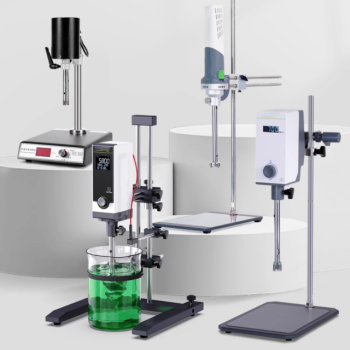
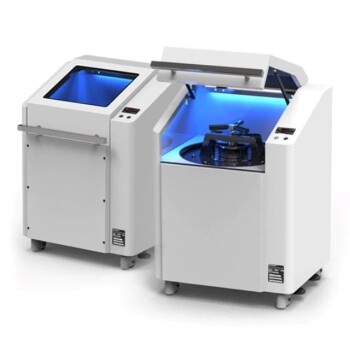
Laboratory shakers and bioreactors act as precision-controlled incubation systems that provide the essential physical conditions for bio-leaching. By delivering precise constant temperature control and continuous mechanical oscillation, these devices ensure a steady oxygen supply and uniform nutrient distribution. This optimized environment enables heterotrophic fungi to thrive, metabolize effectively, and drive the chemical processes necessary for metal extraction.
The core function of this equipment is to maintain metabolic stability. By optimizing the growth environment, you maximize the secretion of organic acids, which is the primary mechanism for the environmentally friendly extraction of rare earth ions from red mud.
Optimizing the Microbial Environment
To successfully extract metals from red mud using bio-leaching, you must prioritize the biological health of the organism. The equipment is designed to stabilize two fundamental variables.
Precise Temperature Control
Heterotrophic fungi, such as Aspergillus niger, require specific thermal conditions to maintain metabolic rates. Laboratory shakers and bioreactors maintain a constant temperature, eliminating fluctuations that could stress the microorganisms or stall growth.
Mechanical Oscillation
The system provides continuous mechanical shaking or agitation. This physical movement prevents the sedimentation of solids and ensures the liquid culture remains in constant motion.
Enhancing Mass Transfer
The efficiency of bio-leaching is directly tied to how well resources move through the system. Static environments are insufficient for this process; dynamic interaction is required.
Steady Oxygen Supply
Fungal metabolism in this context is aerobic. The continuous shaking facilitates gas exchange, ensuring oxygen is consistently dissolved into the liquid medium and available to the microorganisms.
Uniform Nutrient Distribution
Without agitation, nutrients would settle, creating localized zones of starvation. Mechanical oscillation keeps the culture homogenous, ensuring that nutrients are evenly distributed and accessible to every fungal cell.
The Mechanism of Extraction
The physical conditions provided by the equipment exist to serve a specific biochemical end goal. The hardware supports the software (the biology).
Promoting Organic Acid Secretion
When temperature and mass transfer are optimized, the fungi reach an ideal metabolic state. This results in the maximum secretion of organic acids, the active agents in this process.
Complexation with Rare Earth Ions
These secreted organic acids interact chemically with the red mud. They complex with rare earth ions, effectively separating them from the waste material in a "green" extraction process.
Critical Process Dependencies
While the equipment provides the necessary conditions, understanding the relationship between these variables is critical for experimental success.
The Necessity of Consistency
The process relies on stability. Any interruption in mechanical oscillation immediately impacts oxygen levels, potentially forcing the culture into an anaerobic state where bio-leaching cannot occur.
The Link Between Metabolism and Yield
There is a direct linear relationship between environmental control and extraction efficiency. If the equipment fails to maintain uniform nutrient distribution, acid secretion drops, and the recovery of rare earth ions will decrease proportionally.
Implementing Bio-Leaching Protocols
When setting up your bio-leaching experiments for red mud, align your equipment settings with your specific experimental goals.
- If your primary focus is maximizing extraction speed: Prioritize high-efficiency mechanical oscillation to maximize oxygen transfer and prevent any nutrient gradients.
- If your primary focus is process consistency: Ensure your equipment provides rigorous temperature stability to maintain steady organic acid secretion rates.
Success in bio-leaching lies in using mechanical precision to drive biological efficiency.
Summary Table:
| Key Condition | Functional Mechanism | Impact on Bio-leaching |
|---|---|---|
| Temperature Control | Maintains constant thermal environment | Ensures stable metabolic rates of fungi |
| Mechanical Agitation | Continuous oscillation/shaking | Prevents sedimentation and ensures homogeneity |
| Oxygen Supply | Facilitates gas exchange | Supports aerobic metabolism for acid secretion |
| Nutrient Distribution | Eliminates localized starvation zones | Maximizes microbial growth and extraction yield |
Elevate Your Bio-leaching Research with KINTEK Precision
Maximize your experimental efficiency and metal recovery yields with KINTEK’s high-performance laboratory solutions. We specialize in providing the precision-controlled environments essential for delicate biological and chemical processes.
Our extensive portfolio includes:
- Advanced Shakers and Homogenizers: For perfect nutrient distribution and oxygen transfer.
- High-Temperature High-Pressure Reactors & Autoclaves: For complex extraction mechanisms.
- Specialized Furnaces: Including muffle, tube, and vacuum systems for material pre-treatment.
- Consumables: High-quality PTFE products, ceramics, and crucibles to maintain purity.
Whether you are refining red mud bio-leaching protocols or exploring advanced battery research, KINTEK offers the reliable tools and technical expertise you need to succeed.
Ready to optimize your lab’s performance? Contact us today to discuss your specific requirements!
References
- Ata Akçıl, Seydou Dembele. Overview on Hydrometallurgical Recovery of Rare-Earth Metals from Red Mud. DOI: 10.3390/min14060587
This article is also based on technical information from Kintek Solution Knowledge Base .
Related Products
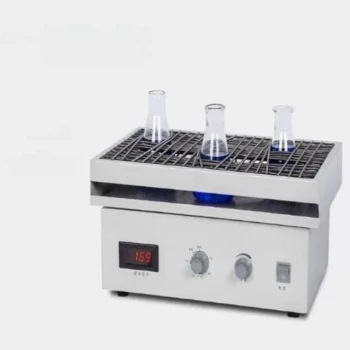
- Laboratory Multifunctional Small Speed-Adjustable Horizontal Mechanical Shaker for Lab
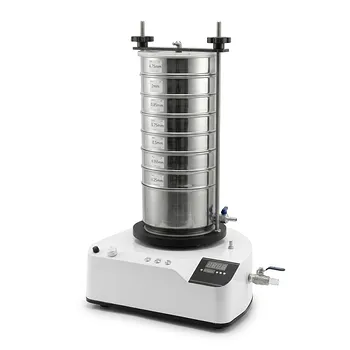
- Laboratory Vibratory Sieve Shaker Machine for Dry and Wet Three-Dimensional Sieving
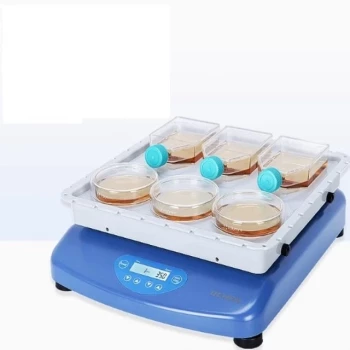
- Laboratory Oscillating Orbital Shaker
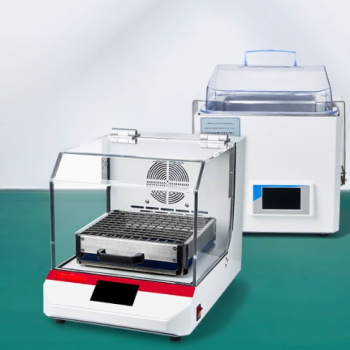
- Shaking Incubators for Diverse Laboratory Applications
- Laboratory Vibratory Sieve Shaker Machine Slap Vibrating Sieve
People Also Ask
- How do static culture and shaking culture affect the morphology of BC? Optimize Lab Shaker Results
- What is the role of a laboratory shaker in silane sol preparation? Master Uniform Aramid Fabric Coating
- Why is a laboratory shaker required for continuous 24-hour catalyst treatment? Achieve Deep Uniform Impregnation
- What is the function of a laboratory shaker in evaluating Fe-C@C nanoparticles? Optimize Methylene Blue Adsorption
- How do laboratory shakers or stirrers influence the efficiency of hydrogen production during dark fermentation?