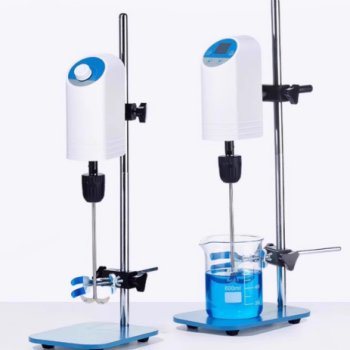
A high-pressure homogenizer achieves cell disruption by utilizing a powerful displacement pump to force a cell suspension containing Polyhydroxyalkanoate (PHA) granules through a restrictive, narrow-gap homogenization valve. As the suspension passes through this valve, the microbial cell membranes are subjected to a combination of extreme shear forces, high-velocity impact, and rapid pressure drops. This purely physical mechanism ruptures the cell wall, releasing the intracellular biopolymer without the need for chemical agents.
Core Takeaway The mechanism relies on the convergence of three physical forces—shear, impact, and pressure drop—generated by forcing fluid through a narrow valve. This method allows for the effective extraction of PHA granules while eliminating the safety and environmental risks associated with halogenated organic solvents.
The Mechanics of Physical Disruption
The Role of the Displacement Pump
The process begins with a high-pressure pump, specifically designed to handle viscous bacterial suspensions. This component drives the biomass forward with significant force, creating the necessary pressure required to overcome the resistance of the downstream valve.
The Narrow-Gap Valve
The critical work of disruption occurs at the homogenization valve (also referred to as the discharge valve). The pump forces the suspension through this extremely narrow gap, converting potential energy (pressure) into kinetic energy (velocity).
The Triad of Forces
The rupture of the microbial cell membranes is not caused by pressure alone, but by the simultaneous action of three specific forces:
- Extreme Shear: The fluid layers move at different velocities while passing through the narrow gap, tearing the cell walls.
- Impact Forces: High-speed collisions between the cells and the valve surfaces contribute to structural failure.
- Pressure Drop: The sudden transition from high pressure to low pressure causes an expansive force that helps burst the cell membrane.
Release of Intracellular Granules
Once the cell wall is compromised by these forces, the intracellular PHA granules are exposed and released into the suspension. This makes the homogenizer a core piece of equipment for biomass removal and polymer release.
Comparison: Mechanical vs. Chemical Extraction
Eliminating Halogenated Solvents
A primary advantage of this mechanism is its sustainability. Traditional extraction often relies on halogenated organic solvents, which pose significant health and environmental risks.
Sustainable Industrial Application
By utilizing physical forces rather than chemical dissolution, high-pressure homogenization provides a "green" solution. It is specifically positioned as a sustainable industrial extraction method suitable for large-scale operations.
Understanding the Trade-offs
Equipment Scale and Complexity
While effective, this method involves heavy industrial machinery. Unlike laboratory-scale ultrasonic methods which use sound waves for small samples, a high-pressure homogenizer is a robust mechanical system designed for volume.
Specificity of Disruption
This is a non-selective physical process. It applies intense force to the entire suspension. While this ensures high rates of cell rupture, it physically processes all components of the biomass, separating the PHA granules from the cell debris post-disruption.
Making the Right Choice for Your Goal
To determine if high-pressure homogenization is the correct mechanism for your PHA extraction process, consider your operational priorities:
- If your primary focus is Environmental Sustainability: This mechanism is ideal as it eliminates the need for toxic halogenated organic solvents, aligning with green chemistry principles.
- If your primary focus is Industrial Scale: This equipment is the standard for large-scale processing, offering high throughput compared to smaller laboratory techniques.
Summary: High-pressure homogenization offers a robust, solvent-free extraction route by leveraging precise mechanical forces to rupture cells and recover PHA granules efficiently at scale.
Summary Table:
| Mechanism Component | Action Type | Result for PHA Extraction |
|---|---|---|
| Displacement Pump | High-force drive | Generates necessary pressure to overcome valve resistance |
| Narrow-Gap Valve | Kinetic conversion | Transforms potential energy into high-velocity fluid flow |
| Extreme Shear | Physical tearing | Mechanical rupture of microbial cell walls and membranes |
| Impact Forces | High-speed collision | Structural failure of cells upon contact with valve surfaces |
| Pressure Drop | Rapid expansion | Sudden decompression causes internal expansive bursting |
Optimize Your PHA Recovery with KINTEK
Ready to scale your biopolymer production without the risks of halogenated solvents? KINTEK specializes in advanced homogenizers and crushing systems designed to deliver the precise mechanical forces required for efficient cell disruption. Beyond extraction, we offer a comprehensive suite of laboratory equipment, including high-temperature furnaces, hydraulic presses, and cooling solutions to support every stage of your research and industrial workflow.
Enhance your lab's sustainability and throughput—contact us today to find the perfect equipment solution for your bioprocessing needs!
References
- Lorena Atarés, María Vargas. Production of Polyhydroxyalkanoates for Biodegradable Food Packaging Applications Using Haloferax mediterranei and Agrifood Wastes. DOI: 10.3390/foods13060950
This article is also based on technical information from Kintek Solution Knowledge Base .
Related Products
- High Shear Homogenizer for Pharmaceutical and Cosmetic Applications
- High Performance Lab Homogenizer for Pharma Cosmetics and Food R&D
- Laboratory High Throughput Tissue Grinding Mill Grinder
- Desktop Fast High Pressure Laboratory Autoclave Sterilizer 16L 24L for Lab Use
- Portable High Pressure Laboratory Autoclave Steam Sterilizer for Lab Use
People Also Ask
- Why Use a High Shear Homogenizer for Cathode Slurries? Optimize Double-Layer Solid-State Battery Production
- What is the function of high-shear dispersion equipment in corona-resistant nanocomposites? Elevate Your Insulation
- What is the necessity of using an industrial-grade high-shear homogenizer for biomass washing? Ensure Process Efficiency
- What are the advantages of using a high-shear homogenizer for BED/GMA coatings? Achieve Superior Nano-Dispersion
- What role does a high-shear homogenizer play in ODC catalyst suspensions? Unlock Superior Electrochemical Efficiency