To maintain the operational integrity of an H-type electrolytic cell, you must establish a routine of periodic inspections covering the physical structure, sealing mechanisms, and electrochemical components. Specifically, you need to check the cell body for cracks, ensure the lid and sealing rings provide a vacuum-tight fit, examine electrodes for corrosion or surface damage, and verify that the ion-exchange membrane is not aged or clogged.
Core Takeaway: The reliability of an H-type cell hinges on the condition of the interfaces—where glass meets seal, and where electrode meets electrolyte. Regular maintenance is not just about cleaning; it is about verifying that the ion-exchange membrane is permeable and the electrodes are uncorroded to prevent compromised experimental data.
Inspecting Structural Integrity
Examining the Cell Body
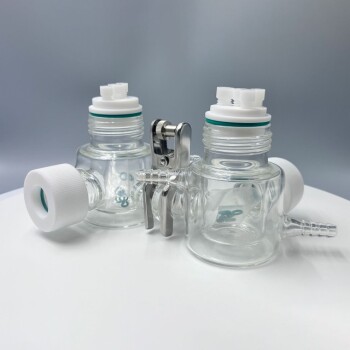
The H-type cell is typically constructed from glass, making it inherently fragile. You must inspect the cell body regularly for any signs of cracks, chips, or structural damage.
Even minor hairline fractures can lead to leaks or catastrophic failure under thermal or chemical stress.
Verifying Lids and Seals
The lid must provide a tight seal to maintain the internal environment of the cell.
Check the sealing rings and the lid fitment to ensure there are no gaps that could allow gas escape or contaminant entry.
Evaluating Electrochemical Components
Electrode Condition
Electrodes are the engine of your cell; they must be inspected for corrosion, damage, or surface contamination.
If the surface appears dull or corroded, the electrode may require cleaning or polishing to restore its electrochemical activity.
Ion-Exchange Membrane Health
The ion-exchange membrane is a critical consumable that separates the anode and cathode chambers.
Check for signs of aging, clogging, or physical damage. A clogged membrane will impede ion flow, while a damaged one will destroy the separation efficiency required for accurate results.
Operational Safety Checks
Wiring and Connections
Regularly inspect the electrical connections and wiring attached to the cell.
Look specifically for signs of aging or insulation breakdown, which could pose safety risks or introduce noise into your data.
Leak Detection
Before every use, perform a visual check to ensure the cell is leak-free.
This involves verifying that all sealing rings are flexible and intact, and that the mating surfaces between the chambers are secure.
Common Pitfalls to Avoid
Ignoring Micro-Damage
A common mistake is overlooking small chips in the glass or minor wear on sealing rings.
Because H-type cells are fragile, these minor issues can escalate quickly during experiments, leading to leaks of potentially hazardous electrolytes.
Delayed Component Replacement
Do not attempt to extend the life of a degraded ion-exchange membrane or a heavily corroded electrode.
As noted in the supplementary guidelines, components showing signs of aging must be replaced promptly to ensure safety and data validity.
Making the Right Choice for Your Goal
Maintenance schedules should be adapted based on your specific usage intensity and experimental requirements.
- If your primary focus is Data Accuracy: Prioritize the condition of the electrode surfaces (cleaning/polishing) and the permeability of the ion-exchange membrane to ensure consistent current flow.
- If your primary focus is Laboratory Safety: Focus heavily on the structural integrity of the glass body and the quality of the sealing rings to prevent leaks of chemical solutions.
Treat the H-type cell with gentle precision; proactive inspection is the only way to prevent costly disruption.
Summary Table:
| Component | Inspection Frequency | Key Checkpoints | Impact on Performance |
|---|---|---|---|
| Glass Cell Body | Before Every Use | Hairline cracks, chips, structural damage | Prevents leaks and catastrophic failure |
| Sealing Rings & Lids | Monthly | Flexibility, vacuum-tight fit, gaps | Maintains internal environment; prevents gas escape |
| Electrodes | Weekly | Corrosion, surface dullness, contamination | Ensures electrochemical activity and data accuracy |
| Ion-Exchange Membrane | Bi-weekly | Clogging, aging, physical tears | Maintains ion flow and chamber separation |
| Wiring/Connections | Monthly | Insulation breakdown, loose contacts | Prevents electrical noise and safety hazards |
Maximize Your Research Accuracy with KINTEK
Don't let aging components compromise your electrochemical data. KINTEK specializes in high-quality laboratory equipment, providing the precision electrolytic cells and electrodes your research demands. Beyond our specialized H-type cells, we offer a complete range of high-temperature furnaces, hydraulic presses, and battery research tools designed for durability and performance.
Ready to upgrade your lab setup or replace essential consumables? Contact our technical experts today to discover how our high-performance solutions can streamline your experiments and ensure safety in every trial.
Related Products
- H-Type Double-Layer Optical Electrolytic Electrochemical Cell with Water Bath
- H Type Electrolytic Cell Triple Electrochemical Cell
- Customizable PEM Electrolysis Cells for Diverse Research Applications
- Electrolytic Electrochemical Cell with Five-Port
- Super Sealed Electrolytic Electrochemical Cell
People Also Ask
- What is the overall structure of the H-type double-layer optical water bath electrolytic cell? Precision Design for Controlled Experiments
- How is the electrolyte managed in H-type electrolytic cells for specific reactions? Achieve Precise Control and High Purity
- What checks should be performed on the H-type electrolytic cell before use? Ensure Accurate Electrochemical Data
- What is important regarding temperature control for the H-type electrolytic cell? Ensure Precision and Data Integrity
- What is the overall structure of the H-type electrolytic cell? Understanding Dual-Chamber Electrochemical Designs