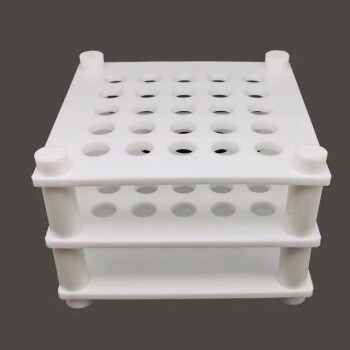
The high-pressure reactor with a PTFE liner serves as a controlled "micro-environment" that enables the transformation of iron precursors into precise nanostructures. This setup creates a sealed, high-temperature system where spontaneous pressure drives the decomposition of precursors and forces growth along specific templates. The result is the successful synthesis of elongated iron oxide nanorods with high aspect ratios that would be impossible to achieve under standard atmospheric conditions.
The core role of this equipment is to provide a synergistic environment where the stainless steel shell maintains structural integrity under extreme pressure, while the PTFE liner ensures chemical purity and controlled crystal growth through its exceptional thermal and chemical stability.
Facilitating Extreme Reaction Conditions
Surpassing Standard Boiling Points
In solvothermal synthesis, the reactor allows solvents to reach temperatures far exceeding their normal boiling points while remaining in a liquid state. This supercritical or near-critical environment significantly increases the solubility of reactants, allowing insoluble iron salts and organic ligands to react thoroughly.
Driving Precursor Decomposition
The spontaneous internal pressure generated at temperatures like 200°C provides the necessary energy to break down iron precursors. This rapid decomposition is essential for initiating the nucleation process, which is the first step in forming nanorods.
Ensuring Structural Control and Morphology
Promoting Directional Growth
The high-pressure environment is instrumental in driving the growth of iron oxide along surfactant templates. By maintaining constant pressure and heat, the reactor ensures that the iron oxide molecules deposit uniformly, resulting in elongated nanostructures with high aspect ratios.
Enhancing Crystallinity and Uniformity
A sealed reactor prevents the loss of volatile components, ensuring the chemical stoichiometry of the solution remains constant throughout the process. This stability is vital for achieving high crystallinity and morphological regularity, such as the specific octahedral or rod-like shapes required for advanced applications.
The Protective Role of the PTFE Liner
Corrosion Resistance and Durability
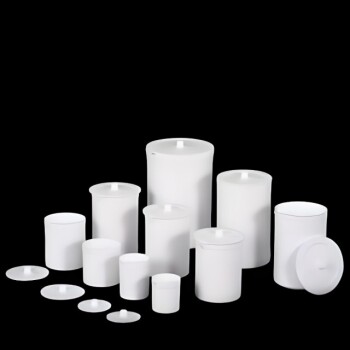
The synthesis of iron oxide often involves strong electrolytes and organic solvents that become highly corrosive at elevated temperatures. The PTFE (polytetrafluoroethylene) liner acts as a sacrificial barrier, protecting the stainless steel jacket from chemical attack and extending the reactor's lifespan.
Preventing Sample Contamination
Without a liner, the reaction liquid would directly contact the metal reactor body, leading to the leaching of impurity ions into the sample. The chemical inertness of PTFE ensures that the resulting iron oxide nanorods remain pure and free from metallic contaminants that could alter their magnetic or electronic properties.
Understanding the Trade-offs
Temperature and Pressure Limitations
While PTFE is highly resistant to chemicals, it has a clear thermal ceiling, typically around 220°C to 250°C. Exceeding these limits can cause the liner to soften or deform, potentially leading to a seal failure or the release of toxic fumes.
Thermal Expansion Mismatch
PTFE and stainless steel expand at different rates when heated, which can cause the liner to become stuck or slightly distorted over many cycles. Users must account for these mechanical stresses to ensure the reactor remains easy to assemble and disassemble without compromising safety.
Maximizing Results in Solvothermal Synthesis
To achieve the best results when using a high-pressure reactor for nanorod synthesis, consider your specific experimental priorities:
- If your primary focus is High Purity: Ensure the PTFE liner is thoroughly cleaned with acid between runs to prevent the carry-over of impurity ions from previous experiments.
- If your primary focus is Morphological Uniformity: Closely monitor the heating rate and fill degree of the reactor, as these factors directly influence the internal pressure and the resulting aspect ratio of the nanorods.
By mastering the balance between internal pressure and chemical stability, researchers can reliably produce high-quality iron oxide nanostructures for the next generation of technological innovations.
Summary Table:
| Component/Feature | Primary Role in Synthesis | Key Benefit for Nanorods |
|---|---|---|
| Stainless Steel Shell | Maintains structural integrity under extreme pressure | Safely enables temperatures far above solvent boiling points |
| PTFE Liner | Provides a chemically inert reaction chamber | Prevents metal ion contamination and resists corrosive solvents |
| Sealed Environment | Creates spontaneous internal pressure | Drives precursor decomposition and promotes directional crystal growth |
| Temperature Control | Facilitates supercritical/near-critical states | Increases reactant solubility for high crystallinity and uniformity |
Elevate Your Nanotechnology Research with KINTEK
Precision in solvothermal synthesis demands equipment that can withstand extreme conditions without compromising sample integrity. KINTEK specializes in high-performance laboratory equipment, providing researchers with the advanced high-temperature high-pressure reactors and autoclaves needed to produce superior iron oxide nanostructures.
Our comprehensive portfolio supports every stage of your workflow, featuring:
- Reaction Vessels: High-pressure reactors, CVD/PECVD systems, and specialized dental furnaces.
- Material Processing: Precision crushing and milling systems, hydraulic presses (pellet, hot, isostatic), and sieving equipment.
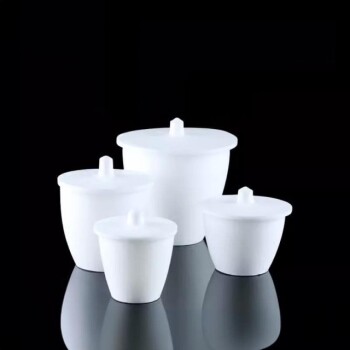
- Essential Consumables: Premium PTFE liners, high-purity ceramics, and durable crucibles designed for zero contamination.
Whether you are a researcher aiming for high-aspect-ratio nanorods or a lab manager seeking reliable, long-lasting equipment, KINTEK delivers the durability and technical support your projects deserve.
Ready to optimize your synthesis process? Contact our specialists today to find the perfect high-pressure solution for your laboratory!
References
- Supun B. Attanayake, H. Srikanth. Competing Magnetic Interactions and Field-Induced Metamagnetic Transition in Highly Crystalline Phase-Tunable Iron Oxide Nanorods. DOI: 10.3390/nano13081340
This article is also based on technical information from Kintek Solution Knowledge Base .
Related Products
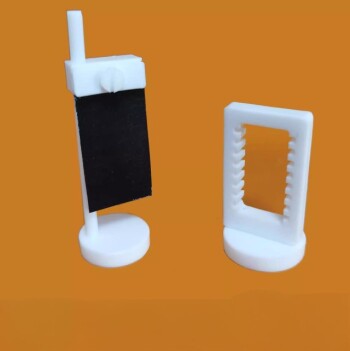
- Custom PTFE Teflon Parts Manufacturer for Hydrothermal Synthesis Reactor Polytetrafluoroethylene Carbon Paper and Carbon Cloth Nano-growth
- Stainless High Pressure Autoclave Reactor Laboratory Pressure Reactor
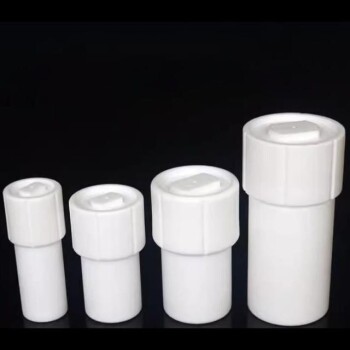
- Custom PTFE Teflon Parts Manufacturer for Reagent Wide Mouth Fine Mouth Sample High Temperature Bottles
- Customizable High Pressure Reactors for Advanced Scientific and Industrial Applications
- High Pressure Laboratory Autoclave Reactor for Hydrothermal Synthesis
People Also Ask
- What is the function of a PTFE reactor in MXene etching? Ensure Safe, High-Purity MAX Phase Conversion
- Why is a PTFE reactor required for titanium-based nano-ceramic coating solutions? Ensure Chemical Inertness & Purity
- Why must a Polytetrafluoroethylene (PTFE) reactor be used for Ti3C2TX MXene etching? Ensure Safety and Purity
- Why are PTFE reactors preferred for silver phosphate glass testing? Ensure Purity and Kinetic Accuracy
- What are the advantages of using polytetrafluoroethylene (PTFE) liners in hydrothermal synthesis reactors? High Purity