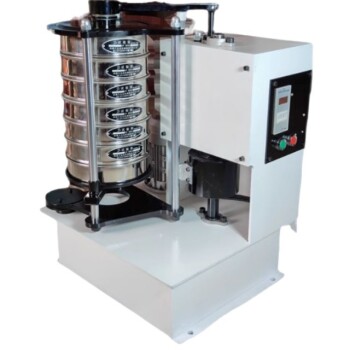
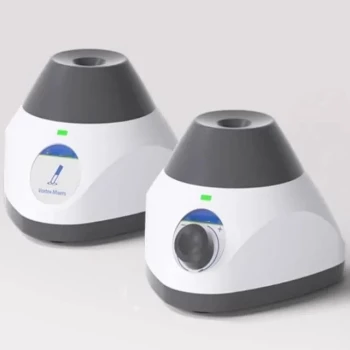
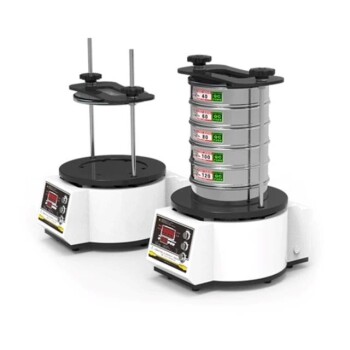
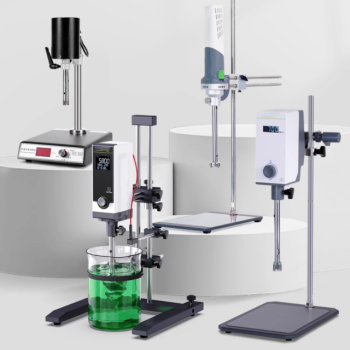
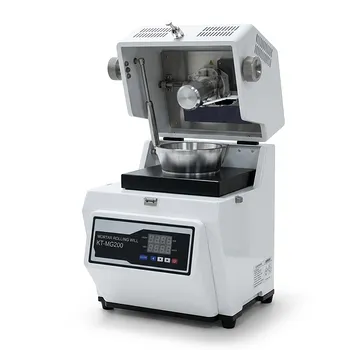
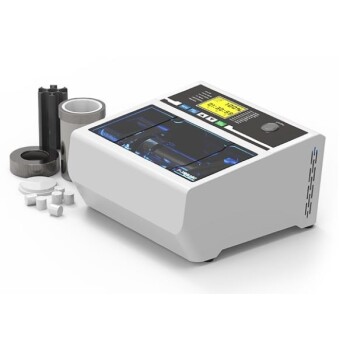
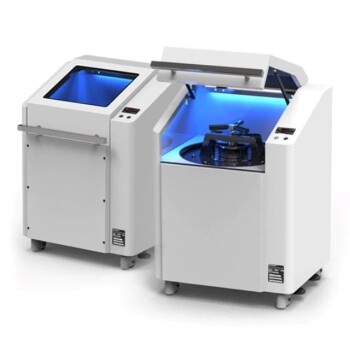
The laboratory shaker acts as the primary engine for surface neutralization. It provides continuous mechanical agitation that creates constant fluid disturbance around the geopolymer material. This physical motion accelerates the critical ion exchange process between the sample and the immersion water, effectively leaching out excess alkalinity to stabilize the surface.
Mechanical agitation is the key to transforming a geopolymer surface from a highly alkaline state to a near-neutral environment (pH ~8), ensuring the material's chemical properties do not skew biological test results.
The Mechanics of pH Stabilization
Accelerating Ion Exchange
Geopolymers naturally possess high alkalinity, which must be reduced for certain applications. The shaker creates constant fluid disturbance, which prevents the water immediately surrounding the sample from becoming saturated with ions.
This continuous motion maintains a concentration gradient that forces excess alkaline ions to leave the geopolymer surface and enter the water more rapidly than they would in static conditions.
Sustained Agitation
This is not a rapid procedure; the stabilization process can persist for several months.
The laboratory shaker is designed to run continuously during this extended period, ensuring that the ion removal process remains consistent and efficient until the target pH is reached.
The Critical Role in Antibacterial Assessment
Reaching a Neutral Baseline
The ultimate goal of using the shaker is to bring the surface pH down to a stable, near-neutral level of approximately pH 8.
Without this mechanical intervention, the surface would remain highly alkaline.
Preventing False Positives
If a geopolymer surface retains high alkalinity, it creates a hostile environment that causes the physical inactivation of bacteria.
This is a critical source of experimental error. If the alkalinity kills the bacteria, researchers cannot accurately determine if the material itself has inherent antibacterial properties. The shaker removes this variable, ensuring that any observed antibacterial effect is due to the material's design, not a chemical side effect.
Understanding the Constraints
Time Intensity
While the shaker accelerates the process, it does not make it instantaneous. Users must account for a timeline that spans months, necessitating durable equipment capable of long-term continuous operation.
Dependency on Fluid Volume
The efficiency of the shaker relies on the immersion water. The constant agitation is only effective if the water facilitates the transport of ions away from the sample surface.
Ensuring Experimental Integrity
To ensure your geopolymer samples are prepared correctly for testing, consider the following:
- If your primary focus is Ion Removal: Ensure the shaker provides consistent, uninterrupted agitation to maximize the rate of ion exchange over the months-long duration.
- If your primary focus is Antibacterial Testing: You must verify that the pH has stabilized to approximately 8 before testing to rule out high alkalinity as a confounding factor.
The laboratory shaker is the bridge between a raw, unstable chemical structure and a reliable, test-ready material.
Summary Table:
| Feature | Role in pH Stabilization | Impact on Experimental Outcome |
|---|---|---|
| Mechanical Agitation | Creates fluid disturbance and maintains concentration gradients | Accelerates ion leaching from geopolymer surfaces |
| Continuous Operation | Supports long-term processing (often spanning several months) | Ensures consistent and stable surface neutralization |
| pH Target (pH ~8) | Lowers alkalinity to a near-neutral baseline | Prevents bacterial inactivation from high alkalinity |
| Ion Exchange Engine | Facilitates transport of alkaline ions into immersion water | Eliminates false positives in antibacterial assessments |
Precision Engineering for Your Research Integrity
Don't let chemical side effects compromise your material science data. KINTEK provides high-performance laboratory solutions designed for the rigorous, long-term demands of geopolymer stabilization and surface treatment.
Our extensive portfolio supports your entire workflow, from laboratory shakers and homogenizers that ensure perfect sample preparation to high-temperature furnaces, crushing systems, and hydraulic presses for material synthesis. Whether you are conducting antibacterial assessments or advanced battery research, KINTEK delivers the durability and precision required to achieve stable, repeatable results.
Ready to elevate your laboratory's capabilities? Contact us today to consult with our experts on the ideal equipment for your specific application.
References
- Vojtěch Růžek, Lucie Svobodová. COMPARISON OF DIFFERENT METHODS FOR EVALUATING THE ANTIMICROBIAL ACTIVITY OF GEOPOLYMER COMPOSITES CONTAINING METAL MICROPARTICLES. DOI: 10.37904/nanocon.2023.4752
This article is also based on technical information from Kintek Solution Knowledge Base .
Related Products
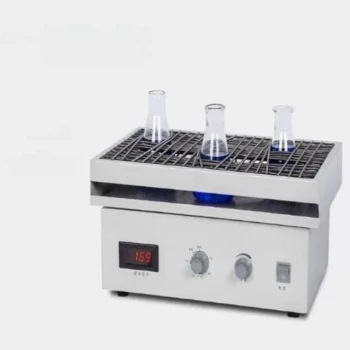
- Laboratory Multifunctional Small Speed-Adjustable Horizontal Mechanical Shaker for Lab
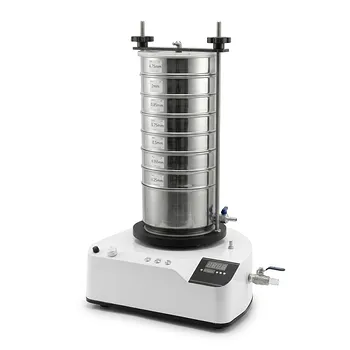
- Laboratory Vibratory Sieve Shaker Machine for Dry and Wet Three-Dimensional Sieving
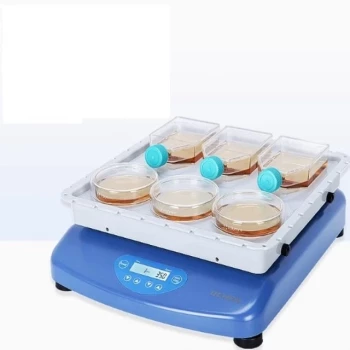
- Laboratory Oscillating Orbital Shaker
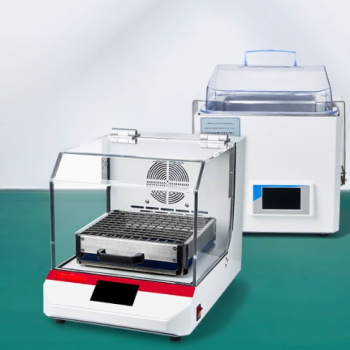
- Shaking Incubators for Diverse Laboratory Applications
- Laboratory Vibratory Sieve Shaker Machine Slap Vibrating Sieve
People Also Ask
- How do static culture and shaking culture affect the morphology of BC? Optimize Lab Shaker Results
- What is the role of a laboratory shaker in silane sol preparation? Master Uniform Aramid Fabric Coating
- Why is a laboratory shaker required for continuous 24-hour catalyst treatment? Achieve Deep Uniform Impregnation
- What is the function of a laboratory shaker in evaluating Fe-C@C nanoparticles? Optimize Methylene Blue Adsorption
- How do laboratory shakers or stirrers influence the efficiency of hydrogen production during dark fermentation?