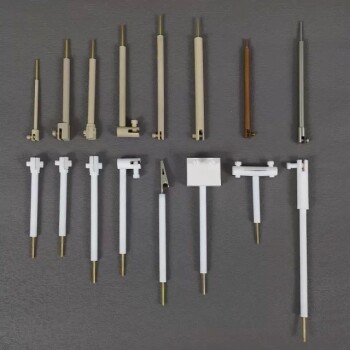
A pressure-controlled electrochemical test cell acts as the critical mechanical stabilizer for solid-state battery evaluation. It functions by applying a constant, continuous external stack pressure—typically between 7 and 17 MPa—to the battery assembly throughout the testing process. This mechanical constraint is necessary to counteract the physical volume changes that occur within the battery materials during charge and discharge cycles.
Core Insight: Solid-state batteries "breathe" significantly during operation, causing internal components to expand and contract. Without the constant pressure provided by these specialized test cells, the solid layers would physically separate, leading to immediate performance failure regardless of the battery's chemical potential.
The Challenge of Volume fluctuation
The "Breathing" Phenomenon
Unlike liquid electrolytes that flow to fill gaps, solid-state components are rigid. During operation, particularly during lithium deposition and stripping, the battery materials undergo significant volume changes.
Anisotropic Expansion
This expansion is not always uniform. Components like high-nickel cathodes experience anisotropic (directional) expansion and contraction.
The Role of the Test Cell
The test cell uses specialized molds or dies to apply steady pressure. This acts as a counter-force to these volume fluctuations, preventing the battery structure from physically distorting or breaking apart.
Preserving Interface Integrity
Maintaining Solid-Solid Contact
The primary function of the applied pressure is to ensure tight contact between the electrode particles and the solid electrolyte.
Preventing Delamination
Without external pressure, the expansion and contraction cycles would cause gaps to form between layers. This phenomenon, known as interfacial delamination, physically breaks the electrical pathway.
Mitigating Crack Propagation
Constant pressure helps maintain the monolithic structure of the battery. It prevents the formation and spread of cracks within the electrode materials or at the interfaces, which is essential for long-term cycle life.
Optimizing Electrical Performance
Reducing Impedance
A loose interface creates high resistance. By mechanically forcing the components together, the test cell minimizes interfacial impedance.
Enhancing Conductivity
Isostatic pressure increases the effective contact area between the electrodes and the electrolyte. This tighter interface directly translates to improved ionic conductivity and lower internal resistance.
Common Pitfalls and Requirements
The Necessity of "Constant" Pressure
It is not enough to simply clamp the cell once. The test cell mechanism (often using torque wrenches or hydraulic systems) must maintain constant pressure even as the battery tries to expand against it.
Pressure Range Specificity
Applying the correct amount of pressure is a precise science. While general ranges often fall between 1.5 MPa and 17 MPa, the specific target (e.g., 7-17 MPa) depends heavily on the specific chemistry and material composition being tested.
Making the Right Choice for Your Goal
To ensure your data accurately reflects your battery's potential, consider your testing objectives:
- If your primary focus is Cycle Life: Prioritize test cells with robust pressure retention mechanisms to prevent mechanical degradation and crack propagation over long durations.
- If your primary focus is Internal Resistance: Ensure your test cell can apply higher ranges of pressure (up to 17 MPa) to maximize solid-solid contact and minimize interfacial impedance.
Ultimately, the pressure-controlled cell ensures that you are testing the chemistry of the battery, not the mechanical failure of its assembly.
Summary Table:
| Feature | Role in Performance Testing | Impact on Solid-State Battery |
|---|---|---|
| Mechanical Stabilization | Applies 7–17 MPa constant pressure | Counteracts volume changes and "breathing" |
| Interface Integrity | Maintains solid-solid contact | Prevents delamination and crack propagation |
| Impedance Control | Maximizes effective contact area | Minimizes resistance and improves ionic conductivity |
| Dynamic Adjustment | Compensates for expansion/contraction | Ensures chemical potential is tested, not mechanical failure |
Elevate Your Solid-State Battery Research with KINTEK
Don't let mechanical failure mask your battery's true potential. At KINTEK, we specialize in high-precision laboratory equipment designed to meet the rigorous demands of advanced energy storage research. Our pressure-controlled electrochemical test cells provide the constant, precise mechanical stabilization necessary to maintain interface integrity and minimize impedance in solid-state systems.
Whether you are focusing on high-nickel cathodes or next-generation solid electrolytes, KINTEK offers a comprehensive range of solutions—from high-pressure test cells and hydraulic pellet presses to vacuum furnaces and battery research consumables. Let our technical experts help you select the right tools to ensure your data reflects the true performance of your battery chemistry.
Ready to optimize your testing accuracy? Contact KINTEK today for a consultation!
Related Products
- Customizable Swagelok Type Test Cells for Advanced Battery Research Electrochemical Analysis
- PTFE Electrolytic Cell Electrochemical Cell Corrosion-Resistant Sealed and Non-Sealed
- Customizable PEM Electrolysis Cells for Diverse Research Applications
- Electrolytic Electrochemical Cell for Coating Evaluation
- Sample Support Body for Electrochemical Tests
People Also Ask
- How does a standardized electrochemical test cell assist in MOx/CNTf electrode screening? Optimize Material Ratios
- Why is a dedicated electrochemical test cell necessary for carbon steel? Ensure Precise Geothermal Corrosion Data
- What is the difference between a voltaic cell and an electrochemical cell? Understand the Two Types of Energy Conversion
- How do the electrochemical cell and three-electrode testing system collaborate? Optimize Zinc Anode Deposition Control
- Why must the electrochemical cell be continuously purged with nitrogen? Ensure Precision in Ni-Cr Corrosion Tests