The PTFE-lined stainless steel high-pressure reactor is the essential vessel for creating the extreme conditions required for iron oxide crystallization. It provides a sealed, high-temperature, and high-pressure environment—typically reaching temperatures around 220°C—that allows iron salt precursors to undergo controlled chemical reactions. This specific setup ensures that the resulting $Fe_2O_3$ nanotubes achieve high morphological regularity and remain free from metallic impurities.
The reactor serves as a dual-purpose system that provides the structural integrity to withstand high internal pressures while maintaining an inert internal environment. This combination is what enables the precise hydrothermal transformation of precursors into high-purity, ultra-fine nanotubes.
Creating the Subcritical Reaction Environment
Overcoming the Atmospheric Boiling Point
The reactor allows the reaction solution to be heated far beyond the standard boiling point of water. This creates a subcritical environment where the solvent's properties change, significantly increasing the solubility and reactivity of the iron salt precursors.
Driving Autogenous Pressure
As the sealed vessel is heated to 220°C, it generates autogenous pressure internally. This pressure is the driving force that promotes the decomposition of precursors and facilitates their reorganization into complex nanotube structures.
The Dual-Material Design Strategy
The Structural Role of Stainless Steel
The external stainless steel shell provides the necessary mechanical strength to ensure the safety and integrity of the system. It acts as a pressure vessel, containing the high forces generated during the hydrothermal process without deforming or failing.
The Chemical Role of the PTFE Liner
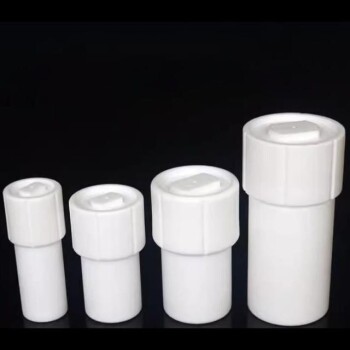
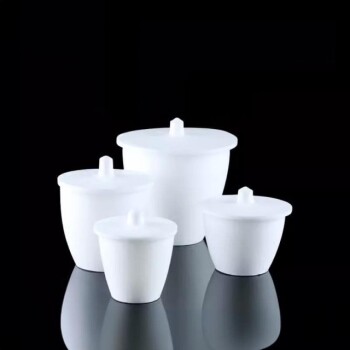
The PTFE (polytetrafluoroethylene) lining acts as a chemically inert barrier between the reaction and the metal shell. It prevents corrosive iron salts or acidic/alkaline byproducts from attacking the stainless steel, which would otherwise lead to vessel failure and product contamination.
Influencing Nanotube Morphology and Purity
Ensuring Chemical and Phase Purity
By isolating the reaction within the PTFE liner, the introduction of metallic impurities (like chromium or nickel from the steel) is eliminated. This is critical for $Fe_2O_3$ nanotubes, as even trace amounts of foreign ions can disrupt the desired crystal phase.
Facilitating Anisotropic Growth
The stable pressure and temperature environment within the reactor induces the iron precursor to grow anisotropically. This means the crystals grow faster along specific planes, which is the fundamental mechanism required to form elongated nanotube shapes rather than irregular particles.
Understanding the Trade-offs and Limitations
Thermal Constraints of PTFE
While PTFE is highly inert, it has a strict temperature ceiling, typically around 250°C. Exceeding this limit can cause the liner to soften or release toxic fumes, meaning the synthesis of $Fe_2O_3$ must be strictly monitored to stay within safe thermal bounds.
Heating and Cooling Rates
The thick stainless steel jacket creates significant thermal inertia, meaning the reactor takes time to reach the target temperature and just as long to cool down. Rapid quenching is difficult, which can affect the size distribution of the nanotubes if the reaction continues during the cooling phase.
Applying This to Your Synthesis Project
Making the Right Choice for Your Goal
To achieve the best results in your hydrothermal synthesis, consider your primary objective:
- If your primary focus is Maximum Purity: Ensure your PTFE liner is thoroughly "pre-conditioned" or cleaned with acid to remove any surface residues before starting the $Fe_2O_3$ synthesis.
- If your primary focus is Morphological Control: Precisely calibrate your oven to reach the 220°C threshold slowly, as the rate of temperature increase influences the aspect ratio of the nanotubes.
- If your primary focus is Equipment Longevity: Never fill the PTFE liner more than 80% of its capacity to allow sufficient headspace for pressure expansion, preventing liner deformation.
By utilizing the structural strength of steel and the chemical resistance of PTFE, you create the perfect high-energy environment for the precision engineering of ultra-fine nanotubes.
Summary Table:
| Component/Feature | Role in Synthesis | Benefit to Fe2O3 Nanotubes |
|---|---|---|
| Stainless Steel Shell | Structural integrity & pressure containment | Ensures safety during high-pressure autogenous reactions. |
| PTFE Liner | Chemical inertness & corrosion resistance | Prevents metallic contamination; ensures phase purity. |
| Subcritical Environment | Exceeds boiling point (220°C+) | Increases precursor solubility and reaction reactivity. |
| Autogenous Pressure | Internal driving force | Promotes anisotropic growth for regular nanotube morphology. |
| Thermal Control | Regulated heating/cooling | Influences crystal size distribution and aspect ratio. |
Precision Engineering for Your Nanomaterial Research
Elevate your hydrothermal synthesis with KINTEK’s industry-leading laboratory solutions. We specialize in providing researchers with the high-performance tools needed for complex material engineering, including our robust high-temperature high-pressure reactors and autoclaves designed specifically for high-purity results.
At KINTEK, we offer a comprehensive portfolio to support your entire workflow:
- Synthesis & Processing: Muffle, tube, and vacuum furnaces; CVD/PECVD systems; and high-pressure reactors.
- Sample Preparation: Advanced crushing, milling, and sieving equipment, alongside hydraulic presses.
- Consumables: High-quality PTFE products, ceramics, and crucibles to maintain an inert reaction environment.
Ready to enhance your lab's efficiency and achieve superior morphological control? Contact us today to discover how KINTEK can provide the reliable equipment and expert support your project deserves.
References
- Lingxia Yu, Fangzhi Mou. Ultrasmall Fe2O3 Tubular Nanomotors: The First Example of Swarming Photocatalytic Nanomotors Operating in High-Electrolyte Media. DOI: 10.3390/nano13081370
This article is also based on technical information from Kintek Solution Knowledge Base .
Related Products
- Custom PTFE Teflon Parts Manufacturer for Hydrothermal Synthesis Reactor Polytetrafluoroethylene Carbon Paper and Carbon Cloth Nano-growth
- Custom PTFE Teflon Parts Manufacturer for Reagent Wide Mouth Fine Mouth Sample High Temperature Bottles
- Stainless High Pressure Autoclave Reactor Laboratory Pressure Reactor
- Customizable High Pressure Reactors for Advanced Scientific and Industrial Applications
- Custom PTFE Teflon Parts Manufacturer for Microwave Digestion Tank
People Also Ask
- What is the function of a PTFE reactor in MXene etching? Ensure Safe, High-Purity MAX Phase Conversion
- Why is a PTFE reactor required for titanium-based nano-ceramic coating solutions? Ensure Chemical Inertness & Purity
- Why must a Polytetrafluoroethylene (PTFE) reactor be used for Ti3C2TX MXene etching? Ensure Safety and Purity
- Why are PTFE reactors preferred for silver phosphate glass testing? Ensure Purity and Kinetic Accuracy
- What are the advantages of using polytetrafluoroethylene (PTFE) liners in hydrothermal synthesis reactors? High Purity