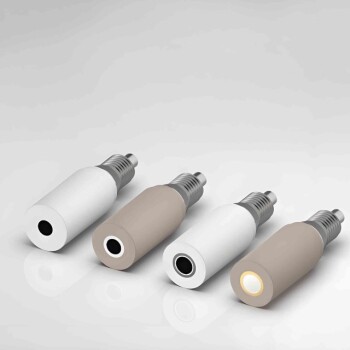
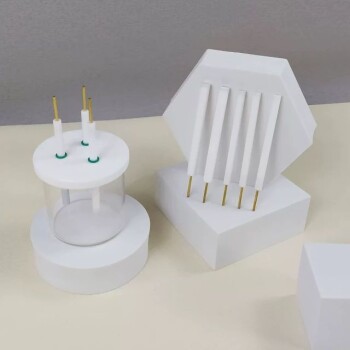
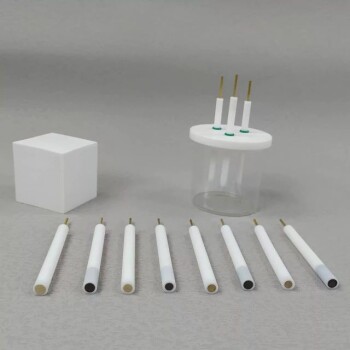
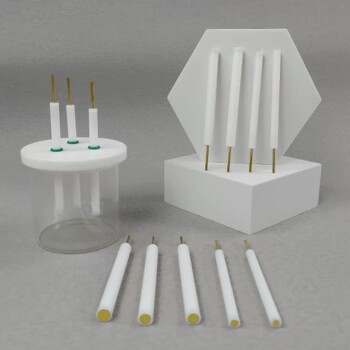
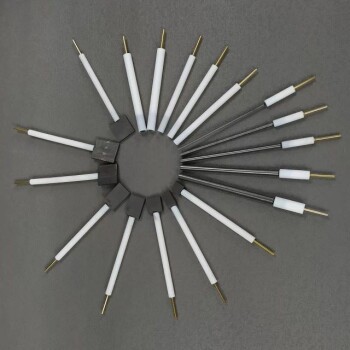
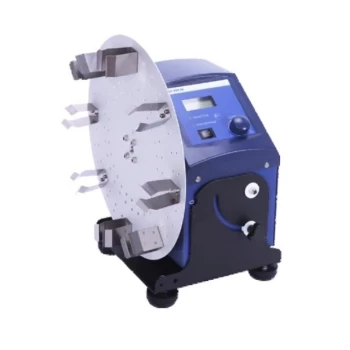
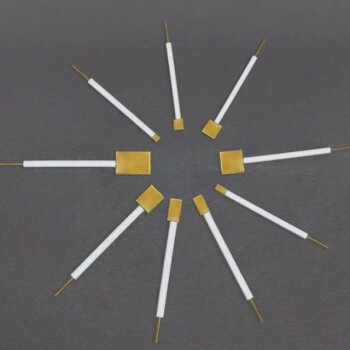
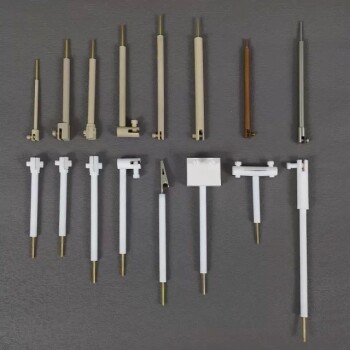
A rotating disk electrode (RDE) system is the primary tool used to isolate the intrinsic kinetics of the hydrogen oxidation reaction (HOR) by neutralizing the interference of mass transport. By precisely regulating rotation speeds, the RDE creates a controlled environment where the rate of reactant delivery is mathematically predictable. This allows researchers to bypass the "diffusion limit" and directly measure fundamental catalyst properties such as exchange current density and electron transfer numbers.
The RDE system converts a complex fluid dynamics problem into a stable, measurable environment by establishing a laminar boundary layer. This provides the necessary clarity to distinguish between the speed of the chemical reaction on the catalyst and the speed of reactant arrival from the solution.
Controlling Mass Transfer Dynamics
Establishing a Stable Laminar Boundary Layer
The RDE functions by spinning at a precisely controlled frequency, often reaching speeds like 1600 rpm. This rotation pulls the electrolyte toward the electrode surface and flings it outward, creating a stable laminar boundary layer.
Eliminating Bulk Solution Diffusion Limitations
In a stationary setup, the reaction rate is often limited by how fast hydrogen can diffuse through the liquid to reach the catalyst. The RDE uses forced convection to ensure a constant supply of reactants, effectively removing this "bottleneck" from the measurement.
Standardizing the Reaction Environment
Because the thickness of the diffusion layer is inversely proportional to the square root of the rotation speed, the environment becomes mathematically defined. This standardization allows for reproducible results across different laboratories and catalyst types.
Extracting Fundamental Kinetic Parameters
Determining Intrinsic Kinetic Current
By analyzing the current at various rotation speeds, researchers can use mathematical models (like the Koutecký-Levich equation) to calculate the intrinsic kinetic current. This value represents how the catalyst would perform if mass transport were infinitely fast.
Evaluating Catalyst Activity in Specific Media
RDE systems are critical for studying catalysts like PtRu/TiO2/C in challenging environments, such as alkaline media. It allows for the precise determination of exchange current density, which is the "baseline" activity of the catalyst at equilibrium.
Measuring Electron Transfer Numbers
The system helps determine the electron transfer number, which reveals the efficiency of the reaction pathway. In HOR and related reactions, this confirms whether the catalyst is facilitating a complete and efficient chemical transformation.
Understanding the Trade-offs and Limitations
Turbulence and Mechanical Vibration
At excessively high rotation speeds, the flow may transition from laminar to turbulent, which invalidates the standard kinetic equations. Furthermore, mechanical vibrations can introduce noise into the electrochemical signal, compromising data integrity.
The Need for Ring Electrodes in Intermediate Studies
A standard RDE can measure the overall reaction rate but cannot identify volatile reaction intermediates. To capture and quantify byproducts, researchers must upgrade to a Rotating Ring-Disk Electrode (RRDE), which uses a secondary ring to "catch" intermediates as they are thrown off the disk.
Surface Sensitivity and Contamination
Because RDE measurements are so precise, they are highly sensitive to surface contamination or bubbles. Even minor impurities in the electrolyte or a poorly prepared catalyst film can lead to significant errors in the calculated kinetic constants.
Applying This Technology to Your Research
High-precision kinetic analysis requires matching the electrode configuration to your specific analytical goals.
- If your primary focus is determining catalyst activity: Use a standard RDE to eliminate mass transfer limits and calculate the exchange current density and Tafel slopes.
- If your primary focus is identifying reaction mechanisms: Utilize an RRDE system to detect intermediate species-like hydrogen peroxide or other redox byproducts-to map the full reaction pathway.
- If your primary focus is screening new materials: Employ consistent rotation speeds (e.g., 1600 rpm) to establish a baseline half-wave potential for comparing the performance of different catalyst compositions.
By mastering the fluid dynamics of the RDE system, you can strip away the complexities of mass transport to reveal the true electrochemical potential of your catalysts.
Summary Table:
| Feature | Function in HOR Kinetics Study | Key Parameter Extracted |
|---|---|---|
| Controlled Rotation | Eliminates mass transport/diffusion bottlenecks | Diffusion-limited current |
| Laminar Boundary Layer | Creates a mathematically defined reaction environment | Reproducible kinetic constants |
| Koutecký-Levich Analysis | Separates mass transport from chemical reaction speed | Intrinsic kinetic current |
| Convective Flow Control | Standardizes reactant delivery to the catalyst surface | Exchange current density |
| RRDE Capability | Captures volatile reaction intermediates | Electron transfer numbers |
Elevate Your Electrochemical Research with KINTEK
Precise kinetic analysis requires high-performance equipment that eliminates variables and delivers reproducible data. KINTEK specializes in providing researchers with cutting-edge laboratory solutions designed for the most demanding applications.
From advanced electrolytic cells and high-precision electrodes to our comprehensive range of battery research tools, we empower your lab to bridge the gap between material synthesis and fundamental discovery. Our portfolio also features essential supporting technology, including:
- High-Temperature Systems: Muffle, tube, and vacuum furnaces for catalyst preparation.
- Material Processing: Crushing, milling, and high-pressure hydraulic presses.
- Thermal Management: ULT freezers and recirculating chillers for stable testing environments.
Ready to isolate the true potential of your catalysts? Contact our technical experts today to find the perfect configuration for your HOR, OER, or battery research needs.
References
- John C. Douglin, Dario R. Dekel. Hydrogenated TiO<sub>2</sub> Carbon Support for PtRu Anode Catalyst in High‐Performance Anion‐Exchange Membrane Fuel Cells. DOI: 10.1002/smll.202307497
This article is also based on technical information from Kintek Solution Knowledge Base .
Related Products
- RRDE rotating disk (ring disk) electrode / compatible with PINE, Japanese ALS, Swiss Metrohm glassy carbon platinum
- Rotating Platinum Disk Electrode for Electrochemical Applications
- Metal Disc Electrode Electrochemical Electrode
- Gold Disc Electrode
- Graphite Disc Rod and Sheet Electrode Electrochemical Graphite Electrode
People Also Ask
- What is the rotating ring disk electrode method? Unlock Real-Time Reaction Analysis
- Role of RRDE & Workstations in Aerogel Catalysis: Master Precise Kinetic Analysis & Electron Transfer Pathways
- What role does the RRDE play in catalyst evaluation for H2O2 synthesis? Enhance Selectivity and Kinetic Precision
- What is the RRDE in electrochemistry? Unlock Detailed Reaction Pathways with Dual-Electrode Analysis
- What is the application of RRDE? Unlock Quantitative Catalyst and Reaction Insights