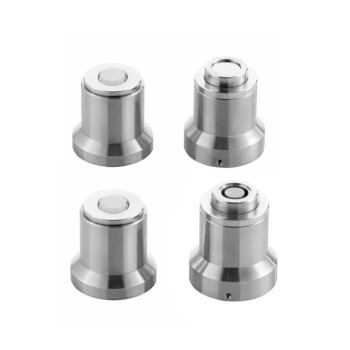
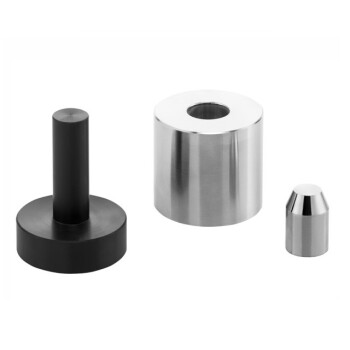
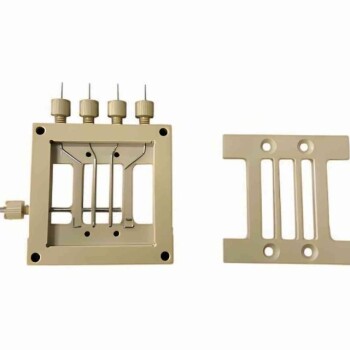
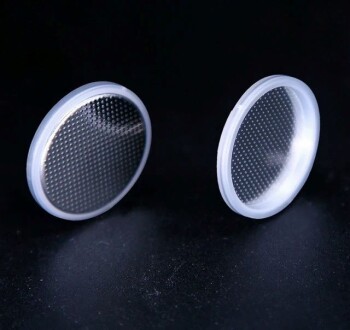
Stainless steel sealed test cells provide a robust, chemically inert environment that isolates sensitive lithium-oxygen reactions from atmospheric contaminants like moisture and carbon dioxide. These cells utilize high-grade materials (typically 316 stainless steel) and precision engineering to manage gas flow, withstand internal pressure changes, and maintain consistent mechanical pressure on battery components. This ensures that the resulting electrochemical data is a true reflection of the battery's chemistry rather than external interference.
The core advantage of stainless steel sealed test cells lies in their ability to transform a volatile chemical experiment into a controlled, measurable process. By combining mechanical strength with precision gas manifolds, they provide the stability required for both long-term cycling and real-time analytical monitoring.
Achieving Atmospheric Isolation and Chemical Stability
Superior Resistance to Corrosive Electrolytes
Lithium-oxygen (Li-O2) batteries often employ aggressive electrolytes that can degrade standard testing plastic or lower-grade metals. 316 stainless steel offers exceptional chemical compatibility, ensuring the cell housing does not react with the internal components or leach impurities into the system.
Complete Exclusion of External Contaminants
Li-O2 chemistry is notoriously sensitive to water vapor and CO2, which can trigger side reactions and lead to premature cell failure. The hermetic sealing of these cells effectively creates a closed environment, preventing any atmospheric ingress during extended testing periods.
Protective Internal Linings
To further enhance chemical resistance, many professional-grade cells are lined with chemically inert FEP film. This layer provides a secondary barrier that protects the stainless steel casing from direct contact with highly reactive intermediates formed during the discharge process.
Precision Gas Management and In-Situ Analysis
Controlled Delivery of High-Purity Oxygen
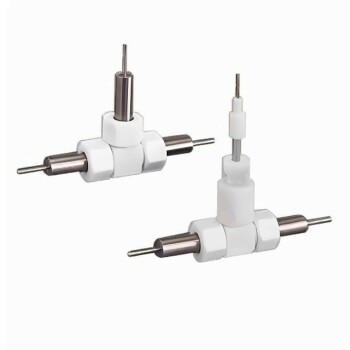
Precision-engineered inlet and outlet manifolds allow researchers to introduce high-purity oxygen directly to the cathode at specific flow rates. This controlled delivery is essential for studying the fundamental oxygen reduction and evolution reactions (ORR/OER) without gas-phase limitations.
Integration with Online Monitoring Systems
The sealed design allows for the accurate collection of trace reaction gases through the outlet manifold. These gases can be directed to mass spectrometers or other online analysis systems for in-situ monitoring, providing real-time insight into the reaction mechanisms.
Uniform Gas Distribution
The internal architecture of these cells is designed to ensure that oxygen is distributed evenly across the entire surface of the cathode. This uniformity prevents "hot spots" of activity and ensures that the entire electrode contributes equally to the measured capacity.
Mechanical Integrity and Structural Stability
Sustaining Internal Pressure Without Leakage
Li-O2 reactions can involve significant volume changes and gas evolution, leading to fluctuations in internal pressure. The high mechanical strength of stainless steel allows the cell to withstand these pressures without warping or leaking, maintaining the integrity of the experiment.
Maintaining Consistent Electrical Contact
High-precision conductive springs are integrated into the cell design to apply constant stacking pressure. This ensures that the anode, separator, and cathode remain in tight physical contact even as the electrodes expand or contract during cycling.
Minimizing Contact Resistance
By preventing components from loosening, these internal spring mechanisms keep contact resistance low and stable. This stability is critical for obtaining repeatable cyclic voltage curves and accurate impedance measurements.
Understanding the Trade-offs
Material Weight and Form Factor
Stainless steel cells are significantly heavier and bulkier than coin cells or pouch cells, which can limit the number of cells that can be tested simultaneously in a small environmental chamber. Their mass also means they have higher thermal inertia, which may slow down tests requiring rapid temperature changes.
Cost and Complexity of Assembly
The precision machining required for manifolds and hermetic seals makes these cells more expensive than disposable alternatives. Furthermore, the assembly process is more complex, requiring careful cleaning and specialized tools to ensure a perfect seal every time.
How to Apply This to Your Research Goal
Depending on the specific objectives of your lithium-oxygen battery study, the configuration of your test cell should be prioritized accordingly.
- If your primary focus is fundamental reaction mechanisms: Prioritize cells with integrated manifolds designed for seamless connection to Gas Chromatography-Mass Spectrometry (GC-MS) for real-time gas analysis.
- If your primary focus is long-term cycle life: Ensure the cell utilizes 316-grade stainless steel and FEP linings to prevent any long-term material degradation or electrolyte leakage.
- If your primary focus is high-rate performance: Focus on cell designs with high-tension conductive springs to minimize contact resistance during high-current pulses.
The transition to stainless steel sealed test cells represents a shift from simple battery testing to rigorous, high-precision electrochemical science.
Summary Table:
| Feature | Technical Advantage | Research Benefit |
|---|---|---|
| 316 Stainless Steel | High corrosion resistance & structural strength | Prevents electrolyte degradation and housing leaks |
| Gas Manifolds | Precision inlet/outlet control | Enables accurate ORR/OER studies & in-situ analysis |
| FEP Internal Lining | Secondary chemical barrier | Protects cell casing from reactive intermediates |
| Conductive Springs | Constant mechanical stacking pressure | Minimizes contact resistance for stable voltage curves |
| Hermetic Sealing | Complete exclusion of H2O and CO2 | Eliminates side reactions for pure electrochemical data |
Elevate Your Battery Research with KINTEK Precision
Don't let atmospheric contaminants or mechanical instability compromise your electrochemical data. KINTEK specializes in high-performance laboratory equipment, offering specialized battery research tools and consumables, including precision-engineered stainless steel sealed test cells designed for the most demanding Li-O2 experiments.
Beyond battery research, our comprehensive portfolio includes:
- High-Temperature Furnaces: Muffle, tube, vacuum, and CVD systems.
- Sample Processing: Crushing, milling, and hydraulic pellet presses.
- Specialized Reactors: High-pressure autoclaves and electrolytic cells.
- Lab Essentials: ULT freezers, ceramics, and PTFE consumables.
Whether you are a researcher focused on fundamental mechanisms or an industrial lab scaling high-rate performance, KINTEK provides the reliability and technical support you need to succeed.
Ready to optimize your lab setup? Contact KINTEK today to discuss your project requirements!
References
- Yanan Gao, Kohei Uosaki. Real time monitoring of generation and decomposition of degradation products in lithium oxygen batteries during discharge/charge cycles by an online cold trap pre-concentrator-gas chromatography/mass spectroscopy system. DOI: 10.1039/d2ra07670e
This article is also based on technical information from Kintek Solution Knowledge Base .
Related Products
- Li-Air Battery Case for Battery Lab Applications
- Battery Lab Equipment 304 Stainless Steel Strip Foil 20um Thick for Battery Test
- Cylindrical Battery Steel Case for Battery Lab
- Customizable Swagelok Type Test Cells for Advanced Battery Research Electrochemical Analysis
- Button Battery Disassembly and Sealing Mold for Lab Use
People Also Ask
- How to check if a lithium battery is good? Safely Test Voltage, Capacity & Internal Resistance
- Is there a way to test lithium batteries? Understand Voltage vs. True Health
- Why is the use of reaction containers with environmental control capabilities essential in mechanochemistry?
- Why is argon used instead of nitrogen? Ensuring Absolute Inertness for High-Stakes Applications
- What is the primary purpose of introducing a high-purity Argon (Ar) protective atmosphere during boriding? Expert Guide