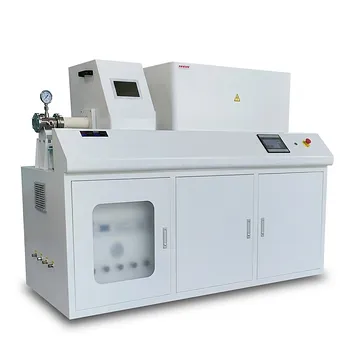
The single-chamber bottle reactor system provides a controlled bio-electrochemical environment specifically engineered to sustain microbial fuel cell (MFC) operations at room temperature. By integrating an air cathode with a three-dimensional carbon felt anode, this setup creates a distinct anaerobic zone necessary for electroactive bacteria to thrive, while simultaneously allowing for direct oxygen reduction at the cathode.
By eliminating the need for a secondary aeration chamber, this system streamlines the study of bio-energy. It creates a compact environment where anaerobic bacterial growth and real-time energy conversion efficiency can be monitored simultaneously under standard ambient conditions.
The Anatomy of the Process Environment
Creating the Anaerobic Anode Zone
The fundamental requirement of this process environment is the maintenance of anaerobic conditions within the liquid medium.
Despite being a single chamber, the design specifically fosters an oxygen-free zone around the anode. This is critical because the electroactive bacteria required for power generation function best in the absence of oxygen.
The Role of the Air Cathode
Unlike dual-chamber systems that may require pumped aeration, this environment utilizes an air cathode.
One side of the cathode is exposed to the liquid (electrolyte), while the other is exposed to the ambient air. This allows oxygen to act as the terminal electron acceptor passively, significantly simplifying the reactor architecture.
Utilizing Three-Dimensional Anodes
To maximize biological activity, the environment employs a three-dimensional carbon felt anode.
This material provides a vast surface area relative to its volume. The porous structure offers an ideal scaffold for bacterial attachment, allowing a robust biofilm to mature and facilitating efficient electron transfer.
Operational Parameters and Monitoring
Ambient Temperature Operation
The process is designed for stability and simplicity, operating effectively at room temperature.
This feature removes the need for complex thermal regulation systems. It allows researchers to evaluate the intrinsic performance of the biofilm without the variable of external heating.
Real-Time Efficiency Tracking
The environment allows for the continuous assessment of energy conversion efficiency.
By connecting the system to external load resistors, operators can monitor voltage output in real time. This data is essential for tracking the stages of biofilm maturation and the overall health of the bio-electrochemical reaction.
Understanding the Trade-offs
Balancing Oxygen Exposure
The primary challenge in this environment is maintaining the separation of conditions within a single vessel.
While the cathode needs air, the anode must remain anaerobic. If oxygen diffuses too deeply into the liquid from the cathode, it can inhibit the electroactive bacteria on the anode, reducing overall efficiency.
Dependency on Biofilm Maturation
The stability of this process environment is heavily dependent on the biological component.
Performance is not instantaneous; it relies on the successful colonization of the carbon felt anode. Real-time monitoring is therefore not just a feature, but a necessity to confirm that the biological community has stabilized.
Making the Right Choice for Your Research
If you are designing an experiment or building a prototype, consider these distinct operational goals:
- If your primary focus is streamlined reactor design: Utilize this system to eliminate the complexity of separate aeration pumps and dual-chamber membranes.
- If your primary focus is biological performance: Rely on the three-dimensional carbon felt anode to maximize bacterial load and electron transfer capability.
- If your primary focus is continuous data analysis: Use the external load resistor setup to correlate biofilm growth stages directly with energy output changes.
This reactor configuration offers the most direct path to observing the fundamental interaction between microbial metabolism and electrochemical energy conversion.
Summary Table:
| Feature | Environmental Specification |
|---|---|
| Anode Zone | Anaerobic (Oxygen-free) for electroactive bacteria |
| Cathode Type | Air-breathing (Passive oxygen reduction) |
| Anode Material | 3D Carbon Felt (High surface area for biofilm) |
| Temperature | Ambient / Room Temperature (Stable operation) |
| Monitoring | Real-time energy conversion via external load |
| Architecture | Single-chamber, membrane-less design |
Elevate Your Bio-Electrochemical Research with KINTEK
Are you looking to streamline your Microbial Fuel Cell (MFC) experiments? KINTEK specializes in precision laboratory equipment designed to meet the rigorous demands of renewable energy research. From high-performance electrolytic cells and electrodes to specialized high-temperature high-pressure reactors, our solutions provide the stability and accuracy your data requires.
Why choose KINTEK?
- Comprehensive Range: We offer everything from 3D carbon anodes to advanced cooling solutions and ceramic consumables.
- Precision Engineering: Our tools are built to support complex processes like biofilm maturation and real-time efficiency tracking.
- Expert Support: We help researchers select the right crushing, milling, and reactor systems for any scale of operation.
Ready to optimize your reactor setup? Contact us today to explore our full portfolio and find the perfect fit for your lab!
References
- Abdelghani Ghanam, Naoufel Haddour. Untreated vs. Treated Carbon Felt Anodes: Impacts on Power Generation in Microbial Fuel Cells. DOI: 10.3390/mi14122142
This article is also based on technical information from Kintek Solution Knowledge Base .
Related Products
- Customer Made Versatile CVD Tube Furnace Chemical Vapor Deposition Chamber System Equipment
- Custom PTFE Teflon Parts Manufacturer for Reagent Wide Mouth Fine Mouth Sample High Temperature Bottles
- Chemical Vapor Deposition CVD Equipment System Chamber Slide PECVD Tube Furnace with Liquid Gasifier PECVD Machine
- Multi Heating Zones CVD Tube Furnace Machine Chemical Vapor Deposition Chamber System Equipment
- Mini SS High Pressure Autoclave Reactor for Laboratory Use
People Also Ask
- What is a CVD tube furnace? A Complete Guide to Thin-Film Deposition
- What is the function of a high-temperature CVD tube furnace in 3D graphene foam prep? Master 3D Nanomaterial Growth
- How does a CVD tube furnace inhibit the sintering of silver supports? Boost Membrane Durability and Performance
- What is the function of a tube furnace in CVD SiC synthesis? Achieving Ultra-Pure Silicon Carbide Powders
- What is the difference between hot wall CVD and cold wall CVD? Choose the Right System for Your Process