PTFE-lined stainless steel reactors are essential for Al-based MOF synthesis because they provide a dual-purpose environment: chemical inertness to resist corrosive precursors and structural strength to withstand high internal pressures. This specialized setup allows solvents to remain in a liquid state far above their boiling points, creating the necessary conditions for the ordered nucleation and crystal growth of frameworks like MIL-53 and MIL-68 without contaminating the product with metallic impurities.
The core requirement for these reactors is to manage the extreme chemical and physical stresses of hydrothermal synthesis. The PTFE liner protects the reaction from contamination and the vessel from corrosion, while the stainless steel shell ensures the system remains sealed under high autogenous pressure.
The Role of the Sealed High-Pressure Environment
Facilitating Liquid Phase Reactions
Hydrothermal synthesis often occurs at temperatures exceeding the atmospheric boiling point of water or other solvents. A sealed stainless steel reactor allows these solvents to remain in a liquid state, which is critical for the dissolution and interaction of metal salts and organic ligands.
Driving Nucleation and Crystal Growth
The high autogenous pressure generated inside the vessel increases the solubility of the reactants. This increased solubility facilitates the self-assembly of metal ions and organic ligands, ensuring the formation of high-crystallinity MOF structures like MIL-68.
Enabling Long-Duration Stability
The synthesis of MIL-53 and similar MOFs often requires extended reaction times at constant high temperatures. The reactor's ability to maintain a stable, pressurized environment over days is vital for the complete growth of the crystal structures.
Chemical Protection and Purity Standards
Resistance to Corrosive Precursors
The synthesis of Al-based MOFs frequently involves acidic slurries or strong electrolytes that would aggressively corrode standard metal surfaces. The PTFE liner possesses exceptional chemical inertness, shielding the outer stainless steel shell from chemical attack and degradation.
Elimination of Metal Ion Contamination
If reactants were to touch the metal walls of the reactor, iron or nickel ions could leach into the solution. The PTFE liner acts as a barrier, ensuring that no external metallic impurities interfere with the experimental results or the purity of the synthesized MOF.
Maintaining Catalyst Integrity
For MOFs intended for use as catalysts or electrocatalysts, even trace amounts of wall-leached metals can alter their functional properties. The use of PTFE ensures the structural integrity and high purity required for advanced functional materials.
Understanding the Trade-offs
Temperature Limitations
While PTFE is highly inert, it has a physical limit; it typically should not be used at temperatures exceeding 220°C to 250°C. At higher temperatures, the liner may deform or release toxic vapors, potentially compromising the seal or the reaction.
Differential Thermal Expansion
PTFE and stainless steel expand at different rates when heated, which can cause the liner to warp if the heating and cooling cycles are too rapid. This necessitates controlled temperature ramps to preserve the life of the liner and the integrity of the seal.
Mechanical Pressure Constraints
While the PTFE liner handles the chemistry, it has no structural strength; the stainless steel shell must be correctly rated for the intended pressure. If the venting or sealing mechanism of the shell fails, the chemical inertness of the liner becomes irrelevant to the safety of the operation.
How to Apply This to Your Project
Recommendations for Synthesis Goals
- If your primary focus is high-purity crystalline MOFs: Ensure the PTFE liner is thoroughly cleaned and inspected for scratches where metal salts could hide, as this maintains the highest possible reaction purity.
- If your primary focus is structural safety at high temperatures: Verify that your stainless steel shell is rated for the specific autogenous pressure of your solvent at your target temperature, as the liner provides no mechanical support.
- If your primary focus is synthesizing acidic MIL-series MOFs: Always utilize a PTFE liner rather than a glass insert, as PTFE offers superior resistance to the acidic aqueous solutions often required for Al-based frameworks.
By leveraging the chemical resistance of PTFE and the mechanical strength of stainless steel, researchers can safely navigate the high-energy environments required to create sophisticated metal-organic frameworks.
Summary Table:
| Component | Primary Function | Key Benefit for MOF Synthesis |
|---|---|---|
| PTFE Liner | Chemical Inertness | Prevents corrosion and eliminates metal ion contamination. |
| Stainless Steel Shell | Structural Strength | Safely withstands high autogenous pressures during heating. |
| Sealed Environment | Pressure Management | Keeps solvents liquid above boiling point to drive crystal growth. |
| Thermal Control | Regulated Heating | Ensures stable nucleation for frameworks like MIL-53 and MIL-68. |
Elevate Your MOF Research with KINTEK
Achieving the high-purity crystalline structures required for MIL-53 and MIL-68 demands equipment that balances extreme chemical resistance with mechanical safety. KINTEK specializes in high-performance high-temperature high-pressure reactors and autoclaves designed specifically for rigorous hydrothermal synthesis.
Our PTFE-lined solutions ensure your experiments remain free from metallic impurities while safely managing high internal pressures. Beyond reactors, KINTEK offers a comprehensive laboratory portfolio, including crushing and milling systems, hydraulic presses, and advanced ceramics to support your entire material science workflow.
Ready to optimize your synthesis process? Contact us today to discuss your specific requirements and discover how our precision equipment can drive your research forward.
References
- Hongyan Li, Bao‐Lian Su. Pore structure unveiling effect to boost lithium-selenium batteries: selenium confined in hierarchically porous carbon derived from aluminum based MOFs. DOI: 10.20517/cs.2023.16
This article is also based on technical information from Kintek Solution Knowledge Base .
Related Products
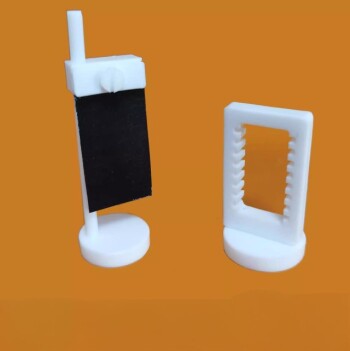
- Custom PTFE Teflon Parts Manufacturer for Hydrothermal Synthesis Reactor Polytetrafluoroethylene Carbon Paper and Carbon Cloth Nano-growth
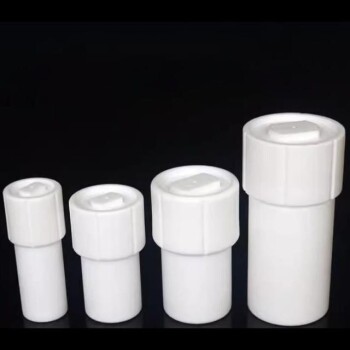
- Custom PTFE Teflon Parts Manufacturer for Reagent Wide Mouth Fine Mouth Sample High Temperature Bottles
- Stainless High Pressure Autoclave Reactor Laboratory Pressure Reactor
- Customizable High Pressure Reactors for Advanced Scientific and Industrial Applications
- Custom PTFE Teflon Parts Manufacturer for Microwave Digestion Tank
People Also Ask
- What is the function of a PTFE reactor in MXene etching? Ensure Safe, High-Purity MAX Phase Conversion
- Why is a PTFE reactor required for titanium-based nano-ceramic coating solutions? Ensure Chemical Inertness & Purity
- Why must a Polytetrafluoroethylene (PTFE) reactor be used for Ti3C2TX MXene etching? Ensure Safety and Purity
- Why are PTFE reactors preferred for silver phosphate glass testing? Ensure Purity and Kinetic Accuracy
- What are the advantages of using polytetrafluoroethylene (PTFE) liners in hydrothermal synthesis reactors? High Purity