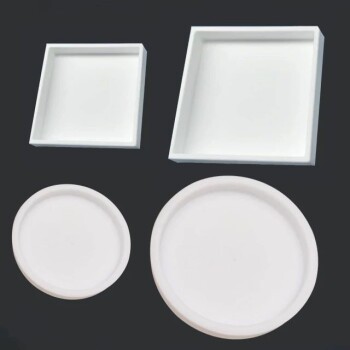
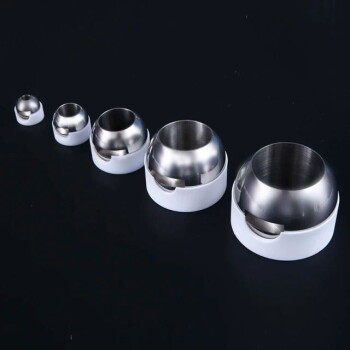
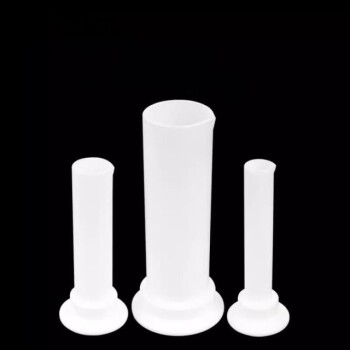
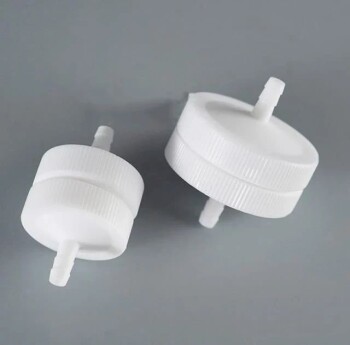
PTFE seals and liners are critical because they provide an chemically inert, heat-stable barrier that prevents corrosive solvents from damaging the reactor while maintaining the high pressures required for synthesis. During solvothermal reactions, organic solvents become highly aggressive under subcritical conditions; PTFE ensures these fluids remain contained without leaking or leaching metal contaminants from the reactor walls into the final product.
Core Takeaway: PTFE is the industry standard for solvothermal sealing because it combines extreme chemical resistance with the physical flexibility needed to maintain a leak-proof environment at temperatures and pressures where traditional materials would fail or cause contamination.
The Role of Chemical Inertness and Corrosion Resistance
Protecting the Reactor Infrastructure
Solvothermal processes often utilize aggressive organic solvents such as DMF, NMP, and methanol, or strong electrolytes that become highly corrosive at high temperatures. PTFE (Polytetrafluoroethylene) acts as a primary shield, preventing these "hungry" solvents from directly contacting and corroding the stainless steel body of the reactor.
Preventing Sample Contamination
Without a PTFE barrier, the reaction medium can leach metal ions like iron, chromium, or nickel from the reactor walls. This isolation is vital for ensuring the high purity of the synthesized materials, such as binary metal sulfides or nanometer-scale powders, where even trace metal contamination can alter the final properties.
Compatibility with Diverse Reagents
PTFE remains stable in the presence of both strong acids and alkalis, making it a versatile choice for a wide range of chemical stoichiometric ratios. This universal compatibility allows researchers to use a single reactor setup for various experimental goals without fearing material degradation.
Maintaining the High-Pressure Environment
Facilitating Autogenous Pressure
In a sealed solvothermal system, heating a solvent above its boiling point generates autogenous pressure. PTFE seals ensure a tight, reliable closure that prevents these pressurized vapors from escaping, allowing the system to reach the subcritical state necessary for the reaction.
Enhancing Solubility and Reactivity
The high-pressure environment maintained by PTFE seals significantly increases the solubility and reactivity of precursors. This allows for the uniform growth of crystals and molecular-level coupling between components, such as growing ligands onto carbon surfaces, which would be impossible at atmospheric pressure.
Flexibility and Hydrostatic Transfer
PTFE is naturally flexible, which allows it to function effectively as a seal under mechanical stress. In specialized processes like warm isostatic pressing, PTFE components act as barriers that accurately transfer hydrostatic pressure to the reaction liquid while preventing external medium contamination.
Understanding the Trade-offs and Limitations
Temperature Ceiling and Thermal Stability
While PTFE is thermally stable, it has a functional limit, typically between 200°C and 250°C. Exceeding these temperatures can lead to material softening, which compromises the seal’s integrity and risks the release of toxic fluorinated vapors.
Physical Deformation and "Creep"
Under sustained high pressure and temperature, PTFE is prone to "cold flow" or creep, where the material slowly deforms over time. This means seals must be regularly inspected and replaced to prevent unexpected leaks or the "wedging" of liners inside the reactor body.
Pressure Limitations in Large Vessels
As the size of the reactor increases, the reliance on a soft PTFE seal becomes more complex. In very large industrial applications, the risk of seal failure increases, often requiring secondary metal-to-metal backup seals or reinforced PTFE composites to handle the mechanical load.
How to Apply This to Your Project
When selecting or maintaining PTFE components for your high-pressure reactor, consider your primary experimental objective to ensure safety and accuracy.
- If your primary focus is product purity: Use a full PTFE liner in addition to the seal to ensure that the reaction medium never touches the metal walls, preventing any leaching of iron or nickel ions.
- If your primary focus is high-temperature synthesis (above 220°C): Consider alternative materials like PPL (Polyphenylene polymers) which offer higher thermal resistance, as standard PTFE may begin to deform or lose its sealing properties.
- If your primary focus is solvent recovery or volatile reactions: Ensure that the PTFE seal is correctly seated and replaced after every few runs, as the "memory" of the material fades with repeated thermal cycling, increasing the risk of pressure loss.
PTFE remains the most reliable material for enabling the extreme conditions required for modern solvothermal chemistry.
Summary Table:
| Feature | Benefit in Solvothermal Reactions | Considerations |
|---|---|---|
| Chemical Inertness | Prevents reactor corrosion and metal ion contamination of samples. | Ideal for aggressive organic solvents and strong acids. |
| Pressure Retention | Maintains autogenous pressure for subcritical reaction states. | Essential for increasing precursor solubility and reactivity. |
| Material Flexibility | Creates a reliable, tight seal under high mechanical stress. | Subject to "creep" or physical deformation over time. |
| Thermal Stability | Stable performance up to 200°C–250°C. | Exceeding limits risks seal failure and toxic vapor release. |
Optimize Your Synthesis with KINTEK Precision Laboratory Solutions
Ensure the integrity and purity of your solvothermal research with KINTEK’s industry-leading laboratory equipment. We specialize in providing high-performance high-temperature high-pressure reactors and autoclaves equipped with premium PTFE seals and liners to withstand the most aggressive chemical environments.
Whether you need precision high-temperature furnaces (muffle, tube, vacuum), robust hydraulic presses, or high-purity ceramics and crucibles, KINTEK delivers the reliability your experiments demand. From battery research tools to specialized cooling solutions, our comprehensive portfolio is designed to enhance your lab's efficiency and safety.
Ready to upgrade your reactor setup or source high-quality consumables?
Contact KINTEK Experts Today to find the perfect solution for your specific application needs!
References
- Arseniy Y. Kalnin, Elena V. Alekseeva. Copper-driven catalyst design for improved oxygen reduction reactions in carbon-based materials. DOI: 10.31300/ctec.25.2023.65-72
This article is also based on technical information from Kintek Solution Knowledge Base .
Related Products
- Custom PTFE Teflon Parts Manufacturer for Gaskets and More
- Custom PTFE Teflon Parts Manufacturer for Hydrothermal Synthesis Reactor Polytetrafluoroethylene Carbon Paper and Carbon Cloth Nano-growth
- Custom Machined and Molded PTFE Teflon Parts Manufacturer with PTFE Crucible and Lid
- PTFE Electrolytic Cell Electrochemical Cell Corrosion-Resistant Sealed and Non-Sealed
- Stainless High Pressure Autoclave Reactor Laboratory Pressure Reactor
People Also Ask
- What technical advantages do PTFE seals provide in high-pressure CO2? Optimize Your Seal Integrity
- What are the critical functions of Polytetrafluoroethylene (PTFE) gaskets within a glow discharge unit? Enhance Precision
- How are PTFE gaskets utilized for POEGMA electrolyte conductivity? Ensure Precision in Electrochemical Measurements
- What is the purpose of using PTFE gaskets in fuel cell test fixtures? Ensure Seal Purity and Data Integrity
- What protective roles do Sealing Gaskets and Support Grids play in oil-water separation? Ensure High-Pressure Integrity