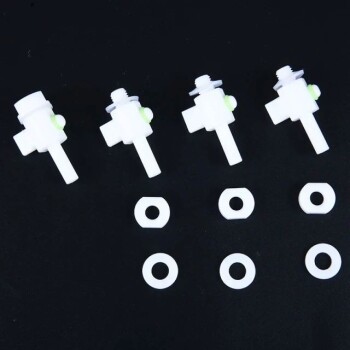
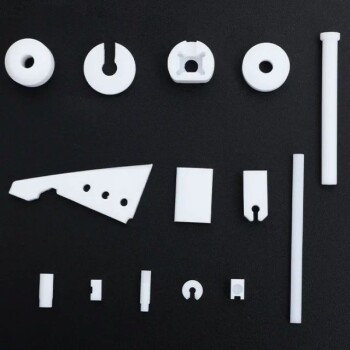
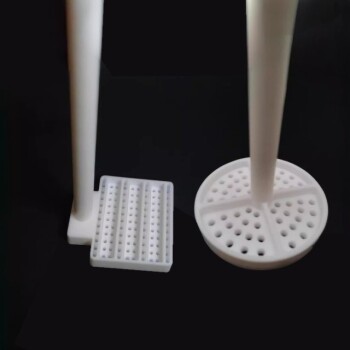
The primary function of Polytetrafluoroethylene (PTFE) gaskets in a glow discharge unit is to serve as a high-precision electrical insulator. Positioned critically between the anode and the sample, these gaskets confine the discharge voltage to a specific, designated area. This confinement is essential for preventing electrical faults and ensuring the physical accuracy of the sputtering process.
By strictly defining where the high-voltage discharge occurs, the PTFE gasket transforms the unit from a simple electrical circuit into a precision analytical tool. It prevents charge leakage that would otherwise destabilize the plasma and compromise the integrity of your data.
The Role of Electrical Isolation
Preventing Charge Leakage
The fundamental role of the PTFE gasket is to act as a barrier between the anode and the sample.
Without this barrier, electricity follows the path of least resistance, which may not be the intended analysis spot. The gasket blocks these alternate paths, preventing charge leakage that would dilute the effectiveness of the discharge.
Eliminating Unintended Arcs
High-voltage environments are prone to arcing—uncontrolled electrical discharges that can damage the sample or the instrument.
By providing a robust dielectric seal, the PTFE gasket suppresses these unintended arcs. This ensures the energy is directed entirely into creating a controlled glow discharge plasma.
Ensuring Analytical Precision
Defining the Sputtered Region
The gasket does more than insulate; it acts as a spatial mask.
It forces the discharge voltage to generate only within the open area of the gasket. This guarantees that the material being sputtered and analyzed comes from the exact region of interest, maintaining high spatial accuracy.
Maintaining Plasma Stability
Stable data requires stable plasma.
Any fluctuation in voltage or current leakage disrupts the plasma equilibrium. By sealing the discharge zone, the gasket maintains the constant conditions necessary for a steady, reliable glow discharge.
Understanding the Trade-offs
The Necessity of Precise Positioning
The effectiveness of the PTFE gasket is entirely dependent on its placement.
As noted in standard operating procedures, these gaskets must be "precisely positioned." Even a minor misalignment can break the insulation barrier, leading to immediate charge leakage.
Mechanical Limitations
While PTFE is an excellent insulator, it is a physical component subject to wear.
The gasket must maintain a perfect seal under pressure. If the material degrades or deforms, the definition of the sputtered region will blur, directly impacting the accuracy of your results.
Ensuring Data Integrity
To maximize the performance of your glow discharge unit, view the PTFE gasket as a consumable precision component rather than a permanent fixture.
- If your primary focus is data accuracy: Regularly inspect the inner edge of the gasket to ensure the sputtered region remains sharply defined and free of irregularities.
- If your primary focus is instrument safety: Verify the precise positioning of the gasket before every run to prevent arc discharges that could damage the anode or sample surface.
A well-maintained gasket is the silent guardian of your spectrometer's stability and your analytical confidence.
Summary Table:
| Function | Description | Impact on Performance |
|---|---|---|
| Electrical Insulation | Acts as a high-precision barrier between anode and sample. | Prevents electrical faults and charge leakage. |
| Arc Suppression | Eliminates unintended electrical arcs. | Protects the sample and instrument from damage. |
| Spatial Masking | Defines the exact area to be sputtered. | Ensures high spatial accuracy for data integrity. |
| Plasma Stabilization | Maintains constant voltage/current conditions. | Delivers steady, reliable, and reproducible results. |
Elevate Your Analytical Precision with KINTEK Lab Solutions
Don't let faulty insulation compromise your data integrity. KINTEK specializes in high-performance laboratory equipment and precision consumables designed for the most demanding environments. Whether you need high-quality PTFE products and crucibles for stable glow discharge, or advanced high-temperature furnaces and vacuum systems for material research, we provide the tools that guarantee accuracy.
Our comprehensive range for laboratory professionals includes:
- Specialized Consumables: Precision-engineered PTFE gaskets, ceramics, and chemical-resistant labware.
- Research Systems: CVD/PECVD units, high-pressure reactors, and battery research tools.
- Processing Equipment: Crushing, milling, and high-pressure hydraulic presses.
Ready to optimize your lab’s performance? Contact our technical experts today to discover how KINTEK’s precision consumables and equipment can enhance your research outcomes.
References
- R. Shekhar, Sanjiv Kumar. Characterization of Hafnium Metal for its Impurities by Glow Discharge Quadrupole Mass Spectrometry Using a Non-Matrix Matched Standard. DOI: 10.46770/as.2020.03.002
This article is also based on technical information from Kintek Solution Knowledge Base .
Related Products
- Custom PTFE Teflon Parts Manufacturer for Gaskets and More
- Custom PTFE Teflon Parts Manufacturer for Hollow Cleaning Basket and Rack Carrier
- Custom PTFE Teflon Parts Manufacturer for PTFE Bottle Oil Fume Sampling Tube
- Custom PTFE Teflon Parts Manufacturer for Air Valve Applications
- Custom PTFE Teflon Parts Manufacturer for Non-Standard Insulator Customization
People Also Ask
- What technical advantages do PTFE seals provide in high-pressure CO2? Optimize Your Seal Integrity
- How are PTFE gaskets utilized for POEGMA electrolyte conductivity? Ensure Precision in Electrochemical Measurements
- What is the purpose of using PTFE gaskets in fuel cell test fixtures? Ensure Seal Purity and Data Integrity
- What protective roles do Sealing Gaskets and Support Grids play in oil-water separation? Ensure High-Pressure Integrity
- What is the function of Polytetrafluoroethylene (PTFE) sleeves and gaskets? Ensure Precise Corrosion Testing Accuracy