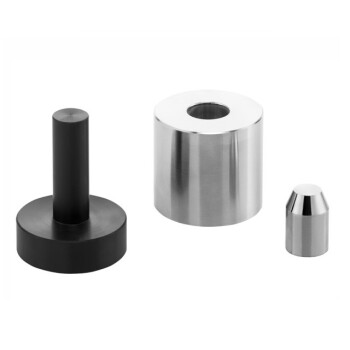
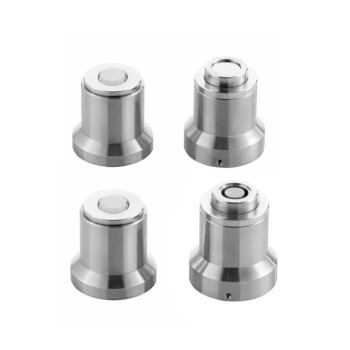
In high-pressure oil-water separation systems, the auxiliary components are just as critical as the filtration medium itself. Chemical inert Sealing Gaskets are deployed to seal the separation chamber and prevent unfiltered oil from bypassing the process. Simultaneously, high-strength Support Grids act as a structural backbone, preventing the delicate glass fiber membranes from rupturing under intense hydraulic pressure.
Core Insight: These components function as the system's "defense layer," transforming a fragile filtration membrane into a robust industrial solution. While gaskets ensure that the fluid actually passes through the filter rather than around it, support grids prevent catastrophic physical failure during high-throughput operations.
The Role of Chemical Inert Sealing Gaskets
The primary function of the sealing gasket is to maintain the integrity of the flow path within the separation chamber.
Preventing Bypass Leakage
In any filtration system, fluids will always follow the path of least resistance. Without a perfect seal, oil and water would flow around the membrane rather than through it.
Sealing Gaskets ensure tightness within the separation chamber. This guarantees that 100% of the fluid is subjected to the separation process, preventing "bypass leakage" that would compromise output purity.
Chemical Inertness
The reference specifically highlights these gaskets as "chemical inert."
This property is vital because the gasket is in constant contact with oil and water mixtures. An inert material will not degrade, swell, or react with the fluids, ensuring the seal remains tight over long operational periods.
The Function of High-Strength Support Grids
While the gasket handles the flow path, the Support Grid manages the physical stress placed on the system.
Mechanical Reinforcement
The actual separation is performed by glass fiber membranes. While effective at separation, these membranes are often thin and mechanically fragile.
The high-strength Support Grid provides a rigid physical under-layer. It bears the structural load, allowing the delicate membrane to rest on top without taking the full brunt of the mechanical stress.
Withstanding High Circulation Pressures
To achieve industrial-grade throughput, fluids are driven through the system at high pressures.
Without reinforcement, the pressure differential would cause the membrane to stretch, deform, or tear. The grid prevents this deformation, enabling the system to operate continuously at the high pressures required for large-scale processing.
Critical Considerations and Trade-offs
While these components are protective, they introduce specific engineering constraints that must be managed.
The Limits of Support
Even with a high-strength grid, the membrane is not invincible.
If the pressure spikes beyond the grid's design specifications, the membrane can still be forced into the grid's pores (an effect known as "intrusion"). This underscores the importance of matching grid mesh size to membrane thickness.
Compatibility is Key
The effectiveness of the chemical inert gasket relies entirely on correct material selection for the specific oil type being processed.
A gasket that is inert to standard crude oil might fail when exposed to synthetic oils or harsh cleaning solvents. Misalignment here leads to seal degradation and immediate efficiency loss.
Making the Right Choice for Your Goal
To optimize your continuous oil-water separation equipment, consider which aspect of protection aligns with your operational priorities.
- If your primary focus is Output Purity: Prioritize the quality and material compatibility of the Sealing Gaskets to ensure zero bypass leakage.
- If your primary focus is High Throughput/Speed: Ensure your Support Grids are rated for pressures exceeding your maximum operating range to prevent membrane tearing.
Summary: The reliability of industrial separation relies not just on the filter, but on the gasket's ability to direct flow and the grid's ability to endure pressure.
Summary Table:
| Component | Primary Function | Key Benefit | Technical Necessity |
|---|---|---|---|
| Chemical Inert Sealing Gasket | Chamber Sealing | Prevents Bypass Leakage | Ensures 100% fluid filtration & purity |
| High-Strength Support Grid | Mechanical Reinforcement | Prevents Membrane Rupture | Withstands high circulation pressures |
| Glass Fiber Membrane | Media Separation | High Efficiency | Requires physical support for durability |
Maximize Your Filtration Efficiency with KINTEK
Don't let mechanical failure or bypass leakage compromise your laboratory or industrial throughput. KINTEK specializes in premium laboratory equipment and high-performance consumables designed for the most demanding environments. Whether you need chemical-resistant PTFE products, high-pressure autoclaves, or precision pellet presses, our team provides the robust solutions required for continuous, reliable operation.
Our value to you:
- Durability: Components engineered to withstand extreme pressures and corrosive chemicals.
- Precision: Ensure 100% process integrity with our high-grade sealing and support solutions.
- Expertise: Comprehensive support for battery research, material science, and chemical processing.
Contact KINTEK Today to Optimize Your System
References
- Seeun Woo, Woonbong Hwang. Robust and continuous oil/water separation with superhydrophobic glass microfiber membrane by vertical polymerization under harsh conditions. DOI: 10.1038/s41598-020-78271-9
This article is also based on technical information from Kintek Solution Knowledge Base .
Related Products
- Custom PTFE Teflon Parts Manufacturer for Gaskets and More
- Button Battery Case Gasket for Battery Lab Applications
- Zirconia Ceramic Gasket Insulating Engineering Advanced Fine Ceramics
- Hexagonal Boron Nitride HBN Spacer Cam Profile and Various Spacer Types
- Stainless Steel Quick Release Vacuum Chain Three-Section Clamp
People Also Ask
- What technical advantages do PTFE seals provide in high-pressure CO2? Optimize Your Seal Integrity
- What are the critical functions of Polytetrafluoroethylene (PTFE) gaskets within a glow discharge unit? Enhance Precision
- How are PTFE gaskets utilized for POEGMA electrolyte conductivity? Ensure Precision in Electrochemical Measurements
- What is the purpose of using PTFE gaskets in fuel cell test fixtures? Ensure Seal Purity and Data Integrity
- What is the function of Polytetrafluoroethylene (PTFE) sleeves and gaskets? Ensure Precise Corrosion Testing Accuracy