Tungsten carbide-cobalt (WC–Co) grinding media is the industry standard for processing high-hardness ceramics primarily because it is one of the few materials robust enough to withstand the process without disintegrating.
When grinding extremely hard materials like boron carbide (B4C), standard media (like stainless steel) suffers from rapid "peeling" and wear. WC–Co alloys possess exceptional hardness and wear resistance, which significantly reduces the degradation of the grinding balls. This durability minimizes the introduction of foreign impurities, protecting the purity and structural integrity of the final composite powder.
Core Takeaway To effectively grind hard ceramics, you need media that is harder and denser than the target material to generate sufficient impact energy. WC–Co offers the necessary density to refine particles and introduce essential lattice defects, while its wear resistance prevents the massive contamination levels seen with softer grinding media.
The Physics of Grinding Hard Ceramics
Overcoming Extreme Hardness
Boron carbide is one of the hardest materials known. If you attempt to mill it using media with lower hardness, the media itself will be ground down rather than the powder. WC–Co alloys provide the extreme hardness required to act effectively against B4C particles. This ensures that the mechanical forces are directed at refining the powder size rather than wearing away the grinding jar walls or balls.
The Role of Density and Kinetic Energy
Effective grinding is not just about hardness; it is about force. WC–Co is significantly denser than ceramic or steel alternatives. High-density media translates to high kinetic energy during rotation (e.g., at 300 r/min). This powerful impact is necessary to:
- Physically shatter and refine the ceramic particles.
- Introduce essential lattice defects and mechanochemical reactions.
- Drive the alloying process efficiently within reasonable timeframes.
Purity and Contamination Control
Minimizing Media Peeling
All grinding processes introduce some level of contamination due to friction. However, the goal is to minimize this. The excellent wear resistance of WC–Co prevents the "peeling" effect common in softer metals. By maintaining their structural integrity, WC–Co balls ensure that the volume of foreign material introduced into the batch remains negligible, thereby preserving the chemical purity of the B4C composite.
Superiority Over Stainless Steel
Compared to media like stainless steel, WC–Co is far less reactive and much more durable. Using steel balls on hard ceramics typically results in significant iron contamination, which degrades the mechanical and electrical properties of the final product. WC–Co acts as a safeguard against this type of metallic impurity introduction.
Understanding the Trade-offs
The Risk of Over-Grinding
While WC–Co is durable, it is not invincible. Extended milling times—specifically periods exceeding 60 minutes—can eventually cause wear even in WC media. This introduces tungsten carbide impurities into the powder, which can create structural defects in the crystal lattice and degrade the performance of the material (such as reducing specific capacity in battery applications).
Alternative Media for Specific Needs
It is important to note that for applications requiring absolute chemical inertness or zero metallic presence, WC–Co might still be too reactive. In scenarios where any metallic trace is unacceptable, engineers may opt for Polyurethane jars or Corundum (alumina) balls.
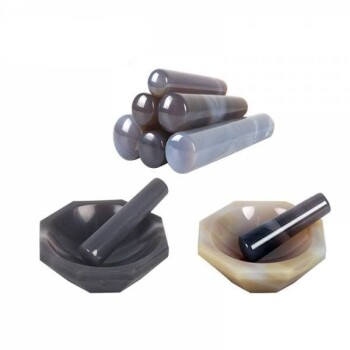
- Polyurethane/Agate: Used when chemical inertness is the highest priority, though they lack the high impact energy of WC.
- Corundum: Often selected because the wear debris (alumina) acts as a sintering aid rather than a contaminant.
Making the Right Choice for Your Goal
Selecting the correct grinding media depends on balancing the need for impact energy against the tolerance for specific impurities.
- If your primary focus is high-efficiency particle refinement: Choose WC–Co for its high density and impact energy, which allows for rapid size reduction and mechanical alloying.
- If your primary focus is avoiding metallic contamination: Consider Polyurethane or Agate, understanding that the grinding process will be slower and possess less kinetic energy.
- If your primary focus is compatible impurities: Choose Corundum (Alumina) if alumina is already a functional part of your material's sintering recipe.
In summary, choose Tungsten Carbide-Cobalt when you need the physical force to break down the hardest ceramics without the media destroying itself in the process.
Summary Table:
| Feature | Tungsten Carbide (WC-Co) | Stainless Steel | Alumina/Corundum | Agate/Polyurethane |
|---|---|---|---|---|
| Hardness | Extremely High | Moderate | High | Moderate |
| Density | Very High (High Impact) | Moderate | Low | Low |
| Wear Resistance | Excellent | Poor (Peeling) | Good | Moderate |
| Best For | High-Hardness Ceramics | Soft Materials | Sintering-Compatible Mixes | High Chemical Purity |
| Main Advantage | Efficiency & Durability | Low Cost | Compatible Debris | Zero Metal Contamination |
Optimize Your Material Processing with KINTEK Precision Solutions
Achieving the perfect particle size for high-hardness ceramics requires equipment that stands up to the challenge. KINTEK specializes in premium laboratory equipment and consumables, providing the high-performance tungsten carbide grinding jars and balls, crushing and milling systems, and hydraulic presses you need for superior results.
Whether you are working on advanced battery research, mechanical alloying, or structural ceramics, our comprehensive portfolio—including high-temperature furnaces, high-pressure reactors, and specialized milling tools—is designed to enhance your lab's efficiency and purity standards.
Ready to upgrade your grinding efficiency? Contact our experts today to find the ideal WC-Co media or customized milling solution for your specific application.
References
- Levan Chkhartishvili, Roin Chedia. Obtaining Boron Carbide and Nitride Matrix Nanocomposites for Neutron-Shielding and Therapy Applications. DOI: 10.3390/condmat8040092
This article is also based on technical information from Kintek Solution Knowledge Base .
Related Products
- Laboratory Jar Mill with Agate Grinding Jar and Balls
- Laboratory Jar Ball Mill with Alumina Zirconia Grinding Jar and Balls
- Laboratory Ball Mill Jar Mill with Metal Alloy Grinding Jar and Balls
- Laboratory Single Horizontal Jar Mill
- Laboratory Four-Body Horizontal Jar Mill
People Also Ask
- What are the different types of laboratory mills? Choose the Right Grinder for Your Sample Material
- What is use for grinding in the laboratory? Select the Right Mill for Accurate Sample Prep
- What laboratory apparatus is used for grinding? Match the Right Mill to Your Sample Material
- What is the function of a laboratory grinding mill? Achieve Precise Sample Preparation for Accurate Results
- Why are agate milling jars and balls used for Mo-La2O3 powder mixing? Ensure High-Purity Material Dispersion