Yttria-stabilized zirconia (YSZ) is preferred for milling Si2N2O matrix powder because it solves the dual challenge of achieving fine particle size while preventing chemical contamination. Its exceptional hardness and density allow it to deliver high kinetic energy for effective refining, while its superior wear resistance ensures that no metallic impurities degrade the ceramic's purity.
Core Takeaway The success of milling advanced ceramics relies on "clean energy"—delivering enough force to pulverize the powder without degrading the grinding media itself. Yttria-stabilized zirconia is the standard choice because its high density provides the necessary crushing force, while its extreme durability prevents wear-related impurities from compromising the final material's chemical stability.
Preserving Material Purity
Eliminating Metallic Contamination
The primary danger during the milling of Si2N2O is the introduction of foreign substances. Standard steel media can shed iron and other metals into the powder.
YSZ media possesses excellent wear resistance due to its extreme hardness. This durability prevents the media from degrading during the milling process, ensuring that the powder remains free of metallic impurities.
Verifying Chemical Stability
The purity maintained by YSZ is not just theoretical; it is measurable. Techniques such as electron probe microanalysis (EPMA-WDS) have confirmed that using zirconia beads results in a chemically stable matrix.
By minimizing wear, you ensure that the chemical composition of your raw materials remains exactly as intended. This is critical for maintaining the specific performance characteristics of the final ceramic product.
Maximizing Milling Efficiency
The Advantage of High Density
Hardness alone is not enough; the media must also carry weight. YSZ has a high density, which translates directly into kinetic energy during the milling process.
When the milling jar rotates, the heavier zirconia beads impact the Si2N2O powder with greater force than lighter ceramic alternatives. This allows for more efficient refinement of the powder structure.
Precision Refinement
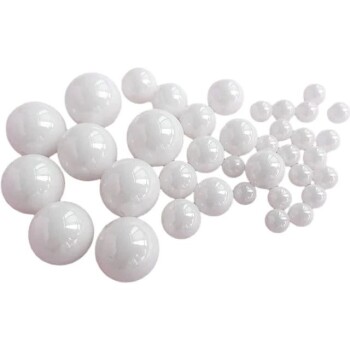
Achieving a specific particle size often requires specific media sizing. The high density of zirconia allows for the use of smaller beads, such as those with a 300-micrometer diameter, without losing impact force.
These smaller, high-energy beads can grind raw materials down to very fine scales. This creates a uniform powder bed essential for high-quality sintering and densification.
Understanding the Trade-offs
Cost vs. Performance
While YSZ offers superior performance, it is generally more expensive than standard alumina or steel media. You are paying a premium for the combination of high density and fracture toughness.
The Limits of Wear Resistance
"Low wear" does not mean "zero wear." While YSZ drastically reduces contamination compared to other options, prolonged high-energy milling will eventually cause some media abrasion.
However, in the context of ceramic matrices, zirconia contamination is often less detrimental to the final properties than metallic contamination from steel balls.
Making the Right Choice for Your Goal
To ensure your milling process yields the best results for your Si2N2O matrix, consider the following:
- If your primary focus is Purity: Use Yttria-stabilized zirconia to eliminate the risk of metallic contamination and ensure chemical stability.
- If your primary focus is Particle Refinement: Rely on the high density of zirconia beads (specifically smaller sizes like 300 micrometers) to generate the kinetic energy needed for fine pulverization.
Select YSZ media when the chemical integrity of your final ceramic product is non-negotiable.
Summary Table:
| Feature | YSZ Grinding Media | Standard Steel Media | Impact on Si2N2O |
|---|---|---|---|
| Material Purity | High (Ceramic-compatible) | Low (Metallic iron shed) | Prevents chemical degradation |
| Wear Resistance | Exceptional | Moderate to Low | Ensures long-term powder stability |
| Density | High (~6.0 g/cm³) | High (~7.8 g/cm³) | Delivers necessary kinetic energy |
| Contamination | Minimal (Zirconia) | High (Fe, Cr, Ni) | Maintains Si2N2O matrix integrity |
| Refinement | Fine (down to 300μm) | Coarse to Fine | Enables uniform sintering density |
Elevate Your Material Purity with KINTEK
Don't let inferior grinding media compromise your advanced ceramic research. KINTEK specializes in premium laboratory equipment and high-performance consumables designed for precision. Whether you are refining Si2N2O matrix powders or developing next-generation ceramics, our Yttria-stabilized zirconia (YSZ) media, crushing and milling systems, and high-temperature furnaces provide the "clean energy" your process demands.
From milling systems and sieving equipment to high-pressure reactors and pellet presses, we offer the complete toolkit for battery research, material science, and industrial manufacturing.
Ready to optimize your milling efficiency? Contact KINTEK today to find the perfect grinding solution for your specific application!
References
- Brice Taillet, F. Teyssandier. Densification of Ceramic Matrix Composite Preforms by Si2N2O Formed by Reaction of Si with SiO2 under High Nitrogen Pressure. Part 1: Materials Synthesis. DOI: 10.3390/jcs5070178
This article is also based on technical information from Kintek Solution Knowledge Base .
Related Products
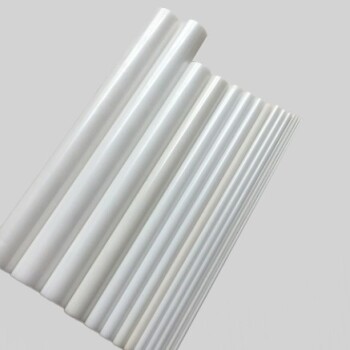
- Precision Machined Yttrium Stabilized Zirconia Ceramic Rod for Engineering Advanced Fine Ceramics
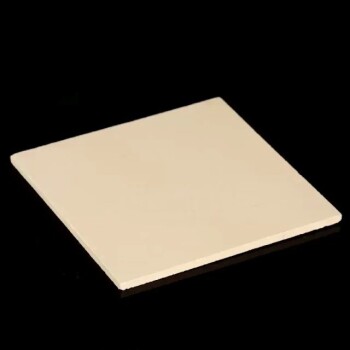
- Precision Machined Yttria Stabilized Zirconia Ceramic Plate for Engineering Advanced Fine Ceramics
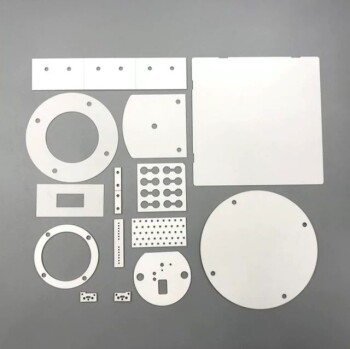
- Custom-Made Alumina Zirconia Special-Shaped Ceramic Plates for Engineering Advanced Fine Ceramics Processing
- Precision Machined Zirconia Ceramic Ball for Engineering Advanced Fine Ceramics
People Also Ask
- What is the purpose of adding yttria to zirconia? Master High-Performance Ceramic Stability and Strength
- What type of zirconia is most commonly used in dentistry? Choose Between Strength and Aesthetics
- What are the applications of zirconia ceramics? Unlock High-Performance Solutions for Extreme Environments
- Why is yttria-stabilized zirconia (YSZ) used as grinding media for NaSICON? Ensure Purity and Milling Efficiency
- What are the useful applications of ceramics? Unlock High-Performance Solutions for Your Industry