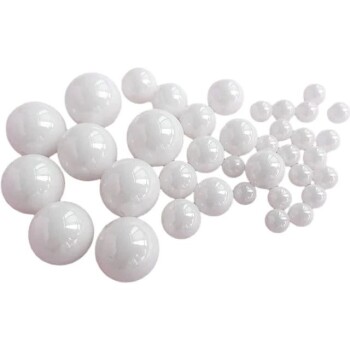
Zirconia grinding media is the standard choice for processing recycled graphite because it solves the dual challenge of mechanical efficiency and chemical purity. By offering extreme hardness, high density, and superior wear resistance, zirconia provides the high-impact energy needed to modify the graphite's microstructure while completely preventing the introduction of metallic impurities like iron.
The processing of battery-grade graphite requires a delicate balance: delivering enough force to alter particle structure without contaminating the material. Zirconia is preferred because it delivers the necessary impact energy via its high density while its chemical inertness guarantees the electrochemical stability of the final anode material.
The Critical Importance of Chemical Purity
Preventing Metallic Contamination
The most significant risk in ball milling recycled graphite is the introduction of impurities from the grinding tools themselves.
Traditional media, such as stainless steel, inevitably shed microscopic metallic particles—specifically iron—during the intense friction of the milling process.
Zirconia is chemically inert. Using zirconia jars and balls eliminates the risk of iron contamination, ensuring the recycled graphite remains free of foreign metals that would otherwise degrade the battery's performance.
Ensuring Electrochemical Stability
For recycled graphite to function effectively as an anode material, it must maintain a specific purity profile.
Metallic impurities introduced during grinding can trigger unwanted side reactions inside a battery cell. These reactions compromise the electrochemical stability of the anode, leading to reduced cycle life and potential safety hazards.
By acting as a non-reactive barrier, zirconia preserves the chemical integrity of the graphite throughout the modification process.
Mechanical Requirements for Microstructure Modification
High Density for Impact Energy
Modifying recycled graphite is not just about cleaning it; it requires altering the physical structure of the particles.
This process demands significant kinetic energy. Zirconia possesses high density, which translates to higher impact energy when the balls collide with the graphite powder.
This intense impact is necessary to effectively reshape the microstructure of the graphite particles, optimizing them for reuse in new batteries.
Durability Under Stress
The milling process involves prolonged periods of high-speed impact.
Zirconia is selected for its extreme hardness and superior wear resistance.
Unlike softer materials that might degrade or chip under these conditions, zirconia withstands the mechanical stress of long milling durations, ensuring consistent processing results without contributing wear debris to the sample.
Understanding the Trade-offs
The "Energy vs. Purity" Paradox
In many milling applications, engineers face a trade-off: materials hard enough to deliver high impact (like hardened steel) are often chemically reactive or prone to shedding conductive metals.
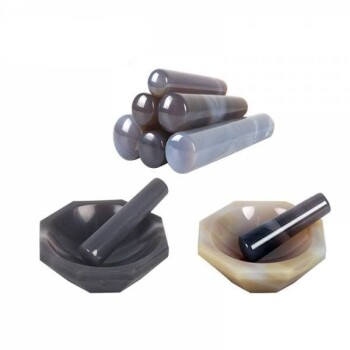
Conversely, softer, inert materials (like agate) often lack the density to generate the impact energy required for structural modification.
Zirconia bridges this gap. It is the unique solution that offers the mechanical aggression of a metal with the chemical passivity of a ceramic. If you utilize softer ceramic alternatives to save cost, you risk failing to achieve the necessary microstructural changes; if you use metal media for higher impact, you destroy the sample's electrochemical viability through contamination.
Making the Right Choice for Your Goal
To ensure the success of your recycled graphite project, consider your specific processing objectives:
- If your primary focus is Electrochemical Performance: Prioritize zirconia media to guarantee the absolute absence of iron impurities, which is essential for maintaining anode stability and preventing side reactions.
- If your primary focus is Particle Modification: Rely on the high density of zirconia balls to generate the sufficient impact energy required to effectively alter the graphite's microstructure.
The choice of milling media is not merely operational; it is a fundamental determinant of whether your recycled graphite will meet the rigorous purity standards required for modern battery anodes.
Summary Table:
| Feature | Zirconia (YSZ) | Stainless Steel | Agate/Alumina |
|---|---|---|---|
| Hardness (Mohs) | ~9 | 5.5 - 6.5 | 6.5 - 7.5 |
| Density (g/cm³) | ~6.0 | ~7.8 | 2.6 - 3.9 |
| Contamination Risk | Chemically Inert (Zero Metal) | High (Iron/Cr/Ni) | Moderate (Si/Al) |
| Impact Energy | High | High | Low to Medium |
| Application Suitability | Battery Grade Graphite | Industrial Non-Critical | Basic Lab Pulverizing |
Elevate Your Battery Research with KINTEK Precision
Ensure the electrochemical integrity of your recycled materials with KINTEK’s premium zirconia grinding jars and balls. Designed specifically for high-energy ball milling, our zirconia solutions eliminate metallic contamination while providing the mechanical force necessary for microstructure modification.
Beyond milling, KINTEK offers a comprehensive range of laboratory equipment including:
- Crushing and Milling Systems: For uniform particle size reduction.
- High-Temperature Furnaces: Muffle, tube, and vacuum systems for graphite thermal treatment.
- Battery Research Tools: Specialized consumables and electrolytic cells for testing anode performance.
Ready to achieve battery-grade purity? Contact our technical experts today to find the perfect milling configuration for your project.
Related Products
- Laboratory Jar Ball Mill with Alumina Zirconia Grinding Jar and Balls
- Precision Machined Zirconia Ceramic Ball for Engineering Advanced Fine Ceramics
- Laboratory Jar Mill with Agate Grinding Jar and Balls
- Laboratory Ball Mill Jar Mill with Metal Alloy Grinding Jar and Balls
- Nature Agate Mortar and Pestle for Grinding and Mixing
People Also Ask
- What are the primary functions of using a ball mill for BZCY72 powder? Achieve High Purity and Enhanced Sintering
- In what way does a laboratory ball mill affect material properties when modifying PHBV/pulp fiber composites?
- Why is a laboratory ball mill required for ultra-fine fly ash? Unlock Nano-Scale Adsorption Power
- What is the function of a laboratory ball mill in the preparation of AMMCs? Optimize Dispersion & Grain Refinement
- What is the function of a laboratory ball mill in the pretreatment of waste tire char (WTC)? Optimize Material Reactivity