Zirconia (ZrO2) grinding media is the industry standard for solid-state battery synthesis because it offers a critical balance of high density and chemical inertness. It provides the necessary kinetic energy for efficient mechanochemical reactions while virtually eliminating the risk of metallic contamination, which is fatal to solid-state electrolyte performance.
Core Takeaway: The selection of zirconia goes beyond simple durability; it is a strategic choice to protect electrochemical integrity. Its high density ensures efficient energy transfer for synthesis, while its chemical stability prevents ionic conductivity degradation caused by metallic impurities.
The Physics of Synthesis Efficiency
Generating High Impact Energy
Solid-state battery materials often require mechanochemical synthesis, where chemical reactions are induced by mechanical force.
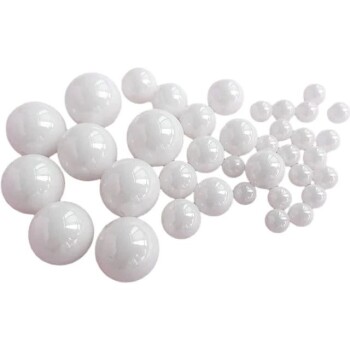
Zirconia balls are significantly denser than many other ceramic alternatives. This high density translates into superior impact kinetic energy during the milling process.
This energy is essential for thoroughly mixing and fusing complex components, such as nano-silicon, sulfide electrolytes, and acetylene black.
Ensuring Reaction Completeness
The efficiency of the milling process relies on the intensity of the collision between the ball and the powder.
Because zirconia creates high-energy impacts, it ensures that the mechanochemical reactions are completed efficiently.
Lower-density media might fail to provide the force required to achieve the necessary phase transformation or particle size reduction.
Protecting Electrochemical Performance
Eliminating Metallic Impurities
The most critical advantage of zirconia is its chemical inertness.
Standard steel grinding media can shed iron or chromium particles due to wear, which act as fatal contaminants in solid-state electrolytes.
These metallic impurities cause side reactions and degrade the electrolyte's ability to conduct ions, severely impacting battery performance.
Preserving Stoichiometry
Solid-state electrolytes, such as Ruddlesden–Popper perovskite oxides (RPPO) or halides, require precise chemical ratios (stoichiometry).
Zirconia’s exceptional wear resistance ensures that the grinding media does not degrade significantly over long milling durations.
This prevents the introduction of foreign mass that would alter the chemical composition of the synthesized product.
The "Compatible Contaminant" Advantage
In specific cases, the target composite material may already contain Zirconium (e.g., ZrO2-Li2ZrCl6).
If trace wear does occur, using zirconia media ensures that the "contaminant" is chemically identical to the host material.
This makes any potential wear debris benign, preventing it from acting as a harmful foreign body within the battery system.
Environmental Control and Safety
Maintaining Inert Atmospheres
Sulfide-based solid electrolytes are highly sensitive to moisture and oxygen, prone to hydrolysis if exposed to air.
High-quality zirconia jars are engineered to maintain a tight seal conducive to argon gas environments.
This allows researchers to conduct high-energy milling without exposing the sensitive precursor powders to atmospheric degradation.
Understanding the Trade-offs
The Reality of Wear
While zirconia is extremely hard, it is not indestructible.
During extended high-energy milling (e.g., five hours or more), trace wear is inevitable due to the intense impact forces involved.
The "trade-off" here is accepting minute ceramic wear to avoid catastrophic metallic contamination. While zirconia wear is generally electrically insulating and chemically stable, it is still a physical impurity that must be minimized through process optimization.
Making the Right Choice for Your Goal
- If your primary focus is Ionic Conductivity: Prioritize zirconia to prevent metallic impurities (Fe/Cr) that create conductive pathways or block ion movement.
- If your primary focus is Sulfide Electrolyte Synthesis: Ensure your zirconia jars are rated for high-quality sealing to maintain an argon environment and prevent hydrolysis.
- If your primary focus is Mechanochemical Efficiency: Rely on the high density of zirconia to provide the kinetic energy needed for alloying and phase changes, rather than lighter ceramics like alumina.
Ultimately, zirconia is chosen because it is the only material that delivers the necessary mechanical force without chemically compromising the delicate solid-state system.
Summary Table:
| Feature | Zirconia (ZrO2) Benefit | Impact on Solid-State Batteries |
|---|---|---|
| Density | High (6.0 g/cm³) | Provides high kinetic energy for mechanochemical synthesis. |
| Chemical Inertness | Non-metallic & Stable | Prevents Fe/Cr contamination that ruins electrolyte performance. |
| Wear Resistance | Exceptional | Preserves stoichiometry by minimizing foreign mass introduction. |
| Atmosphere Control | Airtight Sealing | Enables milling of moisture-sensitive sulfides in argon. |
| Compatibility | Identical to many hosts | Trace wear is benign if the material already contains Zr. |
Elevate Your Solid-State Battery Research with KINTEK
Precise material synthesis requires tools that never compromise purity. At KINTEK, we specialize in high-performance laboratory equipment designed for the rigorous demands of battery innovation. From zirconia grinding jars and balls that ensure zero metallic contamination to advanced planetary ball mills and high-temperature vacuum furnaces, we provide the infrastructure your research deserves.
Our comprehensive range also includes:
- Battery Research Tools: Electrolytic cells, electrodes, and coin cell consumables.
- Synthesis Equipment: CVD/PECVD systems, tube furnaces, and crushing/milling systems.
- Preparation Solutions: Hydraulic pellet presses, isostatic presses, and sieving equipment.
Don't let impurities hinder your ionic conductivity—partner with KINTEK for reliable, industry-standard equipment.
Contact Our Experts Today to find the perfect milling and synthesis solution for your laboratory.
Related Products
- Laboratory Jar Ball Mill with Alumina Zirconia Grinding Jar and Balls
- Precision Machined Zirconia Ceramic Ball for Engineering Advanced Fine Ceramics
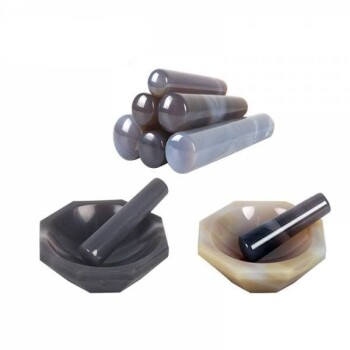
- Laboratory Jar Mill with Agate Grinding Jar and Balls
- Laboratory Ball Mill Jar Mill with Metal Alloy Grinding Jar and Balls
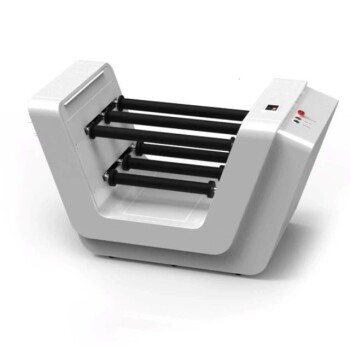
- Laboratory Four-Body Horizontal Jar Mill
People Also Ask
- What are the primary functions of using a ball mill for BZCY72 powder? Achieve High Purity and Enhanced Sintering
- In what way does a laboratory ball mill affect material properties when modifying PHBV/pulp fiber composites?
- Why is a laboratory ball mill required for ultra-fine fly ash? Unlock Nano-Scale Adsorption Power
- What is the function of a laboratory ball mill in the preparation of AMMCs? Optimize Dispersion & Grain Refinement
- What is the function of a laboratory ball mill in the pretreatment of waste tire char (WTC)? Optimize Material Reactivity