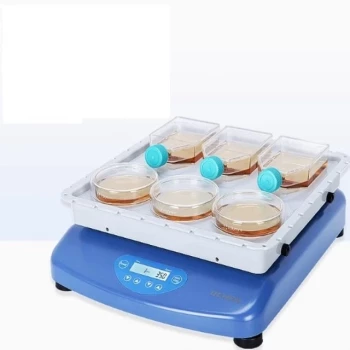
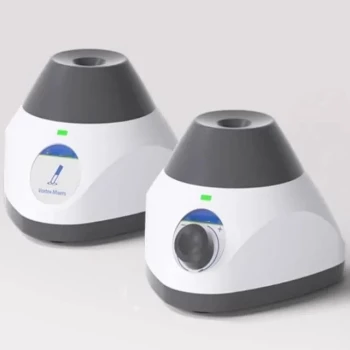
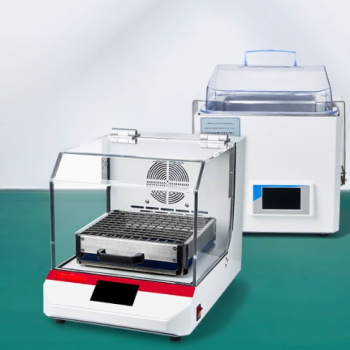
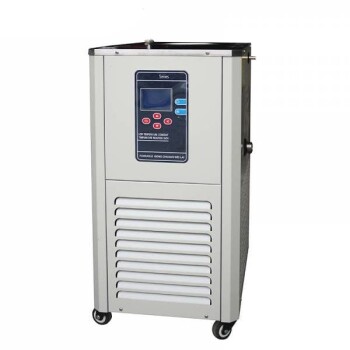
A constant temperature laboratory shaker is essential for microalgae hydrolysis because it synchronizes precise thermal regulation with continuous mechanical agitation. This device ensures that enzymes remain in full, uniform contact with the biomass, effectively eliminating mass transfer resistance and significantly increasing both the conversion rate and the final yield of glucose.
The core value of this equipment lies in its ability to provide continuous kinetic support. By removing physical barriers to reaction, it ensures that the limiting factor of your process is the chemistry of the enzyme, not the mechanics of the mixing.
The Physics of Enzymatic Efficiency
Overcoming Mass Transfer Resistance
In a static solution, a barrier known as mass transfer resistance prevents enzymes from efficiently reaching the substrate.
The laboratory shaker eliminates this by keeping the solution in constant motion. This forces enzymes like alpha-amylase and cellulase to collide continuously with the microalgae biomass, driving the reaction forward.
Ensuring Uniform Homogeneity
Microalgae biomass tends to settle or clump, which creates "dead zones" where no reaction occurs.
Consistent rotation speeds prevent this stratification, maintaining a uniformly mixed suspension. This ensures that every particle of biomass is accessible to the enzymes throughout the entire duration of the hydrolysis.
Facilitating Product Desorption
As enzymes break down the biomass, the resulting glucose can accumulate near the active site, potentially blocking further reaction.
The mechanical oscillation of the shaker promotes product desorption. By physically moving the reaction fluid, the device disperses high concentrations of glucose, preventing localized enzyme inhibition and maximizing the conversion rate.
The Critical Role of Temperature Stability
Maintaining Optimal Kinetic Energy
Enzymatic hydrolysis is highly sensitive to environmental parameters.
A constant temperature shaker holds the environment within a precise window, typically 36-40°C. This stability ensures the enzymes operate at their peak kinetic energy without denaturing due to heat spikes or slowing down due to cooling.
Preventing Thermal Gradients
In static heating methods, the temperature at the center of a vessel often differs from the temperature at the walls.
The combination of shaking and heating creates a uniform thermal profile. This ensures that the entire reaction volume is maintained at the specific activation temperature required for optimal hydrolysis.
Understanding the Trade-offs
Shear Stress Considerations
While agitation is necessary, excessive rotation speeds can introduce shear stress.
If the mechanical force is too aggressive, it may damage delicate enzyme structures or disrupt the biomass in unintended ways. You must optimize the rotation speed (RPM) to balance thorough mixing with the structural integrity of your biological agents.
Evaporation Risks
Constant agitation increases the surface area of the liquid exposed to air, which can accelerate evaporation over long hydrolysis periods.
If the shaker is not properly sealed or humidified, the loss of solvent can alter the pH and solute concentration. This requires careful monitoring to prevent the solution from becoming too concentrated, which could inhibit enzyme activity.
Making the Right Choice for Your Goal
To maximize the efficiency of your microalgae hydrolysis, align your equipment settings with your specific objectives:
- If your primary focus is Maximum Glucose Yield: Prioritize a shaker with high-torque rotation to ensure aggressive mixing and complete suspension of high-density biomass.
- If your primary focus is Process Reproducibility: Prioritize a shaker with high-precision digital temperature control (±0.1°C) to eliminate thermal variables between batches.
Ultimately, the shaker transforms a heterogeneous mixture into a controlled, kinetically active reactor.
Summary Table:
| Feature | Impact on Hydrolysis | Benefit to Lab Process |
|---|---|---|
| Precise Thermal Control | Maintains 36-40°C range | Prevents enzyme denaturation & ensures peak kinetics |
| Continuous Agitation | Eliminates mass transfer resistance | Drives frequent enzyme-substrate collisions |
| Homogenization | Prevents biomass clumping | Eliminates "dead zones" for uniform reaction |
| Product Desorption | Disperses glucose accumulation | Prevents enzyme inhibition & maximizes glucose yield |
Elevate Your Microalgae Research with KINTEK Precision
Unlock the full potential of your enzymatic hydrolysis with KINTEK’s high-performance laboratory shakers. As specialists in advanced laboratory equipment, KINTEK provides the precise thermal regulation and mechanical stability required to eliminate mass transfer resistance and maximize your glucose yield.
Beyond shakers and homogenizers, KINTEK offers a comprehensive range of solutions for demanding research environments, including high-temperature furnaces, hydraulic presses, and specialized autoclaves. Whether you are optimizing battery research, refining biomass, or conducting complex chemical synthesis, our tools are engineered for reproducibility and durability.
Ready to transform your heterogeneous mixtures into controlled, high-yield reactors?
Contact KINTEK today to find the perfect equipment for your lab.
References
- Jinzhi Yang, Ming Yang. Glucose Conversion for Biobutanol Production from Fresh Chlorella sorokiniana via Direct Enzymatic Hydrolysis. DOI: 10.3390/fermentation9030284
This article is also based on technical information from Kintek Solution Knowledge Base .
Related Products
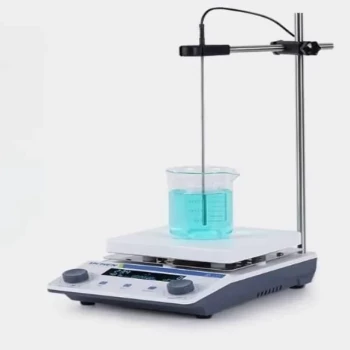
- Laboratory Small Constant Temperature Heated Magnetic Stirrer Heater and Stirrer
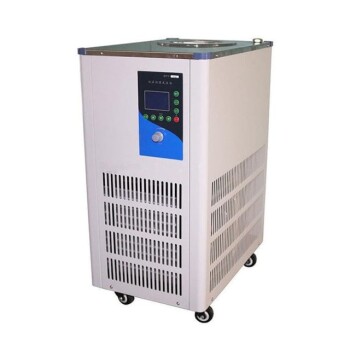
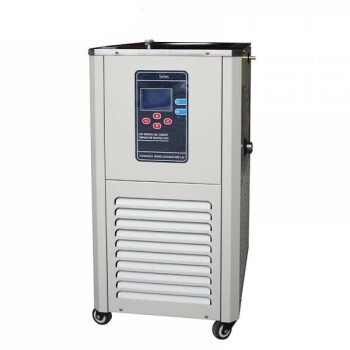
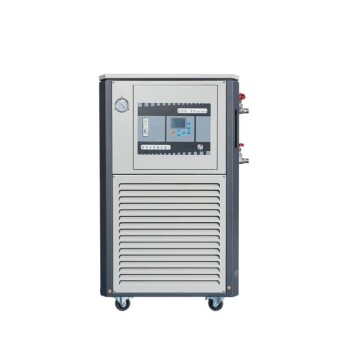
- High Temperature Constant Temperature Heating Circulator Water Bath Chiller Circulator for Reaction Bath
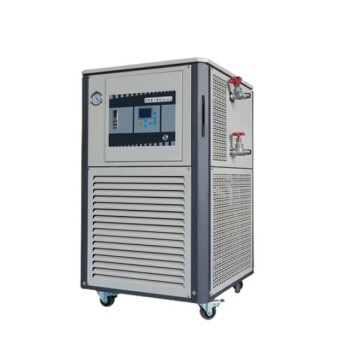
- 100L Chilling Circulator Cooling Water Circulator for Low Temperature Constant Temperature Reaction Bath Water Bath Cooling
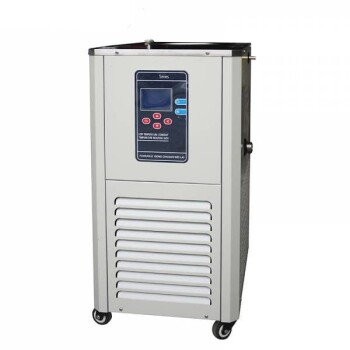
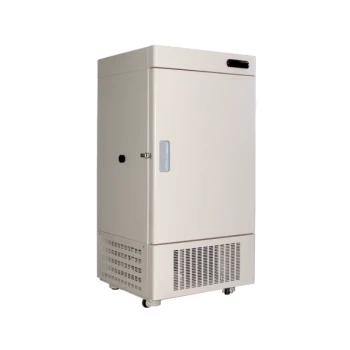
- 5L Chilling Circulator Cooling Water Bath Circulator for Low Temperature Constant Temperature Reaction Bath
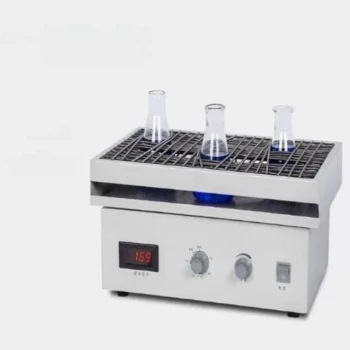
- Laboratory Multifunctional Small Speed-Adjustable Horizontal Mechanical Shaker for Lab
People Also Ask
- What role does a magnetic stirrer with heating play in ZnO nanoparticle synthesis? Precision Control for Quality Results
- What role does a constant temperature heating magnetic stirrer play in MFC-HAp synthesis? Achieve Material Homogeneity
- What is the function of a laboratory magnetic stirrer in Ni–Cr–P electrodeposition? Optimize Ion Transport & Coating
- Why is a laboratory magnetic stirrer required for benzoic acid esters? Boost Reaction Speed & Yield with High RPM
- What role does a laboratory magnetic stirrer play in TiO2 and TiO2-Ag sol preparation? Master Chemical Kinetics