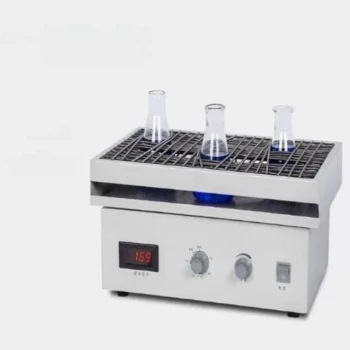
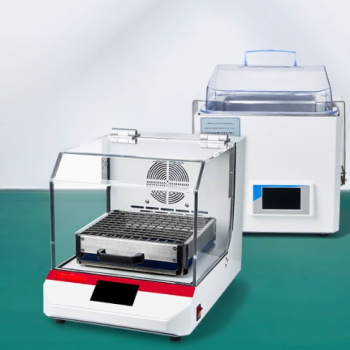
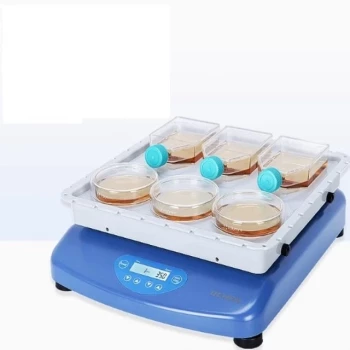
A constant temperature shaker is essential in adsorption experiments because it simultaneously controls two distinct variables: mechanical mixing and thermal stability.
This device ensures continuous oscillation, which facilitates sufficient collision between Methylene Blue molecules and the modified quartz sand, while the precise temperature control eliminates environmental fluctuations that would otherwise skew kinetic and thermodynamic data.
By standardizing both the mixing energy and the reaction temperature, a constant temperature shaker allows you to isolate the material's intrinsic adsorption properties from external environmental variables, ensuring the resulting data is both accurate and reproducible.
Optimizing Mass Transfer Through Mechanical Agitation
The "shaker" function is not merely about mixing; it is about overcoming physical barriers to adsorption.
Overcoming Film Diffusion Resistance
Surrounding every particle of quartz sand is a stagnant boundary layer of liquid known as the hydrodynamic film.
This film acts as a resistance barrier, slowing down the migration of Methylene Blue molecules from the bulk solution to the solid surface.
The continuous mechanical oscillation generates shear forces that reduce the thickness of this film, accelerating mass transfer and helping the system reach equilibrium faster.
Maximizing Active Site Availability
Without constant agitation, modified quartz sand particles would settle at the bottom of the vessel due to gravity.
Settling causes particles to aggregate, which hides surface area and effectively blocks Methylene Blue molecules from reaching the internal active sites of the absorbent.
The shaker ensures the quartz sand remains fully suspended, maximizing the contact probability between the pollutant and the adsorbent surface.
Ensuring Data Integrity Through Thermal Control
The "constant temperature" function is critical for distinguishing between physical reaction rates and chemical equilibrium.
Isolating Thermodynamic Variables
Adsorption is a temperature-dependent process; a material's capacity to hold Methylene Blue changes as the liquid heats up or cools down.
If the ambient temperature fluctuates during the experiment, it becomes impossible to determine if a change in adsorption is due to the material's efficiency or a shift in the room's temperature.
Maintained thermal stability ensures that the calculated maximum adsorption capacity is a true reflection of the material's thermodynamic properties.
Validating Kinetic Accuracy
Adsorption kinetics measure how fast the reaction occurs over time.
Because temperature directly influences reaction speed, a fluctuating environment introduces noise into the kinetic data.
By locking the temperature, you ensure that time is the only independent variable affecting the rate of adsorption, allowing for precise modeling of the reaction mechanism.
Understanding the Trade-offs
While essential, the use of a constant temperature shaker introduces specific constraints that must be managed.
The Risk of Particle Attrition
Excessive agitation speeds (high RPM) can be detrimental to the physical integrity of the modified quartz sand.
If the mechanical force is too high, the quartz particles may grind against each other, changing their particle size distribution and artificially altering the surface area available for adsorption.
Limitations in Simulating Large-Scale Flow
While a shaker is excellent for batch experiments, it does not perfectly replicate the continuous flow dynamics of industrial filtration columns.
Data derived from a shaker represents a "perfectly mixed" system, which may overestimate the efficiency compared to a packed-bed reactor where channeling or clogging can occur.
Making the Right Choice for Your Goal
To extract the most value from your Methylene Blue adsorption experiments, align your shaker settings with your specific research objectives.
- If your primary focus is determining maximum capacity: Prioritize precise thermal control over long durations to ensure thermodynamic equilibrium is reached without temperature-induced error.
- If your primary focus is studying reaction speed: Prioritize optimizing the oscillation speed to fully eliminate film diffusion resistance, ensuring the rate is limited only by the adsorption reaction itself.
Precision in your experimental setup is the only path to data that withstands scientific scrutiny.
Summary Table:
| Function | Primary Mechanism | Impact on Adsorption Experiment |
|---|---|---|
| Mechanical Shaking | Reduces boundary film resistance | Accelerates mass transfer and ensures full active site exposure |
| Thermal Control | Maintains constant kinetic energy | Isolates thermodynamic variables for accurate equilibrium data |
| Oscillation | Prevents particle settling | Maintains adsorbent suspension to maximize contact probability |
| Stability | Eliminates environmental noise | Ensures reproducibility of kinetic and thermodynamic models |
Elevate Your Adsorption Research with KINTEK Precision
Accuracy in Methylene Blue experiments starts with superior equipment. KINTEK specializes in advanced laboratory solutions, offering high-performance shakers, homogenizers, and thermal control systems designed to meet the rigorous demands of material science.
From precise constant temperature shakers that ensure data integrity to our comprehensive range of crushing, milling, and sieving equipment for adsorbent preparation, we provide the tools you need for reproducible results. Our portfolio also includes essential consumables like PTFE products, ceramics, and crucibles to support your entire workflow.
Ready to optimize your lab's efficiency? Contact KINTEK today to discover how our high-precision instruments can empower your next breakthrough.
References
- Bigui Wei, Gang Wang. Quartz Sand Filter Media with Special Wettability for Continuous and Efficient Oil/Water Separation and Dye Adsorption. DOI: 10.3390/pr8091083
This article is also based on technical information from Kintek Solution Knowledge Base .
Related Products
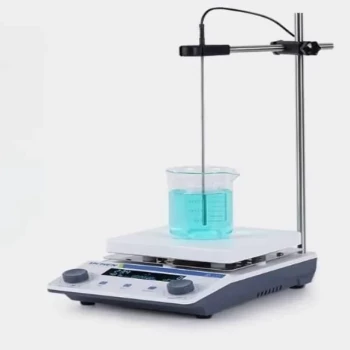
- Laboratory Small Constant Temperature Heated Magnetic Stirrer Heater and Stirrer
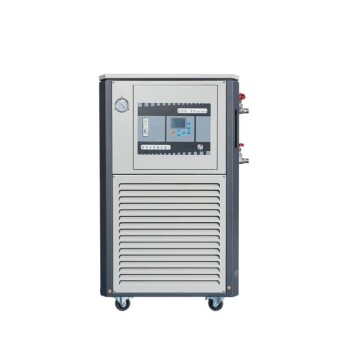
- High Temperature Constant Temperature Heating Circulator Water Bath Chiller Circulator for Reaction Bath
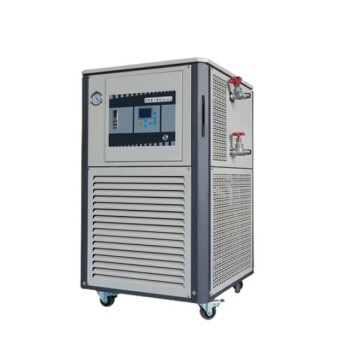
- 5L Heating Chilling Circulator Cooling Water Bath Circulator for High and Low Temperature Constant Temperature Reaction
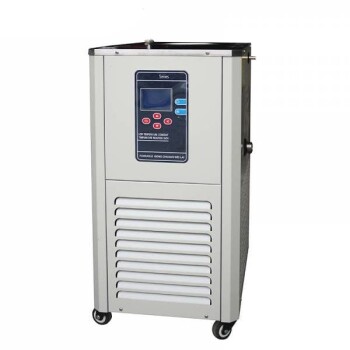
- 50L Chiller Water Bath Cooling Circulator Low Temperature Constant Temperature Reaction Bath
- 10L Heating Chilling Circulator Cooling Water Bath Circulator for High and Low Temperature Constant Temperature Reaction
People Also Ask
- What role does a magnetic stirrer with heating play in ZnO nanoparticle synthesis? Precision Control for Quality Results
- What role does a constant temperature heating magnetic stirrer play in MFC-HAp synthesis? Achieve Material Homogeneity
- What is the function of a laboratory magnetic stirrer in Ni–Cr–P electrodeposition? Optimize Ion Transport & Coating
- Why is a laboratory magnetic stirrer required for benzoic acid esters? Boost Reaction Speed & Yield with High RPM
- What role does a laboratory magnetic stirrer play in TiO2 and TiO2-Ag sol preparation? Master Chemical Kinetics