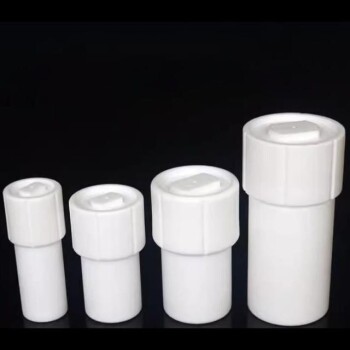
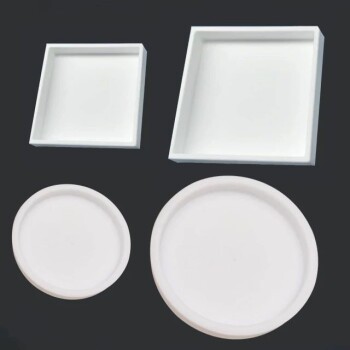
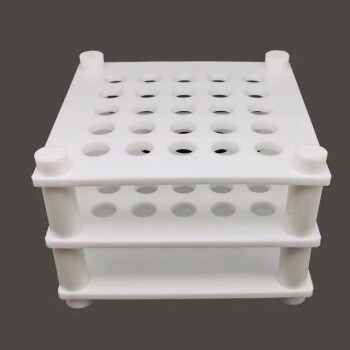
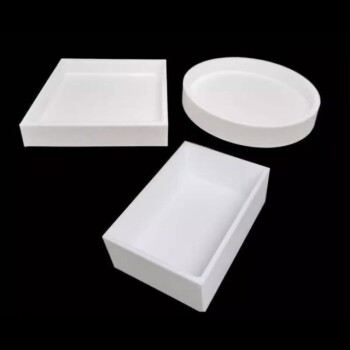
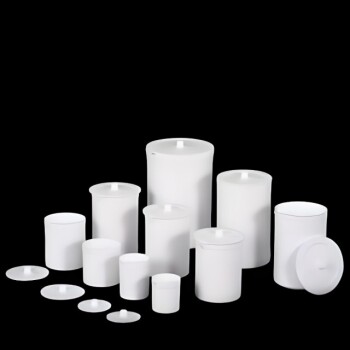
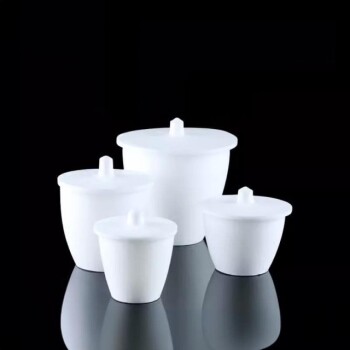
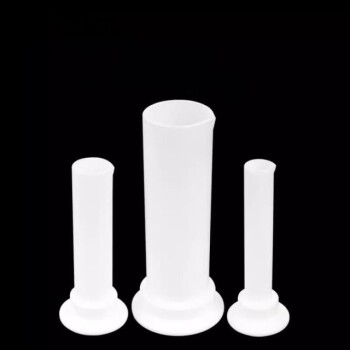
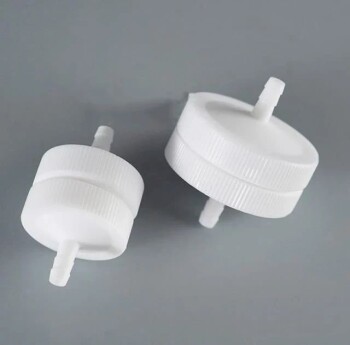
The use of a high-pressure digestion tank with a polytetrafluoroethylene (PTFE) liner is strictly required to create a sealed, pressurized environment capable of reaching 180°C without solvent evaporation. This specific setup drives the solvothermal reaction necessary for glucose dehydration and polycondensation, ensuring a uniform carbon shell forms around the $\alpha$-FeOOH fibers. Simultaneously, the PTFE liner acts as a critical barrier, preventing metal ion contamination from the steel vessel to maintain the chemical purity of the final composite.
The combination of high pressure and a chemically inert PTFE liner facilitates the formation of a uniform carbon shell while ensuring product purity. This environment drives reaction mechanics that standard open-air heating methods cannot support.
The Mechanics of the Solvothermal Reaction
To understand why this specific hardware is necessary, you must understand the physical constraints of the chemical process being performed.
Achieving Temperatures Above Boiling Points
The reaction requires a sustained temperature of 180°C. In an open vessel, the liquid solvent would likely boil away before reaching this temperature, halting the reaction.
A sealed high-pressure tank traps the solvent vapors. This allows the internal pressure to rise, which in turn raises the boiling point of the liquid, keeping the reaction medium in a fluid state at temperatures well above its normal boiling point.
Driving Glucose Polycondensation
The specific chemical transformation required here is the dehydration and polycondensation of glucose. This process converts the glucose into the carbon necessary for the shell.
High pressure and heat act as the catalysts for this transformation. Without the containment provided by the digestion tank, the glucose would not undergo the efficient breakdown and reconstruction required to create the composite material.
Ensuring Uniform Coating
The goal is to coat $\alpha$-FeOOH fibers with a carbon shell. The pressurized environment increases the solubility and diffusion of the reactants.
This enhanced mobility forces the carbonaceous material to deposit uniformly onto the fibers. This results in a consistent core-shell structure that is difficult to achieve under ambient pressure.
The Critical Role of the PTFE Liner
While the steel tank handles the pressure, the PTFE (Teflon) liner is responsible for the chemical integrity of the experiment.
Providing Chemical Inertness
The solvothermal environment is aggressive. At high temperatures and pressures, many reactants become highly corrosive to standard metals.
PTFE is chemically inert. It does not react with the solvent or the glucose mixture, ensuring that the liner itself does not degrade during the 180°C heating cycle.
Preventing Metal Ion Contamination
The most significant risk in high-pressure synthesis is leaching. If the reaction mixture were to touch the steel walls of the tank, iron or other metal ions could dissolve into the solution.
The PTFE liner acts as an isolation barrier. It ensures high purity by preventing any contact between the reactants and the metal tank, guaranteeing that the properties of the FeOOH@C fibers are not altered by foreign metallic impurities.
Understanding the Trade-offs
While the PTFE-lined tank is the correct tool for this job, it is important to recognize the operational limits of this equipment to avoid failure.
Temperature Ceilings
PTFE is highly resistant, but it is not invincible. While it handles 180°C effectively, it generally begins to soften or deform at temperatures approaching 250°C.
Exceeding the liner’s thermal rating can lead to leaks or rupture. You must ensure your reaction protocol stays strictly within the safe operating window of the specific PTFE liner you are using.
Pressure Management Risks
A sealed vessel creates a potential safety hazard. As the temperature rises to 180°C, the internal pressure increases significantly.
If the tank is overfilled with solvent, there may be insufficient headspace for expansion. This can cause dangerous over-pressurization, potentially leading to seal failure or vessel rupture.
Making the Right Choice for Your Project
The decision to use this specific apparatus is driven by two competing requirements: physical force and chemical delicacy.
- If your primary focus is Structural Integrity: You need the high-pressure tank to force the glucose to dehydrate and form a uniform carbon shell around the fibers.
- If your primary focus is Chemical Purity: You need the PTFE liner to isolate the reaction from the steel vessel, preventing metal ion contamination that would compromise the material.
By utilizing a PTFE-lined high-pressure tank, you balance the aggressive physical conditions needed for synthesis with the strict hygiene required for high-performance materials.
Summary Table:
| Feature | Function in FeOOH@C Synthesis | Benefit to Final Product |
|---|---|---|
| High-Pressure Vessel | Reaches 180°C without solvent loss | Enables glucose dehydration & polycondensation |
| PTFE Liner | Chemical isolation & inertness | Prevents metal ion contamination & ensures purity |
| Sealed Environment | Increases reactant diffusion | Facilitates uniform carbon shell coating on fibers |
| Thermal Stability | Maintains steady 180°C environment | Consistent reaction kinetics for core-shell structures |
Elevate Your Material Synthesis with KINTEK Precision
Precise control over temperature and purity is the difference between a successful composite and a failed experiment. KINTEK specializes in high-performance laboratory equipment designed for the most demanding solvothermal processes. From our robust high-temperature high-pressure reactors and autoclaves to our chemically resistant PTFE liners and ceramics, we provide the tools researchers need for flawless carbon coating and material synthesis.
Our value to you:
- Unmatched Purity: Our PTFE-lined vessels prevent contamination in aggressive chemical environments.
- Safety & Reliability: Engineered to handle the pressures of high-temperature dehydration and polycondensation.
- Comprehensive Solutions: We offer everything from crushing and milling systems to PTFE consumables for a streamlined workflow.
Ready to optimize your lab's performance? Contact KINTEK today to find the perfect high-pressure solution!
References
- Yuanyuan Zhang, Jian‐Tang Jiang. Continuous iron spreading on carbon-shell composite nanotubes for electromagnetic wave absorption. DOI: 10.1038/s43246-024-00471-x
This article is also based on technical information from Kintek Solution Knowledge Base .
Related Products
- Custom PTFE Teflon Parts Manufacturer for Microwave Digestion Tank
- Custom PTFE Teflon Parts Manufacturer for PTFE Containers
- Custom PTFE Teflon Parts Manufacturer for Centrifuge Tube Racks
- Custom PTFE Teflon Parts Manufacturer for Reagent Wide Mouth Fine Mouth Sample High Temperature Bottles
- Custom PTFE Teflon Parts Manufacturer for Culture Dish and Evaporation Dish
People Also Ask
- Why are PTFE containers required for PCT leaching tests? Ensure Chemical Inertness and Analytical Precision
- Why use high-quality PTFE containers for CO2 reduction electrolytes? Eliminate silicon contamination and ensure data.
- Why is PTFE Mandatory for Hydrofluoric Acid (HF) Handling? Ensure Safety and Data Integrity in Corrosion Testing
- Why is a PTFE container required for acid leaching of silicon nanosheets? Ensure High Purity and Safety
- Why are polytetrafluoroethylene (PTFE) containers essential for assessing the corrosion resistance of glassified waste?