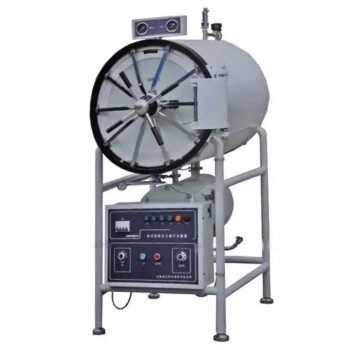
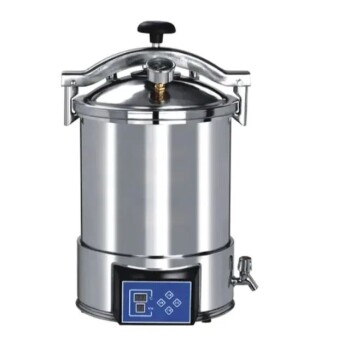
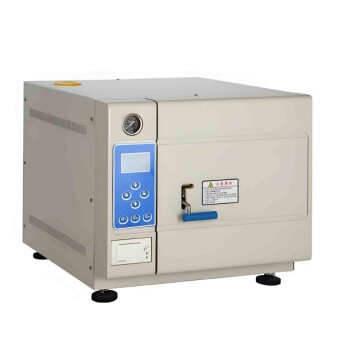
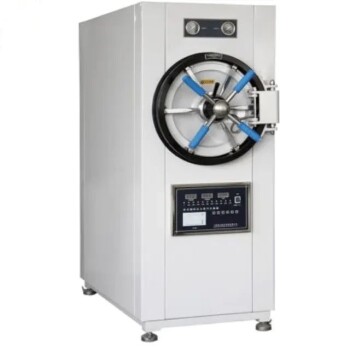
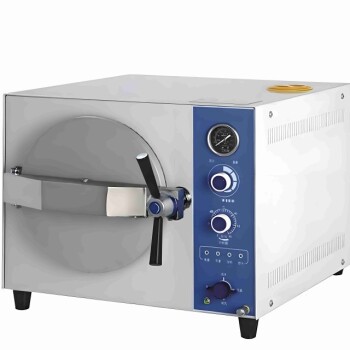
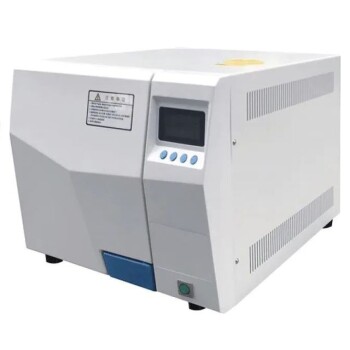
The high-pressure reactor is the indispensable engine for hydrothermal synthesis. It creates a pressurized, high-temperature environment that enables the transformation of precursors into complex core-shell architectures that are physically impossible to achieve at standard atmospheric pressure.
A high-pressure reactor (autoclave) is required to facilitate the complete hydrolysis of magnesium precursors and the subsequent growth of a uniform magnesium hydroxide shell. This hydrothermal process ensures precise control over shell thickness and nanoparticle distribution, which are the foundations of a stable and active catalyst.
The Role of Hydrothermal Synthesis in Catalyst Construction
Facilitating Precursor Transformation
The synthesis of the Pt/deAl-beta@Mg(OH)2 catalyst relies on the complete dissociation of the magnesium oxide (MgO) precursor. In the high-pressure environment of an autoclave, MgO can fully hydrolyze into magnesium and hydroxide ions.
These ions then rearrange and crystallize into thin flakes directly on the surface of the zeolite core. Without the elevated pressure and temperature, this chemical reorganization would be incomplete, leading to poor shell formation.
Achieving Precise Shell Morphology
The hydrothermal environment allows for the growth of a uniform Mg(OH)2 shell with a thickness specifically between 10 to 40 nm. This narrow range is critical for maintaining the structural integrity of the core-shell design.
By providing a closed system, the reactor ensures slow, ordered crystal growth. This results in a stable geometric foundation that protects the internal active sites while allowing reactants to reach them.
Engineering Enhanced Catalytic Properties
Controlling Platinum Nanoparticle Deposition
A high-pressure reactor is vital for the behavior of the platinum (Pt) active phase. Within the sealed vessel, platinum ions can spontaneously and uniformly reduce onto the catalyst support.
This controlled environment produces platinum nanoparticles with smaller particle sizes and more uniform distribution. These characteristics significantly improve the electrochemical activity and overall efficiency of the catalyst.
Overcoming Solvent Boiling Points
The autoclave allows the reaction to occur at temperatures, such as 160°C to 200°C, which are well above the standard boiling point of water or other solvents. This ensures the solvent remains in a liquid state under extreme heat.
Maintaining the liquid phase at these temperatures significantly enhances reaction kinetics. It facilitates smoother nucleation and allows for the development of specific crystal facets that are essential for high catalytic selectivity.
Understanding the Trade-offs
While high-pressure reactors are essential for synthesizing advanced catalysts, they introduce specific operational challenges. The primary trade-off involves the complexity of safety management and equipment maintenance.
High-pressure synthesis requires corrosion-resistant liners, such as PTFE, to protect the stainless steel reactor from aggressive precursors. Additionally, the "one-pot" nature of these reactions means that if the initial precursor ratios or temperatures are slightly off, the entire batch may fail to form the correct nanostructure.
How to Apply This to Your Project
When utilizing high-pressure reactors for catalyst synthesis, your specific goals will dictate your operational parameters:
- If your primary focus is Shell Uniformity: Prioritize the hydrothermal soak time to ensure the MgO precursor fully dissociates and rearranges into the 10–40 nm Mg(OH)2 flakes.
- If your primary focus is Platinum Activity: Focus on maintaining a stable, high-temperature environment to encourage the uniform reduction of platinum ions into smaller, more active nanoparticles.
- If your primary focus is Structural Purity: Utilize a PTFE-lined autoclave to prevent contamination and ensure the solvent remains liquid above its boiling point for optimal crystallinity.
By mastering the hydrothermal environment of the autoclave, you can engineer catalysts with the precise morphology and stability required for high-performance applications.
Summary Table:
| Synthesis Factor | Role of High-Pressure Reactor | Impact on Catalyst Quality |
|---|---|---|
| Precursor Hydrolysis | Enables complete MgO dissociation into ions | Forms uniform Mg(OH)2 flakes on the core |
| Shell Morphology | Regulates shell thickness to 10–40 nm | Ensures structural stability & reactant access |
| Pt Deposition | Facilitates spontaneous, uniform reduction | Produces smaller, highly active nanoparticles |
| Reaction Kinetics | Maintains liquid phase above boiling points | Enhances crystallinity and specific facets |
Precision Equipment for Advanced Catalyst Synthesis
Achieving the perfect core-shell architecture requires uncompromising control over your hydrothermal environment. KINTEK specializes in high-performance laboratory equipment designed for the rigors of material science.
From our robust high-temperature high-pressure reactors and autoclaves to essential corrosion-resistant PTFE liners and ceramics, we provide the tools necessary to synthesize next-generation catalysts with precision. Whether you are focusing on shell uniformity or maximizing platinum activity, KINTEK offers a comprehensive range of muffle furnaces, vacuum systems, and hydrothermal vessels to support your research goals.
Ready to elevate your lab's capabilities? Contact KINTEK today for expert guidance and reliable equipment solutions!
References
- Shizhuo Wang, Zheng Shen. Catalytic production of 1,2-propanediol from sucrose over a functionalized Pt/deAl-beta zeolite catalyst. DOI: 10.1039/d2ra07097a
This article is also based on technical information from Kintek Solution Knowledge Base .
Related Products
- Mini SS High Pressure Autoclave Reactor for Laboratory Use
- High Pressure Laboratory Autoclave Reactor for Hydrothermal Synthesis
- Stainless High Pressure Autoclave Reactor Laboratory Pressure Reactor
- Desktop Fast High Pressure Laboratory Autoclave Sterilizer 16L 24L for Lab Use
- Laboratory High Pressure Horizontal Autoclave Steam Sterilizer for Lab Use
People Also Ask
- Why use high-pressure reactors for molecular sieve synthesis? Unlock Superior Crystallinity and Framework Control
- What is the function of a high-pressure reactor autoclave? Enhancing Cu/N Co-Doped Carbon Catalyst Synthesis
- What are the advantages of using a high-pressure reactor like an autoclave? Maximize Liquefaction Speed & Yield
- Why are high-pressure reactors or autoclaves necessary for the synthesis of new functional materials? Unlock Precision.
- How are high-pressure reactors used to prepare metaphosphate electrocatalysts? Master In-Situ Precursor Growth