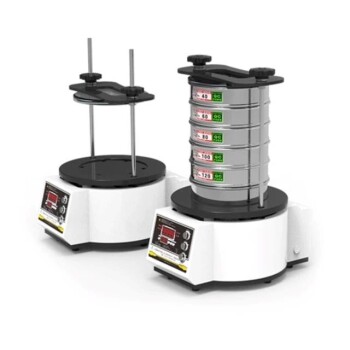
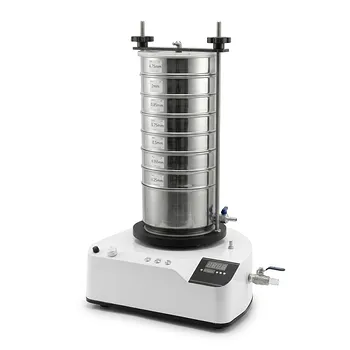
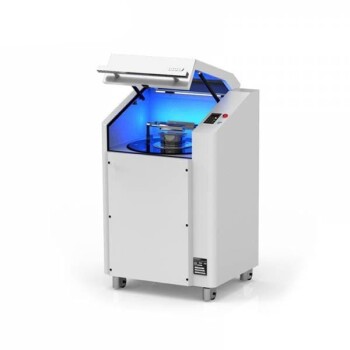
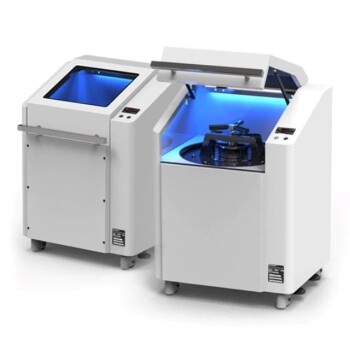
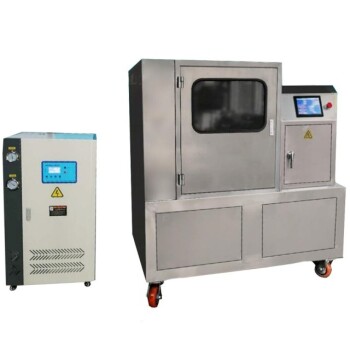
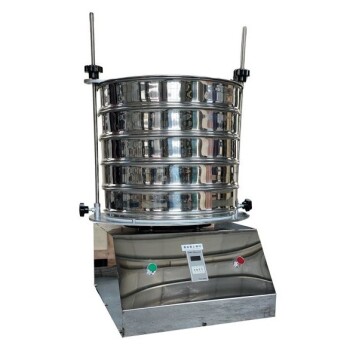
A multi-stage vibrating sieve system is the primary mechanism used to classify crushed sisal residue by particle size. It serves as a quality control checkpoint, utilizing various mesh screens to separate the raw material into distinct groups. This mechanical sorting is required to standardize the physical characteristics of the powder before it enters complex chemical or biological processing stages.
By precisely controlling particle size distribution, this system optimizes critical factors like air permeability and reaction surface area, directly determining the success of subsequent composting and thermal pyrolysis efforts.
Optimizing Biological Processing
The physical size of the sisal residue particles dictates how the material interacts with its environment during biological breakdown.
Ensuring Consistent Air Permeability
For sisal residue destined for composting bins, airflow is non-negotiable. The multi-stage sieve ensures that the powder is not too fine, which could choke off air channels, nor too coarse to decompose effectively.
By standardizing the particle size, the system guarantees consistent air permeability throughout the compost pile. This allows oxygen to circulate freely, which is vital for maintaining the aerobic conditions required for efficient composting.
Enhancing Thermal Pyrolysis
When sisal residue is converted into energy or chemical products via thermal pyrolysis, the uniformity of the input material fundamentally alters the chemical reaction dynamics.
Maximizing Reaction Efficiency
Pyrolysis relies on the interaction between the solid residue and gases generated during heating. The sieve system ensures a particle size that optimizes these gas-solid phase reactions.
Uniform particles present a predictable surface area to the heat source. This maximizes the efficiency of the thermal conversion, ensuring that the material reacts completely and predictably.
Stabilizing Bio-Oil Components
One of the most critical outputs of pyrolysis is bio-oil. The reference highlights that particle classification directly impacts the stability of bio-oil components.
If particle sizes vary wildly, heating becomes uneven, potentially leading to erratic chemical breakdown. A sieved, uniform input helps maintain a stable thermal environment, resulting in a higher quality, more stable bio-oil product.
The Consequence of Poor Classification
While the sieve system adds a step to the preparation process, bypassing it introduces significant risks to the final product.
The Risk of Inconsistency
Without the precise control offered by multi-stage screening, the sisal residue remains a mix of random sizes. In composting, this leads to anaerobic pockets and stalled decomposition.
In pyrolysis, unclassified material causes uneven heating rates. This inefficiency wastes energy and results in bio-oils with unpredictable chemical compositions, reducing their commercial or functional value.
Making the Right Choice for Your Goal
The level of precision you require from the sieve system depends on your specific end-use for the sisal residue.
- If your primary focus is Composting: Prioritize a mesh size that maximizes aeration to prevent suffocation of the biological process.
- If your primary focus is Bio-Oil Production: Prioritize strict uniformity to ensure stable thermal reactions and consistent oil quality.
Mastering particle size distribution is not just a mechanical step; it is the lever that controls the efficiency of your entire conversion process.
Summary Table:
| Factor | Benefit of Multi-Stage Sieving | Impact on Process |
|---|---|---|
| Particle Size | Ensures uniformity across groups | Consistent quality control |
| Air Permeability | Prevents clogging in compost bins | Enhances aerobic decomposition |
| Reaction Surface | Optimizes gas-solid phase interactions | Increases pyrolysis efficiency |
| Thermal Stability | Reduces uneven heating rates | Stabilizes bio-oil components |
Elevate Your Material Processing with KINTEK Precision
Don't let inconsistent particle sizes compromise your research or production. KINTEK specializes in high-performance laboratory equipment designed for the most demanding applications. Whether you are refining sisal residue for bio-energy or standardizing powders for chemical synthesis, our advanced sieving equipment, crushing and milling systems, and hydraulic presses provide the precision you need.
From high-temperature furnaces and reactors for thermal pyrolysis to specialized battery research tools and cooling solutions, KINTEK is your partner in laboratory excellence. Our team is ready to help you select the ideal configuration to maximize your reaction efficiency and product stability.
Ready to optimize your workflow? Contact us today to find the perfect equipment solution!
References
- Flávia Silva Cunha, Carlos Augusto de Moraes Pires. Upgrade of bio‐oil produced from the sisal residue composting. DOI: 10.1111/gcbb.13129
This article is also based on technical information from Kintek Solution Knowledge Base .
Related Products
- Vibratory Sieve Shaker Machine Dry Three-Dimensional Vibrating Sieve
- Laboratory Vibratory Sieve Shaker Machine Slap Vibrating Sieve
- Laboratory Vibratory Sieve Shaker Machine for Dry and Wet Three-Dimensional Sieving
- Laboratory Wet Three-Dimensional Vibratory Sieve Shaker Machine
- Laboratory Test Sieves and Vibratory Sieve Shaker Machine
People Also Ask
- How is a vibratory sieve shaker used in the particle size analysis of mechanically alloyed powders? Expert Guide
- Why use a vibratory sieve shaker for PET powder? Achieve Precise Particle Size Control for Chemical Research
- What is the principle of vibratory sieve shaker? Achieve Accurate Particle Size Analysis
- What is the function of a vibratory sieve shaker? Achieve Precise Particle Size Analysis
- What is the use of vibratory sieve shaker? Achieve Precise Particle Size Analysis for Your Lab