Knowledge Why is a PTFE plate selected as the casting substrate for solid polymer electrolytes? Ensure Damage-Free Release
Author avatar

Tech Team · Kintek Solution

Updated 1 day ago

Why is a PTFE plate selected as the casting substrate for solid polymer electrolytes? Ensure Damage-Free Release


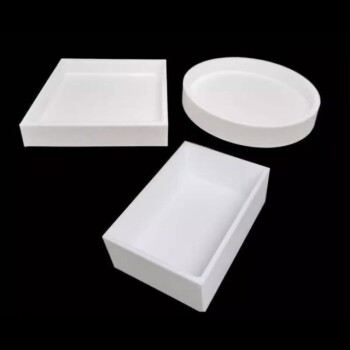
The selection of a Polytetrafluoroethylene (PTFE) plate as a casting substrate is driven fundamentally by its low surface energy and chemical stability. In the solution casting method, the primary objective is to form a thin, uniform film (often around 100 micrometers) that can be removed without damage. PTFE ensures that once the solvent evaporates, the delicate electrolyte membrane releases cleanly from the mold without adhering or deforming.

By leveraging the non-stick properties of PTFE, researchers prevent mechanical stress during the peeling phase, ensuring the physical integrity and surface uniformity of solid polymer electrolyte membranes.

The Critical Role of the Substrate

Facilitating Damage-Free Release

The most fragile stage of solution casting occurs when removing the dried film from the substrate. PTFE provides an extremely low surface energy, effectively acting as a non-stick surface.

This allows the electrolyte membrane to be completely peeled off after drying. Without this property, the film could tear or stretch, compromising its mechanical strength and usability in a battery cell.

Maintaining Chemical Purity

The precursor slurries used in casting often contain complex mixtures, such as PEO/LLZAO/BTO composites and various organic solvents. The substrate must remain chemically inert when in contact with these materials.

PTFE offers superior chemical corrosion resistance, ensuring it does not react with the slurry. This prevents the introduction of substrate-derived impurities that could degrade the electrochemical performance of the final electrolyte.

Ensuring Surface Uniformity

Electrochemical consistency requires a membrane with a smooth, defect-free topography. A stable PTFE substrate contributes directly to the formation of smooth and uniform surfaces on the final membrane.

Any adhesion or roughness from the substrate would transfer to the electrolyte, potentially creating weak points or uneven contact with the battery electrodes.

Understanding the Trade-offs

The Solvent Limit

While PTFE solves the physical handling issues of casting, it does not solve the inherent limitations of the solution casting method itself. This process relies heavily on organic solvents, which must be evaporated.

Porosity and Residuals

The evaporation process can lead to the formation of pores or bubbles within the membrane. These defects disrupt the pathway for ions, hindering overall ion conduction.

Interfacial Impedance

Furthermore, trace amounts of residual solvent may remain trapped in the polymer matrix. These residuals can trigger side reactions on the lithium anode surface, increasing interfacial impedance and reducing the polarization stability of the battery.

Making the Right Choice for Your Goal

While PTFE is the standard for solution casting, your fabrication method should align with your specific performance requirements.

  • If your primary focus is membrane fabrication and handling: Use PTFE substrates to guarantee easy, non-destructive peeling and high yields of thin films.
  • If your primary focus is maximizing electrochemical performance: Consider hot press molding as an alternative to completely eliminate organic solvents and their associated defects.

By selecting the appropriate substrate, you safeguard the structural integrity of the membrane before it ever enters the cell.

Summary Table:

Feature of PTFE Substrate Benefit to Solid Polymer Electrolyte Preparation
Low Surface Energy Enables damage-free, non-stick peeling of fragile thin films.
Chemical Inertness Prevents contamination and reactions with complex slurry precursors.
Surface Smoothness Ensures uniform membrane topography for better electrode contact.
Thermal Stability Maintains substrate integrity during solvent evaporation processes.

Elevate Your Battery Research with KINTEK Precision

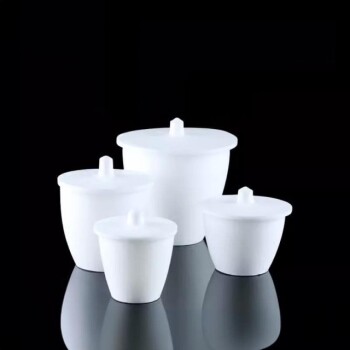
Achieving the perfect solid polymer electrolyte membrane requires high-quality materials and precise tools. KINTEK specializes in laboratory equipment and consumables, offering a comprehensive range of PTFE products, ceramics, and crucibles designed for the most demanding casting processes.

From our robust crushing and milling systems for precursor preparation to high-temperature furnaces (muffle, vacuum, CVD) for advanced materials processing, we provide the end-to-end solutions your lab needs. Whether you are scaling up with our hydraulic presses (pellet, hot, isostatic) or optimizing electrochemical testing with our electrolytic cells and electrodes, KINTEK is your partner in innovation.

Ready to enhance your membrane integrity and lab efficiency? Contact us today to explore our full catalog and find the right solution for your research!

Related Products

People Also Ask

Related Products

Custom PTFE Teflon Parts Manufacturer for Hydrothermal Synthesis Reactor Polytetrafluoroethylene Carbon Paper and Carbon Cloth Nano-growth

Custom PTFE Teflon Parts Manufacturer for Hydrothermal Synthesis Reactor Polytetrafluoroethylene Carbon Paper and Carbon Cloth Nano-growth

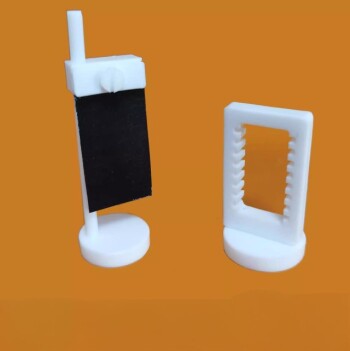
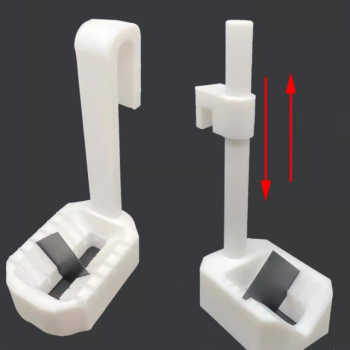
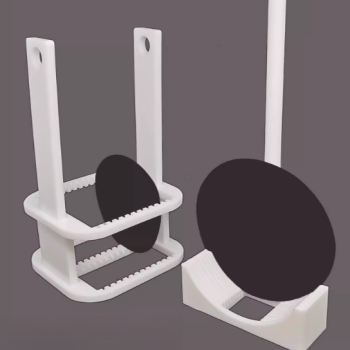
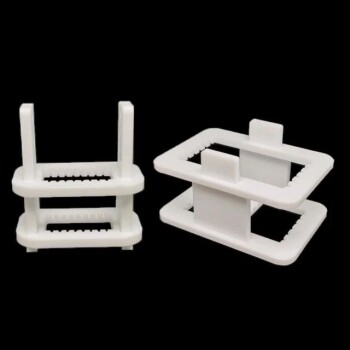
Acid and alkali resistant polytetrafluoroethylene experimental fixtures meet different requirements. The material is made of brand new polytetrafluoroethylene material, which has excellent chemical stability, corrosion resistance, airtightness, high lubricity and non-stickiness, electrical corrosion and good anti-aging ability, and can work for a long time at temperatures from -180℃ to +250℃.

Custom PTFE Teflon Parts Manufacturer for Sampling Solution Sample and Dry Powder Spoons

Custom PTFE Teflon Parts Manufacturer for Sampling Solution Sample and Dry Powder Spoons

The PTFE sampling spoon, also known as a solution spoon or sample spoon, is a crucial tool for accurately introducing dry powder samples in various analytical processes. Made from PTFE, these spoons offer excellent chemical stability, corrosion resistance, and non-stick properties, making them ideal for handling delicate and reactive substances in laboratory settings.

Custom PTFE Teflon Parts Manufacturer for Non-Standard Insulator Customization

Custom PTFE Teflon Parts Manufacturer for Non-Standard Insulator Customization

PTFE insulator PTFE has excellent electrical insulation properties in a wide temperature and frequency range.

Optical Window Glass Substrate Wafer Single Double Sided Coated K9 Quartz Sheet

Optical Window Glass Substrate Wafer Single Double Sided Coated K9 Quartz Sheet

K9 glass, also known as K9 crystal, is a type of optical borosilicate crown glass renowned for its exceptional optical properties.

Custom PTFE Teflon Parts Manufacturer for PTFE Measuring Cylinder 10/50/100ml

Custom PTFE Teflon Parts Manufacturer for PTFE Measuring Cylinder 10/50/100ml

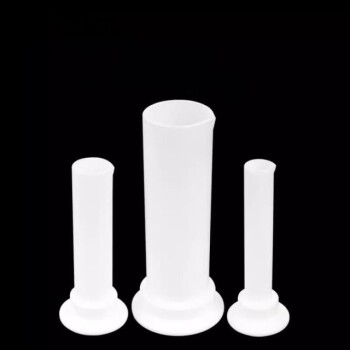
PTFE measuring cylinder are a rugged alternative to traditional glass cylinders. They are chemically inert over a wide temperature range (up to 260º C), have excellent corrosion resistance and maintain a low coefficient of friction, ensuring ease of use and cleaning.

Custom PTFE Teflon Parts Manufacturer PTFE Beaker and Lids

Custom PTFE Teflon Parts Manufacturer PTFE Beaker and Lids

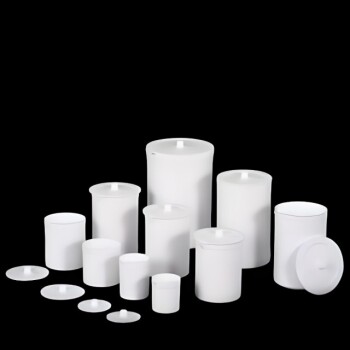
The PTFE beaker is a laboratory container that is resistant to acid, alkali, high and low temperatures and is suitable for temperatures ranging from -200ºC to +250ºC. This beaker has excellent chemical stability and is widely used for heat treatment samples and volume analysis.

Custom PTFE Teflon Parts Manufacturer for Acid and Alkali Resistant Chemical Powder Material Scoops

Custom PTFE Teflon Parts Manufacturer for Acid and Alkali Resistant Chemical Powder Material Scoops

Known for its excellent thermal stability, chemical resistance and electrical insulating properties, PTFE is a versatile thermoplastic material.

Boron Nitride (BN) Ceramic Plate

Boron Nitride (BN) Ceramic Plate

Boron nitride (BN) ceramic plates do not use aluminum water to wet, and can provide comprehensive protection for the surface of materials that directly contact molten aluminum, magnesium, zinc alloys and their slag.

MgF2 Magnesium Fluoride Crystal Substrate Window for Optical Applications

MgF2 Magnesium Fluoride Crystal Substrate Window for Optical Applications

Magnesium fluoride (MgF2) is a tetragonal crystal that exhibits anisotropy, making it imperative to treat it as a single crystal when engaging in precision imaging and signal transmission.

Laboratory Small Constant Temperature Heated Magnetic Stirrer Heater and Stirrer

Laboratory Small Constant Temperature Heated Magnetic Stirrer Heater and Stirrer

The Laboratory Small Constant Temperature Heating Magnetic Stirrer is a versatile tool designed for precise temperature control and efficient mixing in various laboratory applications.

Flat Corrosion Electrolytic Electrochemical Cell

Flat Corrosion Electrolytic Electrochemical Cell

Discover our flat corrosion electrolytic cell for electrochemical experiments. With exceptional corrosion resistance and complete specifications, our cell guarantees optimal performance. Our high-quality materials and good sealing ensure a safe and durable product, and customization options are available.

Square Lab Press Mold for Laboratory Applications

Square Lab Press Mold for Laboratory Applications

Create uniform samples easily with Square Lab Press Mold - available in various sizes. Ideal for battery, cement, ceramics, and more. Custom sizes available.

Silicon Carbide (SIC) Ceramic Sheet Flat Corrugated Heat Sink for Engineering Advanced Fine Ceramics

Silicon Carbide (SIC) Ceramic Sheet Flat Corrugated Heat Sink for Engineering Advanced Fine Ceramics

Silicon carbide (sic) ceramic heat sink not only does not generate electromagnetic waves, but also can isolate electromagnetic waves and absorb part of electromagnetic waves.

Glassy Carbon Sheet RVC for Electrochemical Experiments

Glassy Carbon Sheet RVC for Electrochemical Experiments

Discover our Glassy Carbon Sheet - RVC. Perfect for your experiments, this high-quality material will elevate your research to the next level.

Aluminum Foil Current Collector for Lithium Battery

Aluminum Foil Current Collector for Lithium Battery

The surface of aluminum foil is extremely clean and hygienic, and no bacteria or microorganisms can grow on it. It is a non-toxic, tasteless and plastic packaging material.

Optical Window Glass Substrate Wafer Sheets Zinc Sulfide ZnS Window

Optical Window Glass Substrate Wafer Sheets Zinc Sulfide ZnS Window

Optics Zinc Sulphide (ZnS) Windows have an excellent IR transmission range between 8-14 microns.Excellent mechanical strength and chemical inertness for harsh environments (harder than ZnSe Windows)

Customizable PEM Electrolysis Cells for Diverse Research Applications

Customizable PEM Electrolysis Cells for Diverse Research Applications

Custom PEM test cell for electrochemical research. Durable, versatile, for fuel cells & CO2 reduction. Fully customizable. Get a quote!

Evaporation Crucible for Organic Matter

Evaporation Crucible for Organic Matter

An evaporation crucible for organic matter, referred to as an evaporation crucible, is a container for evaporating organic solvents in a laboratory environment.

Special Shape Press Mold for Lab

Special Shape Press Mold for Lab

Discover high-pressure special shape press molds for diverse applications, from ceramics to automotive parts. Ideal for precise, efficient molding of various shapes and sizes.

Side Window Optical Electrolytic Electrochemical Cell

Side Window Optical Electrolytic Electrochemical Cell

Experience reliable and efficient electrochemical experiments with a side window optical electrolytic cell. Boasting corrosion resistance and complete specifications, this cell is customizable and built to last.


Leave Your Message