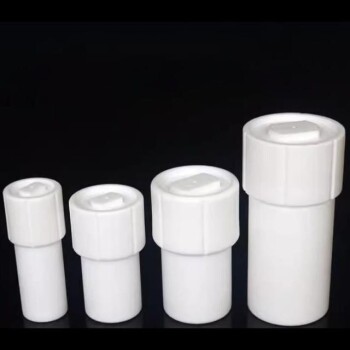
The requirement for a PTFE-lined high-pressure autoclave stems from the need to create a chemically inert, high-energy environment that standard laboratory glassware cannot support. This specific apparatus enables solvents to exceed their atmospheric boiling points safely, forcing the chemical modification (doping) of graphene while the Polytetrafluoroethylene (PTFE) liner prevents the corrosive precursors from destroying the reactor vessel.
This apparatus solves two critical challenges simultaneously: it generates the extreme hydrostatic pressure required to chemically alter the graphene lattice, and it utilizes an inert PTFE barrier to prevent contamination or vessel degradation from the harsh alkaline reagents involved.
Creating the Necessary Reaction Environment
Overcoming Solvent Limitations
In standard synthesis, a solvent cannot exceed its boiling point without evaporating. A high-pressure autoclave seals the system, allowing the solvent to remain in the liquid phase even at temperatures far exceeding its atmospheric boiling point.
Accelerating Reaction Kinetics
This superheated, pressurized environment significantly accelerates reaction rates. The elevated thermal energy is critical for overcoming the activation energy barriers required to chemically modify stable materials like graphene.
Forcing Chemical Doping
For processes like nitrogen doping, simple heating is insufficient. The high pressure forces the dopant atoms into the carbon lattice, ensuring the graphene and specific modifiers react fully to create stable composite nanomaterials.
The Critical Role of the PTFE Liner
Chemical Inertness
Hydrothermal doping often utilizes strong alkaline or corrosive chemicals to facilitate the reaction. A standard steel autoclave wall would react with these agents, leading to corrosion and equipment failure.
Preventing Sample Contamination
The PTFE liner acts as a robust barrier between the reactants and the metal shell. This ensures the final nanofluid remains pure and free from metallic impurities leached from the autoclave walls.
Ensuring Material Stability
By maintaining a non-reactive containment zone, the PTFE liner ensures that the chemical potential is directed entirely toward the synthesis of the nanomaterial, rather than side reactions with the vessel.
Facilitating Structural Self-Assembly
Enabling 3D Growth
Beyond simple chemical doping, these specific conditions allow for the self-assembly of graphene oxide. Under high pressure, the sheets can fold and bond to form three-dimensional network composite materials.
Integrating Metal Oxides
The environment allows for the simultaneous growth and integration of metal oxides, such as iron-based nanoparticles. These particles react fully within the liquid phase system, embedding into the graphene structure.
Optimizing Surface Characteristics
The result of this controlled high-pressure synthesis is a material with a high specific surface area and a stable porous structure. These physical traits are essential for applications requiring high adsorption, such as removing pharmaceutical pollutants.
Understanding the Trade-offs
Temperature Ceilings
While PTFE is chemically inert, it has thermal limitations. A PTFE-lined autoclave generally cannot operate at the extreme temperatures (>250°C) that a pure alloy reactor might withstand, as the liner may deform or degrade.
Batch Processing Constraints
These autoclaves operate as closed systems. This necessitates batch processing, which limits the speed of production compared to continuous flow methods used in other types of chemical synthesis.
Safety Considerations
The combination of high heat and high pressure creates potential safety hazards. The seal must be perfect; otherwise, the rapid expansion of superheated solvents can lead to catastrophic failure.
Making the Right Choice for Your Synthesis
To determine if this apparatus is critical for your specific application, consider your primary objectives:
- If your primary focus is Chemical Purity: The PTFE liner is non-negotiable to prevent metal leaching and reaction with corrosive alkaline precursors.
- If your primary focus is Lattice Modification: The high-pressure capability is essential to force dopants (like nitrogen) into the stable graphene structure.
- If your primary focus is Morphology Control: The sealed environment is required to govern the crystal size and 3D self-assembly of the composite material.
The PTFE-lined autoclave is not just a container; it is an active thermodynamic tool that enables the precise engineering of graphene at the atomic level.
Summary Table:
| Feature | Purpose in Graphene Doping | Key Benefit |
|---|---|---|
| PTFE Liner | Chemical inertness against alkaline precursors | Prevents metal contamination and vessel corrosion |
| High Pressure | Overcomes activation energy barriers | Forces dopant atoms (e.g., Nitrogen) into the carbon lattice |
| Sealed System | Enables superheated liquid phases | Accelerates reaction kinetics and facilitates 3D self-assembly |
| Batch Control | Controlled thermodynamic environment | Optimizes surface area and porosity of nanocomposites |
Elevate Your Nanomaterial Synthesis with KINTEK
Precision in hydrothermal doping requires equipment that can withstand extreme pressures while maintaining absolute chemical purity. KINTEK specializes in high-performance high-temperature high-pressure reactors and autoclaves designed specifically for advanced material research.
Whether you are working on graphene-based nanofluids, battery research, or complex chemical synthesis, our PTFE-lined solutions ensure zero contamination and superior safety. From milling systems and hydraulic presses to ULT freezers and ceramic crucibles, we provide the comprehensive tools your lab needs to succeed.
Ready to optimize your lab’s efficiency? Contact KINTEK experts today to find the perfect autoclave for your specific application!
References
- Thong Le Ba, Imre Miklós Szilágyi. Review on the recent progress in the preparation and stability of graphene-based nanofluids. DOI: 10.1007/s10973-020-09365-9
This article is also based on technical information from Kintek Solution Knowledge Base .
Related Products
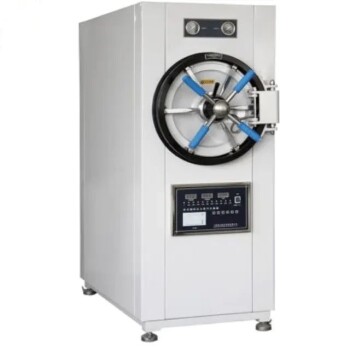
- Laboratory High Pressure Horizontal Autoclave Steam Sterilizer for Lab Use
- Stainless High Pressure Autoclave Reactor Laboratory Pressure Reactor
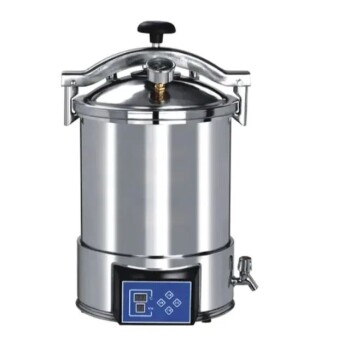
- Portable High Pressure Laboratory Autoclave Steam Sterilizer for Lab Use
- Desktop Fast High Pressure Laboratory Autoclave Sterilizer 16L 24L for Lab Use
- Laboratory High Pressure Steam Sterilizer Vertical Autoclave for Lab Department
People Also Ask
- Why is a laboratory high-pressure autoclave sterilizer necessary? Ensure Accuracy in Antibacterial Research
- What is the role of a laboratory high-pressure autoclave in the conversion of furfural to piperidine? Optimize Yields
- What is the primary function of a laboratory autoclave in the pre-treatment of medical plastic waste for liquid fuel?
- What is an autoclave laboratory equipment? The Ultimate Guide to Steam Sterilization
- What is a laboratory autoclave? A Guide to Sterilization with Pressurized Steam