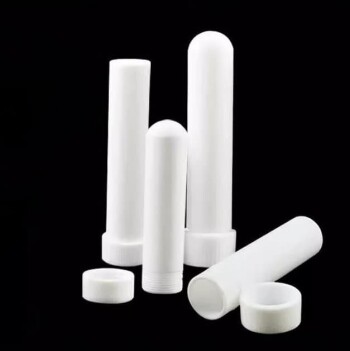
PTFE-lined high-pressure reactors are essential because they provide a chemically inert environment that withstands the corrosive catalysts and extreme autogenous pressures required to deconstruct lignocellulose. For Liquid Hot Water (LHW) pretreatment of corn stalks, this setup allows the reaction to reach temperatures up to 210°C without the catalysts—such as FeCl3—corroding the reactor walls or contaminating the biomass with metal ions.
Core Takeaway: The PTFE liner acts as a critical barrier that prevents chemical degradation of the reactor hardware while the stainless steel outer shell provides the mechanical strength to maintain water in a liquid state at supercritical temperatures.
Managing Chemical Aggression and Purity
Protection Against Acidic Catalysts
Liquid Hot Water pretreatment often utilizes catalysts like FeCl3 or organic acids to accelerate the breakdown of corn stalks. These substances become highly corrosive at high temperatures, capable of pitting or dissolving standard stainless steel. The PTFE liner is chemically inert, ensuring these reagents do not compromise the reactor’s structural integrity.
Preventing Metal Ion Contamination
If a reactor lacks a liner, metal ions from the steel shell can leach into the reaction mixture. These impurities can interfere with the structural deconstruction of the lignocellulosic components or poison downstream fermentation processes. A PTFE liner ensures the purity of the reaction, leading to more accurate experimental results and higher quality end-products.
Resisting By-product Corrosion
As corn stalks break down, they release organic acids and other volatile compounds that can increase the acidity of the liquid medium. The chemical stability of PTFE protects the equipment not just from the added catalysts, but also from the corrosive nature of the biomass degradation products themselves.
Sustaining Extreme Physical Conditions
Maintaining the Liquid Phase
Effective LHW pretreatment requires water to remain in a liquid state at temperatures well above its boiling point (up to 210°C). This creates significant autogenous pressure within the vessel. The high-pressure reactor shell provides the necessary containment to force water into the lignocellulosic matrix, facilitating the dissolution of hemicellulose.
Superior Sealing Performance
PTFE is not only a corrosion barrier but also a critical component of the sealing mechanism. Its slight elasticity under pressure helps maintain a gas-tight seal, ensuring that water vapor pressure remains constant throughout the duration of the pretreatment. This stability is vital for the repeatability of hydrothermal experiments.
Thermal and Pressure Synergy
The reactor design leverages the strengths of two materials: the stainless steel outer shell handles the mechanical stress of high pressure, while the PTFE liner handles the chemical stress. This synergy allows for the safe "structural adjustments at the molecular level" required to break the lignocellulosic network of the corn stalks.
Understanding the Trade-offs
Temperature Limitations
While PTFE is highly resistant to chemicals, it has a functional temperature ceiling, typically around 250°C. Exceeding these limits can cause the liner to soften or deform, potentially leading to seal failure or mechanical issues. For processes requiring temperatures above this range, alternative liners like PPL (Polyphenylene polymers) may be required.
Thermal Conductivity Gaps
PTFE is an insulator, which means it can slow down the heat transfer from the reactor's heating element to the corn stalk slurry. Operators must account for a "thermal lag" and ensure that the internal temperature, rather than just the jacket temperature, is monitored to achieve consistent pretreatment results.
Making the Right Choice for Your Goal
How to Apply This to Your Project
- If your primary focus is High-Yield Hemicellulose Extraction: Prioritize a reactor with a thick PTFE liner to allow for the use of strong acidic catalysts that maximize the dissolution of the lignocellulosic structure.
- If your primary focus is Downstream Fermentation Purity: Use a PTFE-lined vessel specifically to eliminate metal ion leaching, which can inhibit the microbial activity needed for biogas or ethanol production.
- If your primary focus is Equipment Longevity: Ensure the PTFE liner is inspected for "cold flow" or deformation after every high-temperature run to protect the expensive stainless steel outer vessel from accidental exposure to corrosives.
The PTFE-lined high-pressure reactor is the definitive tool for corn stalk pretreatment, balancing the need for chemical "silence" with the physical strength required for hydrothermal deconstruction.
Summary Table:
| Feature | Function in LHW Pretreatment | Key Laboratory Benefit |
|---|---|---|
| PTFE Liner | Chemical barrier against FeCl3 & organic acids | Prevents reactor corrosion & metal ion leaching |
| SS Outer Shell | Mechanical support for autogenous pressure | Maintains water in liquid state up to 210°C |
| Elastic Sealing | Maintains gas-tight containment | Ensures constant vapor pressure & repeatability |
| Chemical Inertness | Resists biomass degradation by-products | Guarantees high-purity downstream fermentation |
Upgrade Your Biomass Research with KINTEK Precision
Achieving consistent results in lignocellulose deconstruction requires equipment that can handle both chemical aggression and extreme physical stress. KINTEK specializes in high-performance laboratory solutions, offering a robust range of high-temperature high-pressure reactors and autoclaves specifically designed for demanding applications like LHW pretreatment.
Our comprehensive portfolio supports your entire workflow—from crushing and milling systems for sample preparation to high-temperature furnaces (muffle, vacuum, CVD) and hydraulic pellet presses for advanced material analysis. Whether you are focused on maximizing hemicellulose yield or ensuring microbial purity in fermentation, KINTEK provides the durability and precision your lab deserves.
Ready to enhance your lab's efficiency? Contact KINTEK today to consult with our experts on the perfect reactor configuration for your research goals!
References
- Jingyuan Liu, Tao Xia. Full-Chain FeCl3 Catalyzation Is Sufficient to Boost Cellulase Secretion and Cellulosic Ethanol along with Valorized Supercapacitor and Biosorbent Using Desirable Corn Stalk. DOI: 10.3390/molecules28052060
This article is also based on technical information from Kintek Solution Knowledge Base .
Related Products
- Custom PTFE Teflon Parts Manufacturer for Hydrothermal Synthesis Reactor Polytetrafluoroethylene Carbon Paper and Carbon Cloth Nano-growth
- Custom PTFE Teflon Parts Manufacturer for Reagent Wide Mouth Fine Mouth Sample High Temperature Bottles
- Stainless High Pressure Autoclave Reactor Laboratory Pressure Reactor
- Customizable High Pressure Reactors for Advanced Scientific and Industrial Applications
- Custom PTFE Teflon Parts Manufacturer for Microwave Digestion Tank
People Also Ask
- What is the function of a PTFE reactor in MXene etching? Ensure Safe, High-Purity MAX Phase Conversion
- Why is a PTFE reactor required for titanium-based nano-ceramic coating solutions? Ensure Chemical Inertness & Purity
- Why must a Polytetrafluoroethylene (PTFE) reactor be used for Ti3C2TX MXene etching? Ensure Safety and Purity
- Why are PTFE reactors preferred for silver phosphate glass testing? Ensure Purity and Kinetic Accuracy
- What are the advantages of using polytetrafluoroethylene (PTFE) liners in hydrothermal synthesis reactors? High Purity