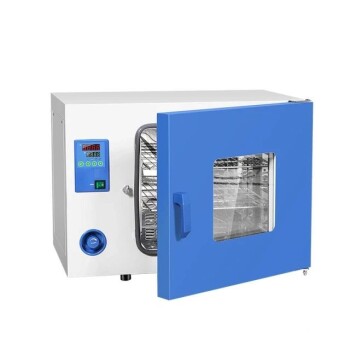
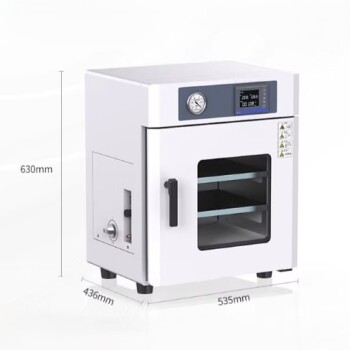
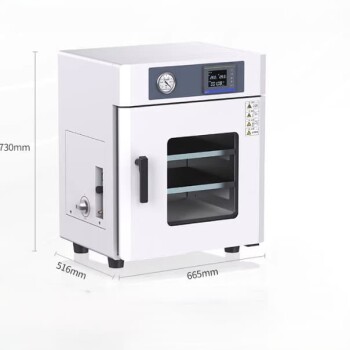
A thermostatic oven is a fundamental requirement for long-term cycling tests because it isolates the battery from external thermal variables. Since the ionic conductivity within a battery's electrolytes is highly sensitive to heat, even minor fluctuations in room temperature can significantly alter performance data. The oven ensures that the environment remains constant, guaranteeing that measured changes in charge-discharge capacity are real and not artifacts of the environment.
The primary function of the thermostatic oven is to eliminate data noise caused by ambient temperature shifts, ensuring that experimental results are repeatable and accurately reflect the battery's intrinsic chemistry.
The Science of Thermal Sensitivity
Impact on Ionic Conductivity
The core reason for strictly controlling temperature lies in the battery's electrolyte. The reference specifically notes that the ionic conductivity of polymer electrolytes is highly sensitive to temperature variations.
When temperature rises or falls, the ability of ions to move through the electrolyte changes. This physical change directly impacts how the battery charges and discharges.
Consistency of Rate Performance
If the temperature shifts, the rate at which the battery can deliver power fluctuates. Without an oven, a researcher cannot tell if a change in rate performance is due to the battery degrading or simply the room getting colder.
Maintaing a fixed temperature, such as 20°C or 40°C, locks this variable in place. This allows the observer to focus entirely on the battery's internal performance evolution.
Ensuring Data Reliability
Eliminating Environmental Noise
Long-term cycling tests often run for weeks or months. Over this period, ambient room temperatures naturally fluctuate due to day/night cycles, HVAC cycling, or seasonal changes.
A thermostatic oven acts as a shield against these fluctuations. It prevents the environment from influencing the data regarding charge-discharge capacity.
Achieving Repeatability
Scientific validity relies on the ability to reproduce results. If a test is conducted in an uncontrolled environment, the specific temperature profile of that day cannot be replicated.
By standardizing the thermal environment, the oven ensures that the experiment can be repeated with the same conditions, validating the accuracy of the results.
The Risks of Ambient Testing
False Data Trends
Testing without a thermostatic oven introduces a significant risk of misinterpreting data. You may observe "ghost" trends where capacity seems to improve or degrade based solely on the time of day.
Inability to Isolate Variables
To improve battery technology, you must isolate variables. If temperature is not controlled, it becomes a confounding variable that masks the true effects of the material properties you are trying to study.
Making the Right Choice for Your Goal
To ensure your cycling data is scientifically valid, you must match your equipment to your objective.
- If your primary focus is material characterization: Use the oven to stabilize ionic conductivity so you measure the chemistry, not the climate.
- If your primary focus is long-term reliability: Use the oven to ensure that capacity fade is tracked accurately over time without environmental interference.
Control the temperature, and you control the integrity of your data.
Summary Table:
| Feature | Impact on Battery Testing | Importance for Reliability |
|---|---|---|
| Temperature Stability | Prevents fluctuations in ionic conductivity | High: Ensures repeatable chemistry analysis |
| Variable Isolation | Separates ambient noise from internal degradation | Essential: Validates capacity fade trends |
| Environmental Shielding | Protects against day/night/seasonal HVAC shifts | Critical: Maintains consistency over months |
| Rate Performance | Standardizes the power delivery environment | Necessary: Accurately measures rate capability |
Precision Battery Testing with KINTEK
Don't let ambient temperature shifts compromise your research integrity. KINTEK specializes in advanced laboratory equipment designed for the rigorous demands of battery research. From precise thermostatic ovens and ULT freezers to specialized electrolytic cells, electrodes, and hydraulic presses for pellet preparation, we provide the tools you need to isolate variables and achieve scientific excellence.
Whether you are conducting material characterization or long-term reliability cycling, our high-performance solutions ensure your data reflects the true chemistry of your cells, not the climate of your lab.
Enhance your data reliability today—Contact KINTEK for a custom quote!
Related Products
- Laboratory Scientific Electric Heating Blast Drying Oven
- Laboratory Muffle Oven Furnace Bottom Lifting Muffle Furnace
- High Temperature Muffle Oven Furnace for Laboratory Debinding and Pre Sintering
- 1700℃ Muffle Oven Furnace for Laboratory
- Graphite Vacuum Furnace High Thermal Conductivity Film Graphitization Furnace
People Also Ask
- How does a laboratory electric drying oven contribute to the formation of the initial coating? Expert Insights
- What role does a precision laboratory drying oven play in the synthesis of GO-PANI nanocomposites? Protect Material Integrity
- What role does a laboratory drying oven play in the preparation of zinc oxide nanoparticle precursors?
- What is the necessity of using a laboratory drying oven when processing MoO3/GO composite nanopowders? Find out here.
- What is the role of a laboratory drying oven in cellulose citrate production? Ensure Material Stability & Purity