A high-performance turbomolecular pump is the critical component responsible for creating the ultra-high vacuum (UHV) necessary for Knudsen Effusion Mass Spectrometry (KEMS). By achieving pressure levels between 10⁻⁸ and 10⁻⁹ kPa, the system ensures that the molecular beam travels from the Knudsen cell orifice to the mass spectrometer without colliding with background gas molecules.
Core Takeaway The validity of KEMS data relies entirely on the "mean free path" of the molecules being measured. A high-performance vacuum system eliminates background interference, ensuring that the detected signals represent the pure sample rather than residual atmospheric gases or scattered particles.
The Physics of Beam Integrity
Preventing Molecular Collisions
In a KEMS experiment, a molecular beam is ejected from a Knudsen cell orifice. This beam must travel a specific distance to reach the detector.
If the vacuum chamber contains residual gas molecules, the sample molecules will collide with them. These collisions scatter the beam, preventing it from reaching the mass spectrometer and effectively destroying the experiment.
Achieving the Ultra-High Vacuum (UHV) Standard
To guarantee a collision-free path, the environment must reach an ultra-high vacuum level.
According to established standards for this equipment, the target pressure range is 10⁻⁸ to 10⁻⁹ kPa. Only a high-performance turbomolecular pump has the rotational speed and compression ratio required to achieve and maintain this extreme level of emptiness.
Data Accuracy and Repeatability
Eliminating Background Noise
Mass spectrometers are highly sensitive devices designed to measure partial pressures.
If the vacuum system fails to rapidly extract background gases, the spectrometer will detect them. This creates "noise" that obscures the signal from the actual sample, making accurate analysis impossible.
Ensuring Experimental Repeatability
Scientific data is only valuable if it is reproducible.
A high-performance pump system maintains a consistently clean vacuum environment throughout the duration of the experiment. This stability ensures that variations in data are due to the sample's properties, not fluctuations in the vacuum chamber's background pressure.
Understanding the Operational Trade-offs
Sensitivity to Contamination
While turbomolecular pumps are powerful, they are strictly designed for moving gas, not solids or liquids.
If the sample inside the Knudsen cell "spits" or evaporates too violently, it can deposit material onto the pump blades. This contamination can degrade pump performance, making it impossible to reach the required 10⁻⁹ kPa threshold.
The Necessity of Roughing Pumps
A turbomolecular pump cannot operate at atmospheric pressure.
It requires a "backing" or "roughing" pump to bring the pressure down to a medium vacuum first. This adds complexity to the system, as the high-performance pump is only effective once the initial evacuation is complete.
Ensuring Success in Your KEMS Setup
To maximize the reliability of your mass spectrometry results, consider your specific experimental goals:
- If your primary focus is Beam Integrity: Ensure your pump system is rated to sustain 10⁻⁹ kPa, maximizing the mean free path to prevent scattering.
- If your primary focus is Data Precision: Prioritize pumps with high pumping speeds for light gases (like hydrogen or helium) to minimize the background noise floor.
A KEMS system is only as precise as its vacuum is pure; the pump is the engine of that purity.
Summary Table:
| Feature | Requirement for KEMS | Role of Turbomolecular Pump |
|---|---|---|
| Vacuum Level | 10⁻⁸ to 10⁻⁹ kPa | Achieves and sustains ultra-high vacuum (UHV) states. |
| Beam Path | Collision-free | Maximizes mean free path by removing background gas molecules. |
| Signal Quality | Low background noise | Rapidly extracts residual gases to ensure high signal-to-noise ratios. |
| Stability | High repeatability | Maintains consistent pressure for reproducible scientific data. |
Elevate Your Research Precision with KINTEK
Don't let background noise or beam scattering compromise your critical KEMS data. At KINTEK, we specialize in the high-performance laboratory equipment essential for advanced material science. From ultra-high vacuum solutions and high-temperature furnaces (muffle, tube, vacuum) to specialized high-pressure reactors and battery research tools, our expertise ensures your lab environment meets the most rigorous standards.
Ready to optimize your experimental setup? Contact KINTEK experts today to discover how our high-performance vacuum systems and precision consumables can enhance your lab's efficiency and accuracy.
References
- Elisa Capelli, R.J.M. Konings. Determination of the thermodynamic activities of LiF and ThF<sub>4</sub>in the Li<sub>x</sub>Th<sub>1−x</sub>F<sub>4−3x</sub>liquid solution by Knudsen effusion mass spectrometry. DOI: 10.1039/c5cp04777c
This article is also based on technical information from Kintek Solution Knowledge Base .
Related Products
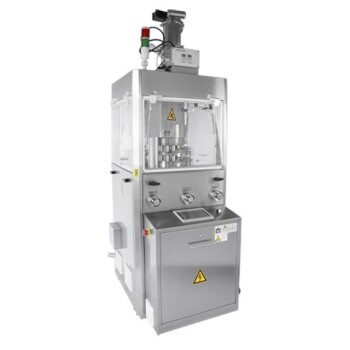
- Single Punch Tablet Press Machine and Mass Production Rotary Tablet Punching Machine for TDP
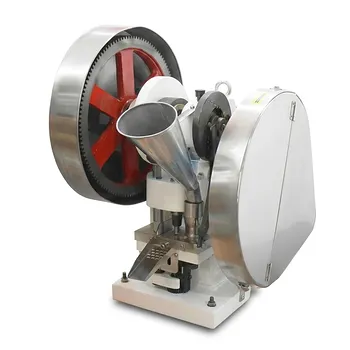
- Single Punch Electric Tablet Press Machine TDP Tablet Punching Machine
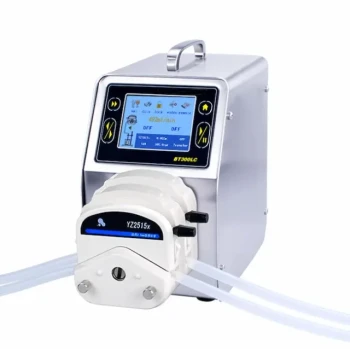
- Variable Speed Peristaltic Pump
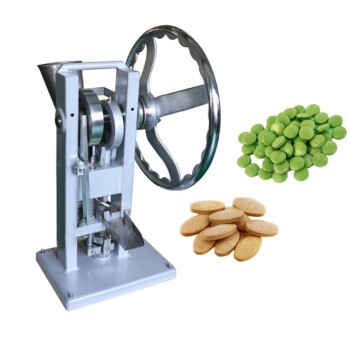
- Single Punch Manual Tablet Press Machine TDP Tablet Punching Machine
- Lab Scale Rotary Single Punch Tablet Press Machine TDP Tablet Punching Machine
People Also Ask
- What is the use of single punch tablet press? For Precise R&D and Small-Batch Tablet Production
- What is a punch tablet press? Precision Tableting for R&D and Small Batches
- Which type of tablet press is more suitable for large scale production? Rotary Presses for High-Volume Efficiency
- How fast is the rotary tablet press? Unlock Peak Production Speeds for Your Tablets
- What is the difference between a rotary tablet press and a single tablet punch press? A Guide to Choosing the Right Machine