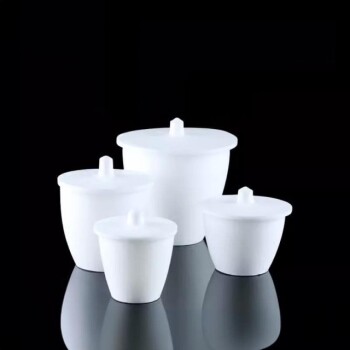
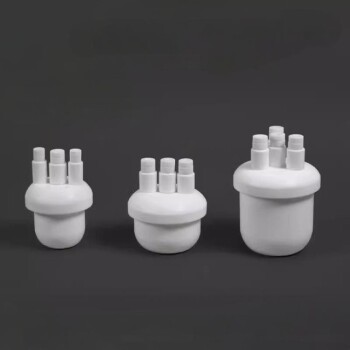
The use of a Teflon-lined pressure reactor is mandatory because it simultaneously ensures physical safety and chemical data integrity at elevated temperatures. At 200°C, water generates significant internal vapor pressure that requires a robustly sealed vessel, while the Teflon liner provides an inert barrier that prevents the metallic reactor walls from contaminating the deionized water used as the test medium.
The specific use of a Teflon-lined pressure reactor allows researchers to simulate harsh industrial hydrothermal conditions while eliminating variables like external contamination, ensuring that the observed degradation is solely due to the interaction between the coating and the corrosive medium.
Managing Thermodynamics at 200°C
Containing Internal Vapor Pressure
Standard laboratory glassware cannot withstand the conditions required for this test. At 200°C, water exists well above its atmospheric boiling point, generating substantial internal vapor pressure.
A pressure reactor is mechanically designed to contain this force without rupturing. This capability allows the water to remain in a liquid or dense vapor phase, accurately simulating the hydrothermal environment the Polymer-Derived Ceramic (PDC) coating is meant to resist.
Reliable Sealing Mechanisms
Maintaining a consistent environment requires an impeccable seal. As noted in advanced corrosion testing protocols, reliable sealing designs are critical for preventing leaks that would alter the pressure or volume of the corrosive medium.
By utilizing a pressure-bearing design, the reactor ensures that the test environment remains static and closed. This effectively eliminates hydrodynamic interference, ensuring the test focuses purely on chemical stability rather than flow-induced erosion.
Preserving Chemical Integrity
The Critical Role of the Teflon Liner
The primary reason for using a Teflon liner is its exceptional chemical inertness. While the outer steel shell handles the pressure, it is reactive and could corrode in hot, high-pressure water.
Teflon (PTFE) does not react with deionized water or the breakdown products of the PDC coating. This ensures that the vessel itself remains a neutral observer in the experiment.
Preventing Cross-Contamination
If the corrosive medium (deionized water) were to touch the metal walls of the reactor, metallic ions could leach into the solution. This contamination would alter the water chemistry, potentially accelerating or inhibiting the corrosion of the PDC coating.
The liner guarantees that the corrosive medium remains pure. This allows for an accurate assessment of the PDC coating’s durability, ensuring that any failure is due to the coating's limitations, not impurities introduced by the testing equipment.
Understanding the Trade-offs
Temperature Limitations
While Teflon is excellent for tests at 200°C, it has thermal limits. For experiments requiring supercritical water conditions (temperatures reaching up to 700°C), a Teflon liner would melt or degrade.
In those extreme scenarios, specialized alloys or different reactor designs are required. However, for the specific target of 200°C, Teflon offers the best balance of cost, performance, and chemical purity.
Static vs. Dynamic Testing
This specific setup is generally designed for static corrosion testing. While it excels at isolating chemical interactions, it does not simulate the mechanical stress of flowing water.
If the material application involves high-velocity fluids, a static pressure reactor provides a baseline for chemical resistance but may not capture the full scope of erosion-corrosion mechanisms.
Making the Right Choice for Your Goal
To ensure your data is valid and your equipment is safe, apply the following guidelines:
- If your primary focus is chemical purity at moderate temperatures (≤ 200°C): Use a Teflon-lined reactor to prevent metal ion contamination and isolate the chemical breakdown of the coating.
- If your primary focus is extreme supercritical conditions (> 300°C): You must abandon Teflon and utilize high-grade alloy reactors capable of withstanding extreme thermal stress, accepting that vessel reactivity becomes a more complex variable.
By matching the reactor's material properties to the thermal and chemical demands of your experiment, you transform a dangerous procedure into a precise, controlled scientific assessment.
Summary Table:
| Feature | Teflon-Lined Pressure Reactor | Significance for PDC Testing |
|---|---|---|
| Temperature Limit | Up to 200°C - 250°C | Ideal for simulating standard hydrothermal environments. |
| Chemical Inertness | High (PTFE Liner) | Prevents metal ion leaching into deionized water, ensuring data purity. |
| Pressure Containment | High (Steel Outer Shell) | Safely contains internal vapor pressure of water at 200°C. |
| Medium Isolation | Complete | Eliminates external variables and cross-contamination from the vessel. |
| Test Type | Static Corrosion | Focuses on chemical stability and coating degradation mechanisms. |
Elevate Your Material Research with KINTEK
Precision and safety are non-negotiable in hydrothermal testing. At KINTEK, we specialize in high-performance laboratory equipment designed for the most demanding environments. Whether you are conducting corrosion tests on PDC coatings or exploring advanced chemical synthesis, our high-temperature high-pressure reactors and autoclaves provide the perfect balance of chemical inertness and mechanical strength.
From our premium Teflon-lined vessels to specialized crushing, milling, and hydraulic press systems, KINTEK delivers the tools you need to ensure accurate, repeatable results. Our comprehensive portfolio also includes electrolytic cells, ULT freezers, and essential ceramics to support your entire lab workflow.
Ready to upgrade your research capabilities? Contact us today to find the ideal reactor solution for your application!
References
- Milan Parchovianský. CORROSION AND OXIDATION BEHAVIOR OF POLYMER DERIVED CERAMIC COATINGS WITH PASSIVE GLASS FILLERS ON AISI441 STAINLESS STEEL. DOI: 10.13168/cs.2018.0006
This article is also based on technical information from Kintek Solution Knowledge Base .
Related Products
- Custom PTFE Teflon Parts Manufacturer for Hydrothermal Synthesis Reactor Polytetrafluoroethylene Carbon Paper and Carbon Cloth Nano-growth
- Custom PTFE Teflon Parts Manufacturer for Microwave Digestion Tank
- Custom PTFE Teflon Parts Manufacturer PTFE Beaker and Lids
- Custom PTFE Teflon Parts Manufacturer F4 Conical Flask Triangular Flask 50 100 250ml
- Stainless High Pressure Autoclave Reactor Laboratory Pressure Reactor
People Also Ask
- What is the function of a PTFE reactor in MXene etching? Ensure Safe, High-Purity MAX Phase Conversion
- Why is a PTFE reactor required for titanium-based nano-ceramic coating solutions? Ensure Chemical Inertness & Purity
- Why must a Polytetrafluoroethylene (PTFE) reactor be used for Ti3C2TX MXene etching? Ensure Safety and Purity
- Why are PTFE reactors preferred for silver phosphate glass testing? Ensure Purity and Kinetic Accuracy
- What are the advantages of using polytetrafluoroethylene (PTFE) liners in hydrothermal synthesis reactors? High Purity