Blog Classification of tablet press molds and precautions for use
Classification of tablet press molds and precautions for use

Classification of tablet press molds and precautions for use

3 years ago

What is a stamping die

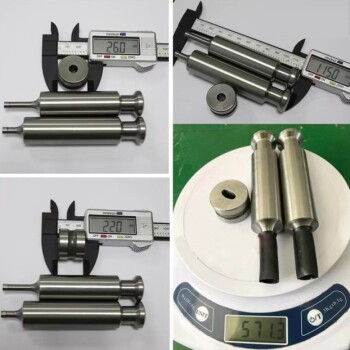
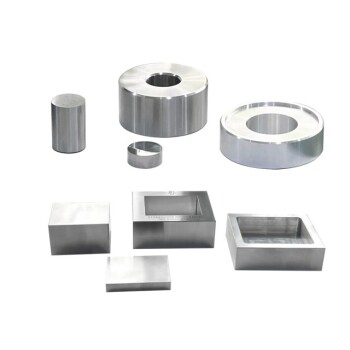
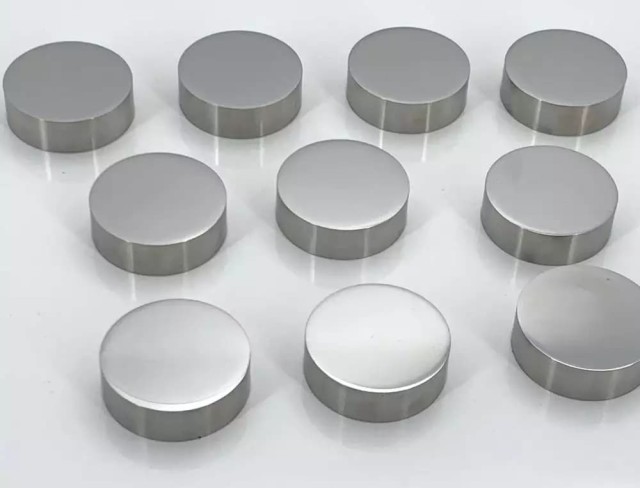
During the stamping process. A stamping die is a tablet press die that compresses a sample or tablet during the stamping process. The stamping die is placed on top of the tablet press and the sample is placed on top of the die then compression molded to the desired shape and size.

The working end faces of the upper and lower punches of the stamping die form the surface shape of the tablet, and the diameter of the middle die is the diameter of the tablet. The dies are mounted in a frame, and the frame is attached to the press.

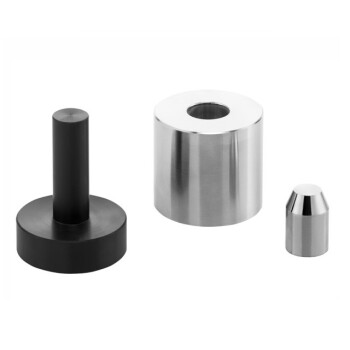
The punching die consists of three parts: the upper punch, the middle die, and the lower punch. The middle die is the main working element and is usually made of a harder material than the upper and lower punches. The upper and lower punches are used to create the desired shape in the metal sheet.

as that of the lower punch The structure of the upper and lower punches of the die is similar, and the diameter of the punch is also the same as that of the lower punch. The main difference between the two types of punches is the length of the shank. The upper punch has a shorter shank than the lower punch, so that it can be inserted into the die cavity from the top.

The upper and lower punches of the punching die need to have a very precise punch diameter in order to be able to slide up and down freely in the middle die hole without any gaps where powder can leak. The machining accuracy requirements for the die are therefore very high.

Shape of stamping die

There are various shapes for the end face of a punch, depending on the desired use. A flat shape is great for general purpose use, while a hypotenuse shape is useful for creating sharp edges. A shallow concave shape is ideal for making shallow indentations, while a deep concave shape is perfect for making deeper indentations. There is also a comprehensive shape that can be used for a variety of purposes.

Punches are important in the tablet compression process because they determine the shape and size of the tablet. There are different types of punches that can be used depending on the type of tablet being compressed. Flat, beveled punches are used to compress flat cylindrical tablets or samples. Shallow concave punches are used to compress biconvex tablets or samples. Deep concave punches are mainly used to compress the core of coated tablets. The integrated punch is mainly used for compressing special-shaped tablets.

In order to identify the pressed samples, the sample name, dosage, and vertical and horizontal lines can be engraved on the end face of the die. This will help to distinguish the pressed samples from one another and make it easier to identify the desired sample.

The die should be filled with the proper amount of powder. The die should be tapped on a hard surface a few times to allow the powder to settle. A Punches should be placed onto the die and tamped with a tamper. The die should be placed on the bottom plate of the press and the upper plate brought down with even pressure to produce a Tablet. A die is a tool that is used to press powder into a sample of a desired shape and size. The die is filled with powder, tapped on a hard surface to settle the powder, and then placed on the bottom plate of a press. A punch is placed on top of the die, and the upper plate is brought down with even pressure to produce a tablet.

Cleaning and maintenance of stamping dies

If the mold is deformed, it will affect the test results of the sample.When using a mold, it is important to wipe the surface clean with dust-free paper to prevent the anti-rust oil from affecting the test results. Be careful not to exceed the pressure when applying pressure, as this can deform the mold and affect the test results.

If the mold is not used for a long time, it is necessary to coat the mold with anti-rust oil and store it in a dry environment. This will help to avoid corrosion of the mold.

Precautions for the use of stamping dies

Place the mold in the center of the tablet press, and the maximum bearing capacity of the mold should not be exceeded during pressurization. The mold needs to be replaced if there are any cracks or damages.

If there is any sample residue on the surface of the mold that cannot be removed, please do not wash and soak with chemical reagents; please contact us for further directions. Washing the mold with chemical reagents may damage the mold and affect the analysis.

If you don't plan on using your mold for a while, it's a good idea to apply some anti-rust oil to the surface. This will help to prevent the mold from rusting over time.

If the mold is not used for a long time, the mold needs to be stored in a dry environment to prevent it from rusting.

Related Products

Related Articles

Related Products

Multi-Punch Rotary Tablet Press Mold Ring for Rotating Oval and Square Molds

Multi-Punch Rotary Tablet Press Mold Ring for Rotating Oval and Square Molds

The multi-punch rotary tablet press mold stands as a pivotal component in pharmaceutical and manufacturing industries, revolutionizing the process of tablet production. This intricate mold system comprises multiple punches and dies arranged in a circular fashion, facilitating rapid and efficient tablet formation.

Button Battery Tablet Press Sealing Mold for Lab Use

Button Battery Tablet Press Sealing Mold for Lab Use

The sealing die is essential for assembling button batteries, ensuring components like the anode, cathode, and electrolyte are securely enclosed.

Single Punch Tablet Press Machine and Mass Production Rotary Tablet Punching Machine for TDP

Single Punch Tablet Press Machine and Mass Production Rotary Tablet Punching Machine for TDP

Rotary tablet punching machine is an automatic rotating and continuous tableting machine. It is mainly used for tablet manufacturing in the pharmaceutical industry, and is also suitable for industrial sectors such as food, chemicals, batteries, electronics, ceramics, etc. to compress granular raw materials into tablets.

Lab Scale Rotary Single Punch Tablet Press Machine TDP Tablet Punching Machine

Lab Scale Rotary Single Punch Tablet Press Machine TDP Tablet Punching Machine

This machine is a single-pressure automatic rotating, continuous tableting machine that compresses granular raw materials into various tablets. It is mainly used for tablet production in the pharmaceutical industry, and is also suitable for chemical, food, electronics and other industrial sectors.

Single Punch Electric Tablet Press Machine Laboratory Powder Tablet Punching TDP Tablet Press

Single Punch Electric Tablet Press Machine Laboratory Powder Tablet Punching TDP Tablet Press

The single-punch electric tablet press is a laboratory-scale tablet press suitable for corporate laboratories in pharmaceutical, chemical, food, metallurgical and other industries.

Single Punch Manual Tablet Press Machine TDP Tablet Punching Machine

Single Punch Manual Tablet Press Machine TDP Tablet Punching Machine

Single punch manual tablet punching machine can press various granular, crystal or powdery raw materials with good fluidity into disc-shaped, cylindrical, spherical, convex, concave and other various geometric shapes (such as square, triangle, ellipse, capsule shape, etc.), and can also press products with text and patterns.

Single Punch Electric Tablet Press Machine TDP Tablet Punching Machine

Single Punch Electric Tablet Press Machine TDP Tablet Punching Machine

The electric tablet punching machine is a laboratory equipment designed for pressing various granular and powdery raw materials into discs and other geometric shapes. It is commonly used in pharmaceutical, healthcare products, food, and other industries for small batch production and processing. The machine is compact, lightweight, and easy to operate, making it suitable for use in clinics, schools, laboratories, and research units.

Anti-Cracking Press Mold for Lab Use

Anti-Cracking Press Mold for Lab Use

The anti-cracking press mold is a specialized equipment designed for molding various shapes and sizes of film using high pressure and electric heating.

Special Heat Press Mold for Lab Use

Special Heat Press Mold for Lab Use

Square, round and flat plate forming dies for hot presses.

Ball Press Mold for Lab

Ball Press Mold for Lab

Explore versatile Hydraulic Hot Press molds for precise compression molding. Ideal for creating various shapes and sizes with uniform stability.

No Demolding Lab Infrared Press Mold for Laboratory Applications

No Demolding Lab Infrared Press Mold for Laboratory Applications

Effortlessly test your samples with no demolding required using our lab infrared press mold. Enjoy high transmittance and customizable sizes for your convenience.

Ring Press Mold for Lab Applications

Ring Press Mold for Lab Applications

Ring Press Dies, also known as Circular Pellet Press Die Sets, are integral components in various industrial and laboratory processes.

Cylindrical Press Mold for Lab Applications

Cylindrical Press Mold for Lab Applications

Efficiently form and test most samples with Cylindrical Press Molds in a range of sizes. Made of Japanese high-speed steel, with long service life and customizable sizes.

Double Plate Heating Press Mold for Lab

Double Plate Heating Press Mold for Lab

Discover precision in heating with our Double Plate Heating Mold, featuring high-quality steel and uniform temperature control for efficient lab processes. Ideal for various thermal applications.

XRF Boric Acid Lab Powder Pellet Pressing Mold for Laboratory Use

XRF Boric Acid Lab Powder Pellet Pressing Mold for Laboratory Use

Get accurate results with our XRF Boric Acid lab Powder Pellet Pressing Mold. Perfect for preparing samples for X-ray fluorescence spectrometry. Custom sizes available.

Special Shape Press Mold for Lab

Special Shape Press Mold for Lab

Discover high-pressure special shape press molds for diverse applications, from ceramics to automotive parts. Ideal for precise, efficient molding of various shapes and sizes.

Assemble Square Lab Press Mold for Laboratory Applications

Assemble Square Lab Press Mold for Laboratory Applications

Achieve perfect sample preparation with Assemble Square Lab Press Mold. Quick disassembly eliminates sample deformation. Perfect for battery, cement, ceramics, and more. Customizable sizes available.

Cylindrical Press Mold with Scale for Lab

Cylindrical Press Mold with Scale for Lab

Discover precision with our Cylindrical Press Mold. Ideal for high-pressure applications, it molds various shapes and sizes, ensuring stability and uniformity. Perfect for lab use.

Square Lab Press Mold for Laboratory Applications

Square Lab Press Mold for Laboratory Applications

Create uniform samples easily with Square Lab Press Mold - available in various sizes. Ideal for battery, cement, ceramics, and more. Custom sizes available.

Round Bidirectional Press Mold for Lab

Round Bidirectional Press Mold for Lab

The round bidirectional press mold is a specialized tool used in high-pressure molding processes, particularly for creating intricate shapes from metal powders.


Leave Your Message