Blog The Architecture of Control: Why the Five-Port Cell is More Than Glassware
The Architecture of Control: Why the Five-Port Cell is More Than Glassware

The Architecture of Control: Why the Five-Port Cell is More Than Glassware

5 days ago

In experimental science, the greatest enemy is not ignorance. It is noise.

We often assume that if we mix the right chemicals and apply the right current, the truth will reveal itself. But electrochemical data is fragile. It is constantly under siege by invisible variables: a two-degree shift in room temperature, a trace amount of dissolved oxygen, or a subtle voltage drop across a solution.

To an engineer, a reaction vessel isn't just a container. It is a boundary condition.

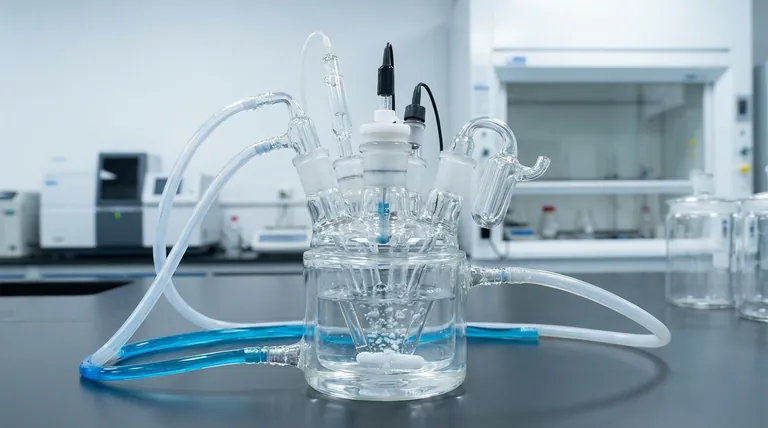
The five-port water bath electrolytic cell is designed with this philosophy in mind. It is not merely a glass jar; it is a meticulously engineered micro-environment designed to isolate the signal from the noise.

Here is how this system creates the architecture of control required for high-level research.

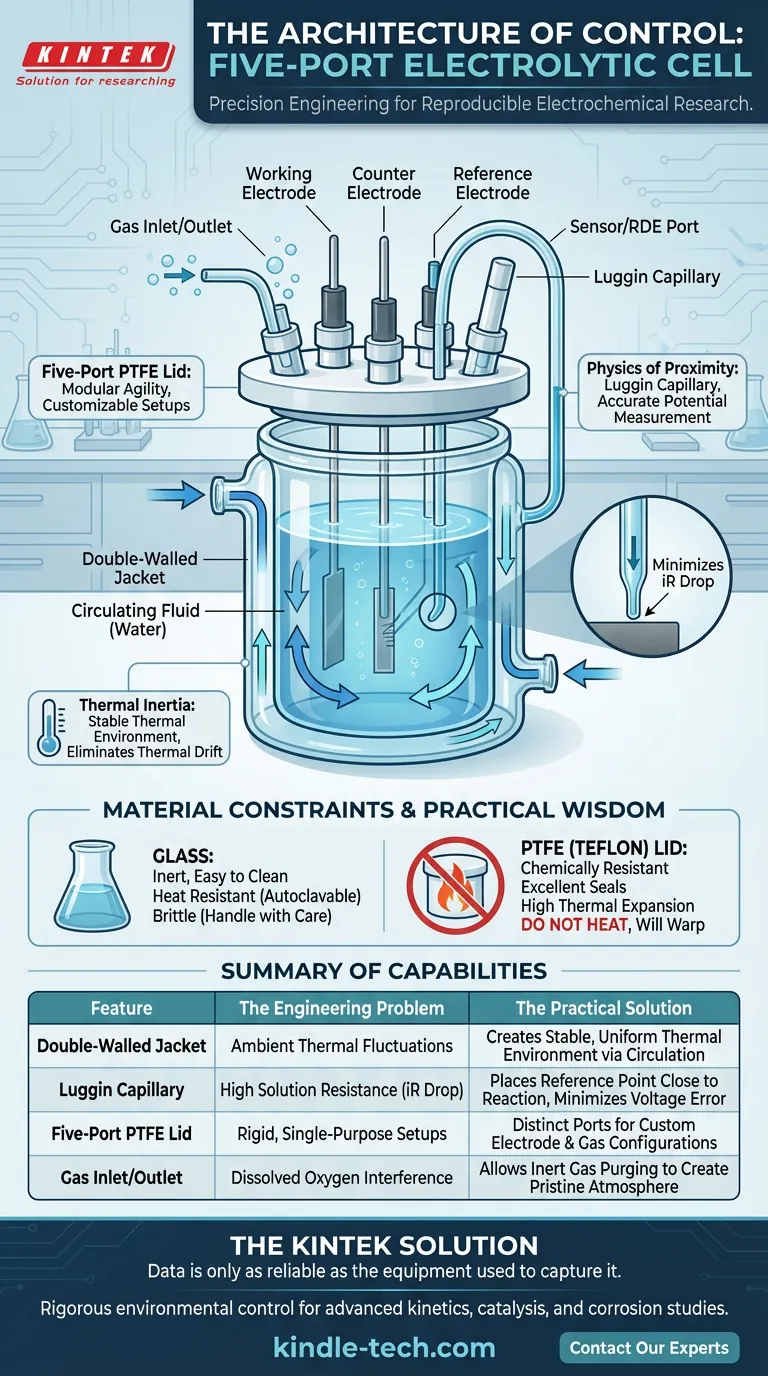
Thermal Inertia: The Double-Walled Defense

Most chemical kinetics are slaves to temperature. A reaction rate that is stable at 25°C can drift significantly at 27°C. If your lab's air conditioning cycles on and off, your data cycles with it.

The defining feature of this cell is its jacketed, double-walled glass body. This creates a thermal moat around your experiment.

By circulating fluid—typically water—through this jacket, the cell acts as a massive thermal sink or source. It locks the internal environment to a specific temperature, regardless of ambient fluctuations.

This eliminates "thermal drift" as a hidden variable. Whether you are studying organic electrosynthesis or battery materials, the double wall ensures that the temperature you record is the temperature that actually existed.

The Physics of Proximity: The Luggin Capillary

In electrochemistry, distance is resistance.

When measuring the potential of a working electrode, the resistance of the solution itself creates an error known as the iR drop. In low-conductivity media, this error can be large enough to render data useless. It creates a phantom voltage that doesn't exist at the reaction surface.

The five-port design includes a specialized port for a Luggin capillary.

This narrow glass tube extends the reach of your reference electrode, placing its sensing tip millimeters away from the working electrode.

It effectively shortcuts the solution's resistance. By minimizing the physical distance, you minimize the iR drop, ensuring that the potential you measure is the potential driving the reaction.

Modular Agility: The Five-Port Logic

Standardization is useful, but rigidity is fatal to innovation. The five-port lid (typically PTFE) offers a balance between structure and freedom.

Three ports serve the "Holy Trinity" of electrochemistry:

  • The Working Electrode: Where the chemistry happens.
  • The Counter Electrode: Closing the circuit.
  • The Reference Electrode: Providing the baseline.

The remaining ports are your canvas. They allow for the introduction of gas inlet/outlet tubes to purge oxygen (a notorious interferent) or the insertion of temperature probes.

For hydrodynamic studies, the geometry accommodates a Rotating Disk Electrode (RDE). This modularity means the cell adapts to the experiment, rather than forcing the experiment to adapt to the cell.

Material Constraints and Practical Wisdom

Engineering is the art of trade-offs. While this cell offers immense control, it demands respect for its materials.

The Glass: It is chemically inert and easy to clean, but it is brittle. It handles heat well (autoclavable), but not impact.

The PTFE (Teflon): The lid is chemically resistant and creates excellent seals. However, PTFE has a high coefficient of thermal expansion. It should never be heated. If you autoclave the lid, it will warp, and your airtight seal will vanish.

Understanding these limits is as important as understanding the capabilities.

Summary of Capabilities

Here is how the hardware translates to experimental advantage:

Feature The Engineering Problem The Practical Solution
Double-Walled Jacket Ambient thermal fluctuations Creates a stable, uniform thermal environment via water circulation.
Luggin Capillary High solution resistance (iR Drop) Places reference point close to the reaction, minimizing voltage error.
Five-Port PTFE Lid Rigid, single-purpose setups distinct ports allow for custom electrode and gas configurations.
Gas Inlet/Outlet Dissolved oxygen interference Allows inert gas purging (N2/Ar) to create a pristine atmosphere.

The KINTEK Solution

Data is only as reliable as the equipment used to capture it.

At KINTEK, we understand that you aren't just buying glass; you are buying reproducibility. Our five-port water bath electrolytic cells are crafted to provide the rigorous environmental control necessary for advanced kinetics, catalysis, and corrosion studies.

Don't let hidden variables compromise your hard work. Ensure your setup is as precise as your hypothesis.

Contact Our Experts

Visual Guide

The Architecture of Control: Why the Five-Port Cell is More Than Glassware Visual Guide

Related Products

Related Articles

Related Products

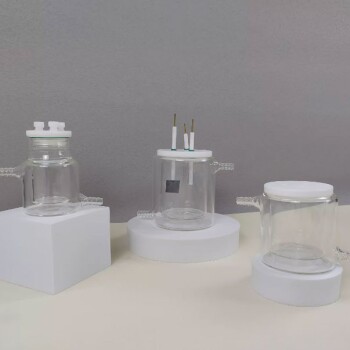
Double Layer Five-Port Water Bath Electrolytic Electrochemical Cell

Double Layer Five-Port Water Bath Electrolytic Electrochemical Cell

Experience optimal performance with our Water Bath Electrolytic Cell. Our double-layer, five-port design boasts corrosion resistance and longevity. Customizable to fit your specific needs. View specs now.

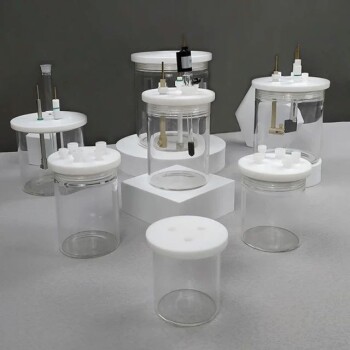
Electrolytic Electrochemical Cell with Five-Port

Electrolytic Electrochemical Cell with Five-Port

Streamline your laboratory consumables with Kintek's Electrolytic Cell with five-port design. Choose from sealed and non-sealed options with customizable electrodes. Order now.

Optical Water Bath Electrolytic Electrochemical Cell

Optical Water Bath Electrolytic Electrochemical Cell

Upgrade your electrolytic experiments with our Optical Water Bath. With controllable temperature and excellent corrosion resistance, it's customizable for your specific needs. Discover our complete specifications today.

Double-Layer Water Bath Electrolytic Electrochemical Cell

Double-Layer Water Bath Electrolytic Electrochemical Cell

Discover the temperature-controllable electrolytic cell with a double-layer water bath, corrosion resistance, and customization options. Complete specifications included.

Multifunctional Electrolytic Electrochemical Cell Water Bath Single Layer Double Layer

Multifunctional Electrolytic Electrochemical Cell Water Bath Single Layer Double Layer

Discover our high-quality Multifunctional Electrolytic Cell Water Baths. Choose from single or double-layer options with superior corrosion resistance. Available in 30ml to 1000ml sizes.

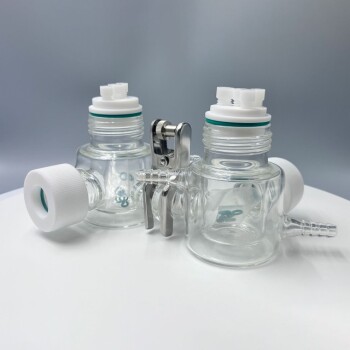
Super Sealed Electrolytic Electrochemical Cell

Super Sealed Electrolytic Electrochemical Cell

Super-sealed electrolytic cell offers enhanced sealing capabilities, making it ideal for experiments that require high airtightness.

H-Type Double-Layer Optical Electrolytic Electrochemical Cell with Water Bath

H-Type Double-Layer Optical Electrolytic Electrochemical Cell with Water Bath

Double-layer H-type optical water bath electrolytic cells, with excellent corrosion resistance and a wide range of specifications available. Customization options are also available.

Electrolytic Electrochemical Cell for Coating Evaluation

Electrolytic Electrochemical Cell for Coating Evaluation

Looking for corrosion-resistant coating evaluation electrolytic cells for electrochemical experiments? Our cells boast complete specifications, good sealing, high-quality materials, safety, and durability. Plus, they're easily customizable to meet your needs.

Customizable PEM Electrolysis Cells for Diverse Research Applications

Customizable PEM Electrolysis Cells for Diverse Research Applications

Custom PEM test cell for electrochemical research. Durable, versatile, for fuel cells & CO2 reduction. Fully customizable. Get a quote!

Electrolytic Electrochemical Cell Gas Diffusion Liquid Flow Reaction Cell

Electrolytic Electrochemical Cell Gas Diffusion Liquid Flow Reaction Cell

Looking for a high-quality gas diffusion electrolysis cell? Our liquid flow reaction cell boasts exceptional corrosion resistance and complete specifications, with customizable options available to suit your needs. Contact us today!

Quartz Electrolytic Electrochemical Cell for Electrochemical Experiments

Quartz Electrolytic Electrochemical Cell for Electrochemical Experiments

Looking for a reliable quartz electrochemical cell? Our product boasts excellent corrosion resistance and complete specifications. With high-quality materials and good sealing, it's both safe and durable. Customize to meet your needs.

PTFE Electrolytic Cell Electrochemical Cell Corrosion-Resistant Sealed and Non-Sealed

PTFE Electrolytic Cell Electrochemical Cell Corrosion-Resistant Sealed and Non-Sealed

Choose our PTFE Electrolytic Cell for reliable, corrosion-resistant performance. Customize specifications with optional sealing. Explore now.

H Type Electrolytic Cell Triple Electrochemical Cell

H Type Electrolytic Cell Triple Electrochemical Cell

Experience versatile electrochemical performance with our H-type Electrolytic Cell. Choose from membrane or non-membrane sealing, 2-3 hybrid configurations. Learn more now.

Side Window Optical Electrolytic Electrochemical Cell

Side Window Optical Electrolytic Electrochemical Cell

Experience reliable and efficient electrochemical experiments with a side window optical electrolytic cell. Boasting corrosion resistance and complete specifications, this cell is customizable and built to last.

FS Electrochemical Hydrogen Fuel Cells for Diverse Applications

FS Electrochemical Hydrogen Fuel Cells for Diverse Applications

KINTEK's FS Electrochemical Cell: Modular PEM fuel cell stack for R&D and training. Acid-resistant, scalable, and customizable for reliable performance.

Thin-Layer Spectral Electrolysis Electrochemical Cell

Thin-Layer Spectral Electrolysis Electrochemical Cell

Discover the benefits of our thin-layer spectral electrolysis cell. Corrosion-resistant, complete specifications, and customizable for your needs.

Customizable Swagelok Type Test Cells for Advanced Battery Research Electrochemical Analysis

Customizable Swagelok Type Test Cells for Advanced Battery Research Electrochemical Analysis

The KINTEK Swagelok-type test cell is a modular, T-shaped device constructed from high-quality, chemically inert materials.

Customizable CO2 Reduction Flow Cell for NRR ORR and CO2RR Research

Customizable CO2 Reduction Flow Cell for NRR ORR and CO2RR Research

The cell is meticulously crafted from high-quality materials to ensure chemical stability and experimental accuracy.

Flat Corrosion Electrolytic Electrochemical Cell

Flat Corrosion Electrolytic Electrochemical Cell

Discover our flat corrosion electrolytic cell for electrochemical experiments. With exceptional corrosion resistance and complete specifications, our cell guarantees optimal performance. Our high-quality materials and good sealing ensure a safe and durable product, and customization options are available.

Button Battery Disassembly and Sealing Mold for Lab Use

Button Battery Disassembly and Sealing Mold for Lab Use

The simple sealing and disassembly mold can be directly used on ordinary tablet presses, which can save costs, is convenient and fast, and can be used to encapsulate and disassemble button batteries. Other specifications can be customized.


Leave Your Message