Blog The Fragility of Precision: Mastering the Integrity of Five-Port Electrolytic Cells
The Fragility of Precision: Mastering the Integrity of Five-Port Electrolytic Cells

The Fragility of Precision: Mastering the Integrity of Five-Port Electrolytic Cells

3 days ago

The Invisible Component

In electrochemistry, we obsess over the visible variables: voltage, current, electrode material, and electrolyte concentration. We meticulously record data points to the third decimal.

Yet, the success of the entire experiment rests on an invisible component: containment.

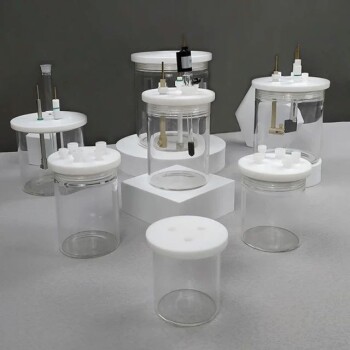
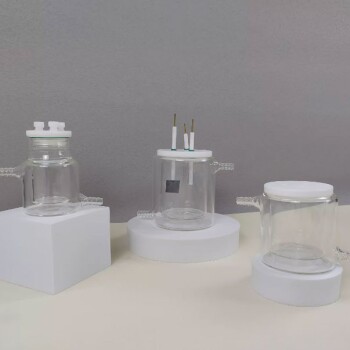
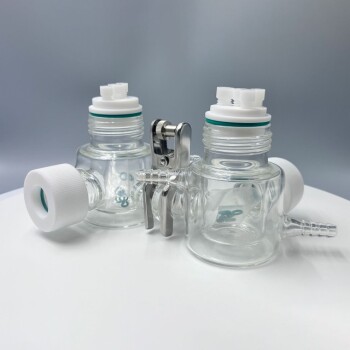
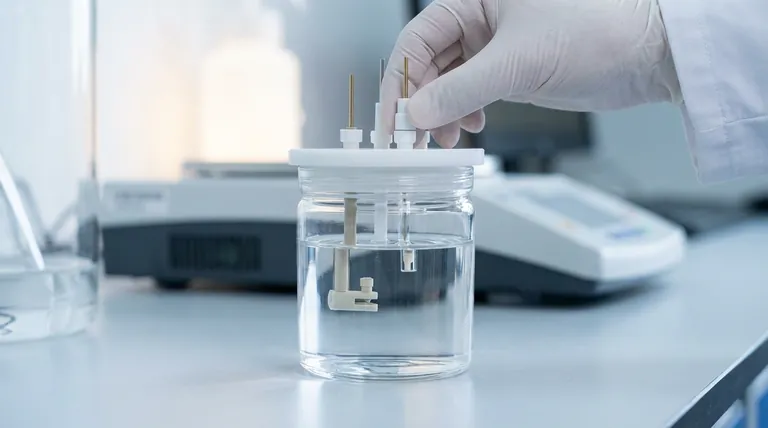
The five-port water bath electrolytic cell is a marvel of functional geometry. It maintains thermal equilibrium while allowing complex access for electrodes and gases. But it is also a system of fragility.

When a cell leaks, it is rarely a manufacturing defect. It is almost always a failure of process. It is the result of treating the vessel as a simple bucket rather than a precision instrument.

Preventing leaks requires a shift in mindset. We must move from reacting to puddles to curating a system of perfect seals.

The Anatomy of Vulnerability

To protect the system, you must understand where it bleeds. A five-port cell is not a solid block; it is a collection of interfaces. Every interface is a potential exit point for your data.

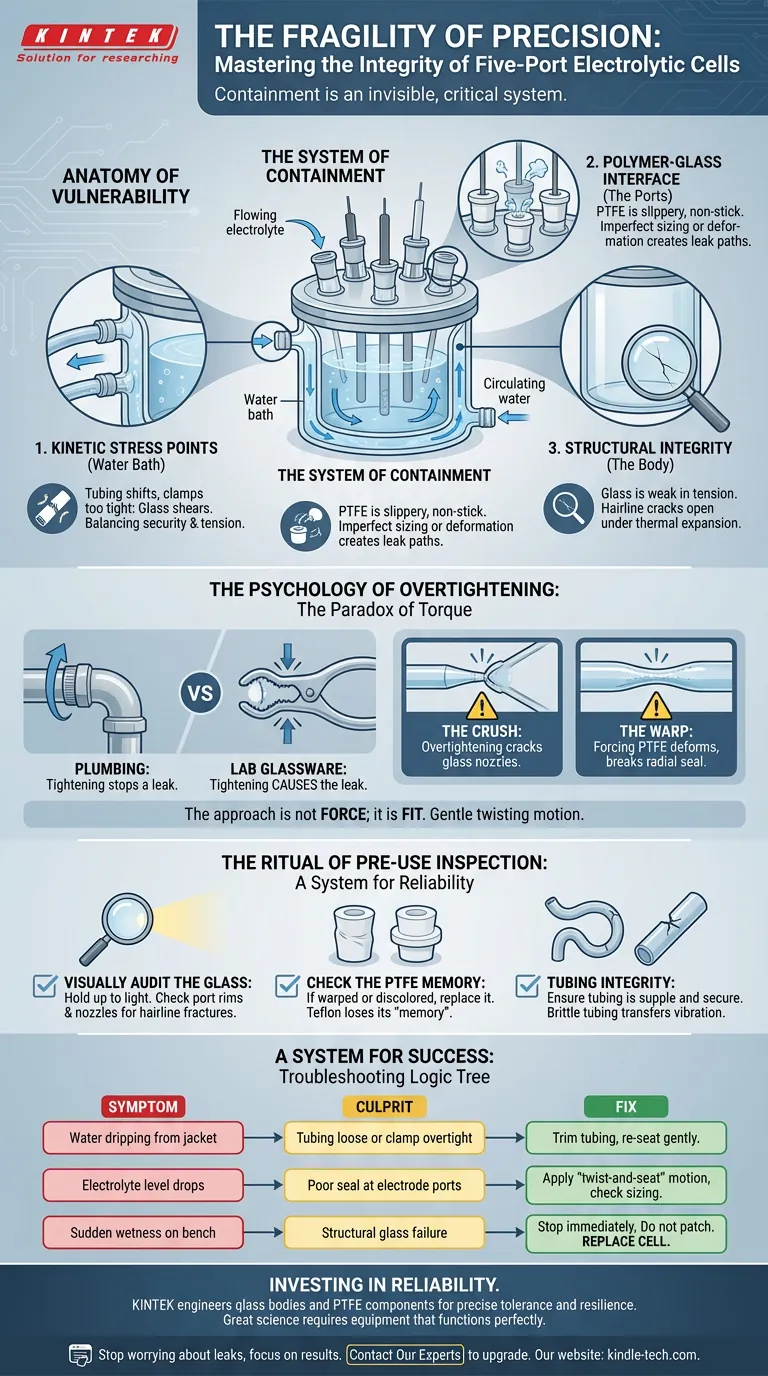
1. The Kinetic Stress Points (Water Bath)

The double-walled jacket is designed for thermal control, but it endures the most mechanical abuse.

The inlet and outlet ports are tethered to circulating tubing. Every time the tubing shifts, the glass feels it. If the connection is loose, water drips on your electronics. If the clamp is too tight, the glass shears. It is a balancing act between security and tension.

2. The Polymer-Glass Interface (The Ports)

The five ports on the lid house your working, auxiliary, and reference electrodes. They are sealed with PTFE (Teflon) stoppers.

PTFE is a miracle material—chemically inert and non-stick. But it is slippery. A stopper that isn't sized perfectly, or one that has deformed over time, creates a path of least resistance for gas and liquid.

3. The Structural Integrity (The Body)

Glass is strong in compression but weak in tension. A hairline crack near a port acts like a slow-moving fault line. It may hold during setup, but once thermal expansion occurs during the experiment, the fault opens.

The Psychology of Overtightening

When we see a leak, our lizard brain takes over. We feel fear. We want to stop the flow. So, we tighten.

This is the Paradox of Torque.

In plumbing, tightening stops a leak. In laboratory glassware, tightening often causes the leak.

  • The Crush: Overtightening a clamp on a water inlet cracks the glass nozzle.
  • The Warp: Forcing a PTFE stopper down with brute force deforms the shape, breaking the radial seal needed against the glass wall.

The engineer’s approach is not force; it is fit. A stopper should be inserted with a gentle twisting motion, allowing the materials to mate naturally. If you have to force it, you are already breaking it.

The Ritual of Pre-Use Inspection

Reliability is not an accident. It is the result of a checklist.

Surgeons scrub in before surgery. Pilots walk around the plane before takeoff. Electrochemists must inspect their cells before the electrolyte is poured.

The Pre-Flight Checklist:

  • Visually Audit the Glass: Hold the cell up to the light. Look for the glint of a hairline fracture, specifically around the port rims and the water jacket nozzles.
  • Check the PTFE Memory: Teflon flows over time. If a stopper looks warped or discolored, it has lost its "memory" of the seal. Replace it.
  • Tubing Integrity: Rubber becomes brittle. If the tubing connecting your water bath is stiff, it will transfer vibration to the glass. It should be supple and secure.

A System for Success

Troubleshooting a leak should not be a panic response. It should be a logic tree.

Symptom The Likely Culprit The Engineering Fix
Water dripping from jacket Tubing is loose or clamp is overtight. Trim end of tubing to fresh rubber; re-seat gently.
Electrolyte level drops Poor seal at electrode ports. Apply a "twist-and-seat" motion to stoppers; check sizing.
Sudden wetness on bench Structural glass failure. Stop immediately. Do not patch. Replace the cell.

Investing in Reliability

There is a cost to "making do" with worn equipment.

The cost is not just the replacement part. The cost is the wasted reagents. It is the lost afternoon of data. It is the safety hazard of electrified water.

At KINTEK, we view the electrolytic cell as the foundation of your research, not an accessory.

We engineer our glass bodies to withstand the thermal and mechanical rigors of daily lab use. Our PTFE components are machined for precise tolerance, ensuring that "snug" means "sealed."

Great science requires equipment that disappears into the background, functioning so perfectly that you forget it is there.

Stop worrying about leaks and start focusing on your results.

Contact Our Experts to upgrade your setup with KINTEK’s high-integrity electrolytic cells and precision consumables.

Visual Guide
The Fragility of Precision: Mastering the Integrity of Five-Port Electrolytic Cells Visual Guide

Related Products

Related Articles

Related Products

Electrolytic Electrochemical Cell with Five-Port

Electrolytic Electrochemical Cell with Five-Port

Streamline your laboratory consumables with Kintek's Electrolytic Cell with five-port design. Choose from sealed and non-sealed options with customizable electrodes. Order now.

Super Sealed Electrolytic Electrochemical Cell

Super Sealed Electrolytic Electrochemical Cell

Super-sealed electrolytic cell offers enhanced sealing capabilities, making it ideal for experiments that require high airtightness.

Double Layer Five-Port Water Bath Electrolytic Electrochemical Cell

Double Layer Five-Port Water Bath Electrolytic Electrochemical Cell

Experience optimal performance with our Water Bath Electrolytic Cell. Our double-layer, five-port design boasts corrosion resistance and longevity. Customizable to fit your specific needs. View specs now.

Double-Layer Water Bath Electrolytic Electrochemical Cell

Double-Layer Water Bath Electrolytic Electrochemical Cell

Discover the temperature-controllable electrolytic cell with a double-layer water bath, corrosion resistance, and customization options. Complete specifications included.

Quartz Electrolytic Electrochemical Cell for Electrochemical Experiments

Quartz Electrolytic Electrochemical Cell for Electrochemical Experiments

Looking for a reliable quartz electrochemical cell? Our product boasts excellent corrosion resistance and complete specifications. With high-quality materials and good sealing, it's both safe and durable. Customize to meet your needs.

Electrolytic Electrochemical Cell for Coating Evaluation

Electrolytic Electrochemical Cell for Coating Evaluation

Looking for corrosion-resistant coating evaluation electrolytic cells for electrochemical experiments? Our cells boast complete specifications, good sealing, high-quality materials, safety, and durability. Plus, they're easily customizable to meet your needs.

Customizable PEM Electrolysis Cells for Diverse Research Applications

Customizable PEM Electrolysis Cells for Diverse Research Applications

Custom PEM test cell for electrochemical research. Durable, versatile, for fuel cells & CO2 reduction. Fully customizable. Get a quote!

PTFE Electrolytic Cell Electrochemical Cell Corrosion-Resistant Sealed and Non-Sealed

PTFE Electrolytic Cell Electrochemical Cell Corrosion-Resistant Sealed and Non-Sealed

Choose our PTFE Electrolytic Cell for reliable, corrosion-resistant performance. Customize specifications with optional sealing. Explore now.

Optical Water Bath Electrolytic Electrochemical Cell

Optical Water Bath Electrolytic Electrochemical Cell

Upgrade your electrolytic experiments with our Optical Water Bath. With controllable temperature and excellent corrosion resistance, it's customizable for your specific needs. Discover our complete specifications today.

Electrolytic Electrochemical Cell Gas Diffusion Liquid Flow Reaction Cell

Electrolytic Electrochemical Cell Gas Diffusion Liquid Flow Reaction Cell

Looking for a high-quality gas diffusion electrolysis cell? Our liquid flow reaction cell boasts exceptional corrosion resistance and complete specifications, with customizable options available to suit your needs. Contact us today!

Side Window Optical Electrolytic Electrochemical Cell

Side Window Optical Electrolytic Electrochemical Cell

Experience reliable and efficient electrochemical experiments with a side window optical electrolytic cell. Boasting corrosion resistance and complete specifications, this cell is customizable and built to last.

H-Type Double-Layer Optical Electrolytic Electrochemical Cell with Water Bath

H-Type Double-Layer Optical Electrolytic Electrochemical Cell with Water Bath

Double-layer H-type optical water bath electrolytic cells, with excellent corrosion resistance and a wide range of specifications available. Customization options are also available.

H Type Electrolytic Cell Triple Electrochemical Cell

H Type Electrolytic Cell Triple Electrochemical Cell

Experience versatile electrochemical performance with our H-type Electrolytic Cell. Choose from membrane or non-membrane sealing, 2-3 hybrid configurations. Learn more now.

Customizable Swagelok Type Test Cells for Advanced Battery Research Electrochemical Analysis

Customizable Swagelok Type Test Cells for Advanced Battery Research Electrochemical Analysis

The KINTEK Swagelok-type test cell is a modular, T-shaped device constructed from high-quality, chemically inert materials.

Thin-Layer Spectral Electrolysis Electrochemical Cell

Thin-Layer Spectral Electrolysis Electrochemical Cell

Discover the benefits of our thin-layer spectral electrolysis cell. Corrosion-resistant, complete specifications, and customizable for your needs.

FS Electrochemical Hydrogen Fuel Cells for Diverse Applications

FS Electrochemical Hydrogen Fuel Cells for Diverse Applications

KINTEK's FS Electrochemical Cell: Modular PEM fuel cell stack for R&D and training. Acid-resistant, scalable, and customizable for reliable performance.

Platinum Sheet Electrode for Battery Lab Applications

Platinum Sheet Electrode for Battery Lab Applications

Platinum sheet is composed of platinum, which is also one of the refractory metals. It is soft and can be forged, rolled and drawn into rod, wire, plate, tube and wire.

Flat Corrosion Electrolytic Electrochemical Cell

Flat Corrosion Electrolytic Electrochemical Cell

Discover our flat corrosion electrolytic cell for electrochemical experiments. With exceptional corrosion resistance and complete specifications, our cell guarantees optimal performance. Our high-quality materials and good sealing ensure a safe and durable product, and customization options are available.

Customizable CO2 Reduction Flow Cell for NRR ORR and CO2RR Research

Customizable CO2 Reduction Flow Cell for NRR ORR and CO2RR Research

The cell is meticulously crafted from high-quality materials to ensure chemical stability and experimental accuracy.

Battery Lab Equipment Battery Capacity and Comprehensive Tester

Battery Lab Equipment Battery Capacity and Comprehensive Tester

The scope of application of the battery comprehensive tester can be tested: 18650 and other cylindrical, square lithium batteries, polymer batteries, nickel-cadmium batteries, nickel-metal hydride batteries, lead-acid batteries, etc.


Leave Your Message