The Illusion of Control
In the laboratory, we often confuse having equipment with having control.
You can buy the most expensive electrochemical workstation. You can source the purest reagents. But electrochemistry is unforgiving. It takes place at an invisible interface, a chaotic dance of electrons and ions that you cannot see with the naked eye.
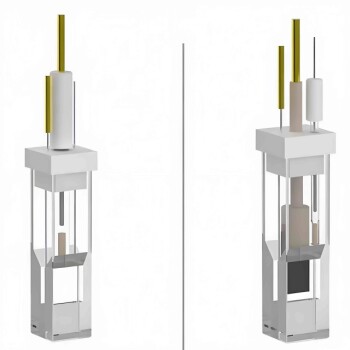
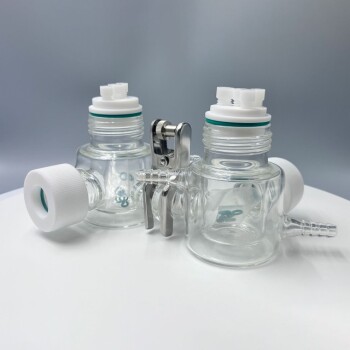
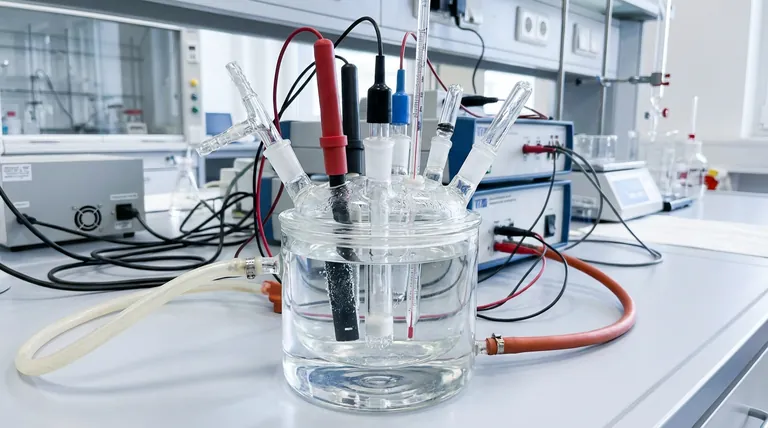
The five-port water bath electrolytic cell is designed to tame this chaos. It offers a promise: if you can control the temperature, the atmosphere, and the potential, you can uncover the truth of the reaction.
But the machine does not work alone. It relies on a system of behavior.
Atul Gawande often writes that in complex environments (like surgery or aviation), failure rarely comes from a lack of knowledge. It comes from a lack of diligent application of that knowledge. The same applies here.
The cell is not a bucket. It is an instrument of precision. Here is how to treat it like one.
Phase 1: The Architecture of Purity
Before you touch a wire, you must establish the physical reality of the experiment. This is where most errors originate—not in the data analysis, but in the physical setup.
1. Respect the Electrolyte Purity is a variable. Using standard tap water or low-grade reagents introduces "noise"—side reactions that mimic or mask the data you are hunting.
- Use deionized water.
- Dissolve components completely.
- Treat the solution as the foundation of your data.
2. Geometric Precision When installing the working, reference, and counter electrodes, geometry matters.
- Install them into their specific ports.
- Ensure spacing is uniform to prevent short circuits.
- The Golden Rule: The conductive connecting rods at the top must remain dry. Only the active surface area touches the liquid.
3. Physical Stability A vibrating cell creates noise in the current response. Secure the cell on a stable stand. If you are working with corrosive materials, assume a leak will happen and place a protective pad underneath. Safety is just good engineering.
Phase 2: Connecting the Nervous System
An electrolytic cell is the heart of the experiment, but the electrochemical workstation is the brain, and the water bath is the circulatory system.
If these connections are weak, the organism fails.
The Electrical Interface
Connecting the workstation requires a "measure twice, cut once" mentality.
- Check Polarity: Reversing positive and negative leads is the most common, yet most destructive, error. It can ruin a reference electrode in seconds.
- Secure the Lines: A loose cable looks like signal noise. Don't let gravity pull on your connections.
The Thermal Loop
Temperature dictates reaction kinetics. The water bath jacket allows you to freeze time or speed it up.
- Connect the inlet and outlet pipes securely.
- Verify circulation before starting the reaction.
- A stable temperature creates a stable baseline.
The Atmospheric Seal
This is the defining feature of the five-port cell. You are building a micro-world.
- Seal all unused ports.
- If using an inert gas (Nitrogen/Argon), purge the system.
- Remove the oxygen. Oxygen is the enemy of precision in reduction reactions.
Phase 3: Active Vigilance
There is a dangerous tendency in modern labs to "set it and forget it." We trust the software to do the work.
But software only records; it does not observe.
Initiate and Watch Once you input the parameters (potential range, scan rate) and start the run, your job changes. You become a qualitative observer.
- Look for bubbles: Is gas evolving where it should?
- Watch for color: Is the electrolyte changing?
- Inspect the surface: Are deposits forming on the electrode?
These visual cues are the reality check for the digital data appearing on your screen. If the graph looks smooth but the cell is leaking, the graph is a lie.
The Psychology of Failure (And How to Avoid It)
In engineering, as in finance, risk is what you don't see. Most experiments fail due to "boring" oversights.
The "Invisible" Leak
A gas leak is silent. It introduces oxygen into your inert environment, skewing your reduction potentials. ** The Fix:** obsessively check seals.
The "Drifting" Baseline
If your electrolyte evaporates over a long experiment, the electrode immersion level drops. The current density changes, not because of chemistry, but because of geometry. The Fix: Monitor liquid levels during long-duration tests.
The "Assumed" Connection
We assume electricity flows because the wire is plugged in. But corrosion or loose clamps create resistance. The Fix: Trace the line. Every time.
Summary: The Protocol of Precision
| Phase | Key Objective | The "Engineer's Mindset" |
|---|---|---|
| Preparation | Purity & Geometry | Variables are eliminated before the machine is turned on. |
| Integration | Connectivity & Atmosphere | A loose seal makes the entire system worthless. |
| Execution | Observation & Data | Don't trust the screen; look at the reaction. |
The Hardware for Your Ambition
You can have the discipline of a surgeon and the checklist of a pilot, but you are still limited by the quality of your tools.
A five-port cell must withstand thermal stress, resist corrosion, and maintain a perfect vacuum seal. If the glass is flawed, the science is flawed.
KINTEK understands this engineer’s romance with precision. We don't just sell glass and wires; we provide the reliable infrastructure your research demands. From robust electrochemical cells to high-precision workstations, our equipment is built to disappear—so you can focus entirely on the data.
Is your equipment as disciplined as you are? Contact Our Experts to discuss how KINTEK can upgrade your laboratory setup today.
Visual Guide

Related Products
- Electrolytic Electrochemical Cell with Five-Port
- Double Layer Five-Port Water Bath Electrolytic Electrochemical Cell
- Customizable PEM Electrolysis Cells for Diverse Research Applications
- PTFE Electrolytic Cell Electrochemical Cell Corrosion-Resistant Sealed and Non-Sealed
- Side Window Optical Electrolytic Electrochemical Cell
Related Articles
- The Architecture of Control: Decoding the Five-Port Electrolytic Cell
- The Fragile Vessel of Truth: A Maintenance Manifesto for Electrolytic Cells
- The Symphony of Coefficients: Why Your Electrolytic Cell Cannot Be a Monolith
- The Fragility of Precision: Mastering the Integrity of Five-Port Electrolytic Cells
- The Architecture of Accuracy: Inside the Five-Port Electrolytic Cell